
In the Spirit of Dr. King: Making Good on the Promissory Note of Canada’s Black Justice Strategy
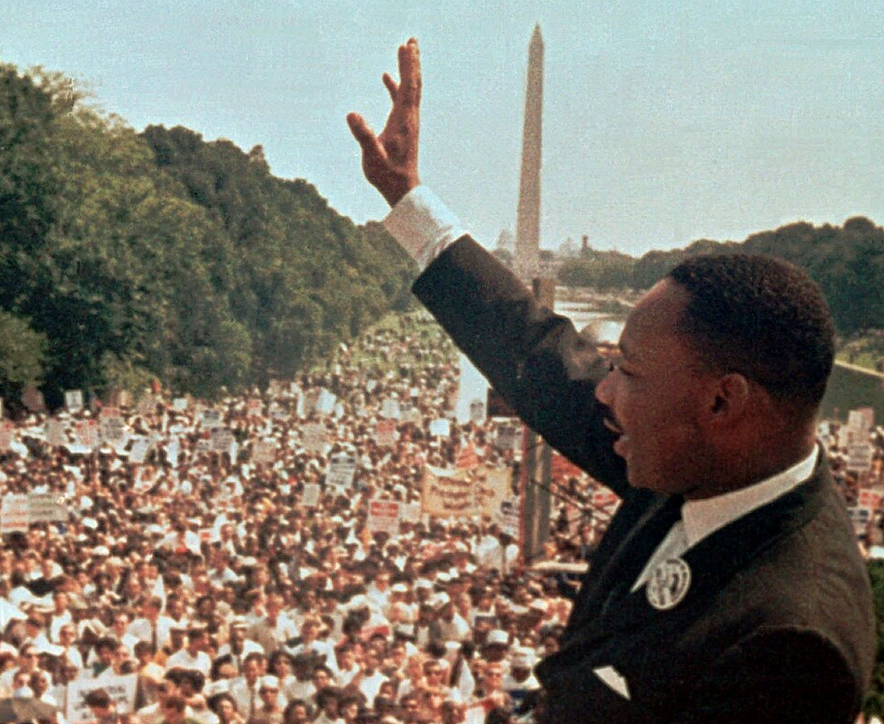 Dr. Martin Luther King on August 28th, 1963, after delivering his ‘I Have a Dream’ speech/AP
By Craig Wellington
August 27, 2026
On this August 28th, the world marks the 63rd anniversary of Dr. Martin Luther King Jr.’s “I Have a Dream” speech amid an exceptional level of competition for the attention of a public besieged by more immediate dramas — from the Canada-U.S. trade war to the Iran war to the economic anxieties prompted by both.
It is in such moments that pausing to reflect on Dr. King’s legacy becomes all the more important, because the work of his life still lies at the core of these crises — his insistence on the dignity of the human being above the cyclical power games of war, and above the artificial constructs of systemic racism that only get amplified in hard times.
These are the questions that bring us back to what is truly important.
Above all, how far have we come since King stood on the steps of the Lincoln Memorial and demanded payment on the promissory note of America’s founding ideals?
And how far do we still have to go?
On that day, King shared his dream of a society where people would no longer be judged by the colour of their skin but by the content of their character.
King’s words travelled far beyond the United States, inspiring generations confronting racism and inequality from Canada, to the United Kingdom, to South Africa, to India, to Northern Ireland and beyond.
They became a powerful language of freedom and equality around the world. More than six decades later, his words remain both an inspiration and an unfinished challenge.
In Canada, tremendous progress has been made in many areas. Canada has advanced meaningfully towards equality. But we cannot honestly say that the work is finished.
Black Canadians make up roughly four per cent of the population yet accounted for 37 per cent of police-reported hate crimes motivated by race or ethnicity in 2024. That is more than any other group in Canada.
From the government of Canada’s own report Overrepresentation of Black People in the Canadian Criminal Justice System: Causes and Effects:
“Black people in Canada are overrepresented in the criminal justice system as accused and convicted, victims and survivors. Overrepresentation occurs at all stages of the system – policing, courts and corrections – in significant numbers relative to the rest of the Canadian population. For example, in 2022-23 Black individuals accounted for 9 percent of the total federal corrections population, while representing 4 percent of the total population.”
These statistics represent young people, families, victims, and survivors whose experiences with Canada’s justice system can be profoundly different because they are Black. For too many Canadians, justice is still experienced differently depending on the colour of your skin.
We saw the Black Justice Strategy as a promissory note that would help remove an unjust burden from our children’s future. Unfortunately, the government can’t live up to that promise under its current funding scheme.
For generations, Black Canadians have fought to change this reality so that our children and their children can grow up and thrive, as every child deserves the chance to do.
That is the challenge the federal government undertook when it created Canada’s Black Justice Strategy.
Introduced by the federal government in 2025, the strategy is historic: it acknowledges that systemic anti-Black racism exists within Canada’s criminal justice system and sets out a 10-year framework to address it.
At Black Opportunity Fund, we welcomed the strategy because we understand the difference between identifying a problem and doing something about it. We saw the Black Justice Strategy as a promissory note that would help remove an unjust burden from our children’s future.
Unfortunately, the government can’t live up to that promise under its current funding scheme. Canada’s Black Justice Strategy is a 10-year plan, yet the federal government has committed only two years of funding.
A two-year funding commitment for a 10-year strategy is not implementation, it is hesitation.
Imagine a 100-metre river crossing with a 20-metre bridge.
No one would call that bridge a success. It does not matter how well the first 20 metres are built if the remaining 80 metres are missing.
The Black Justice Strategy calls for transformation, and the federal government has promised to deliver it.
But to do it means to fund it. Budget 2026 must provide at least five years of stable, predictable funding for implementation of the Black Justice Strategy.
Five years is not an unreasonable ask for a 10-year strategy. It is a bare minimum foundation for serious implementation. It would allow community organizations to plan, build capacity, evaluate results and develop programs that respond to the realities of Black Canadians across the country.
It would also give governments and communities enough time to measure what works, improve what doesn’t and ensure public dollars produce lasting results. The Black Justice Strategy is too important to be allowed to become another well-intentioned document that falls short because the resources required to implement it weren’t there.
BOF was created to address systemic barriers facing Black communities by mobilizing capital and supporting Black-led organizations and businesses. We have seen firsthand what happens when governments and institutions move beyond talking to investment.
Investment creates capacity. Capacity creates impact.
Canada has already done the difficult work of acknowledging the problem and developing a national strategy. Without sustained funding, the Black Justice Strategy risks joining a long list of well-intentioned commitments that never fulfilled their promise.
We can do better.
At Black Opportunity Fund, we believe the government can be ambitious when a problem demands ambition – and accountable when it makes a promise to Canadians.
A 10-year strategy deserves more than two years of funding.
More than six decades after Dr. King’s speech, the most meaningful way to honour his legacy, and the legacy of all of those who valued and acted on his leadership philosophy, is not simply to remember it, but to empower it to shape our collective future.
Let’s move from recognition to action, from strategy to implementation, and from promises to sustainable investment.
Justice requires more than good intentions. It requires the political will — and the resources — to make it real.
Craig Wellington is CEO of the Black Opportunity Fund. He was awarded the King Charles III Coronation Medal in 2025.