
Letter From Washington: New Sanctions Are a First Step in Forcing Putin to the Table
 Shutterstock
By Fritz Lodge
November 6, 2025
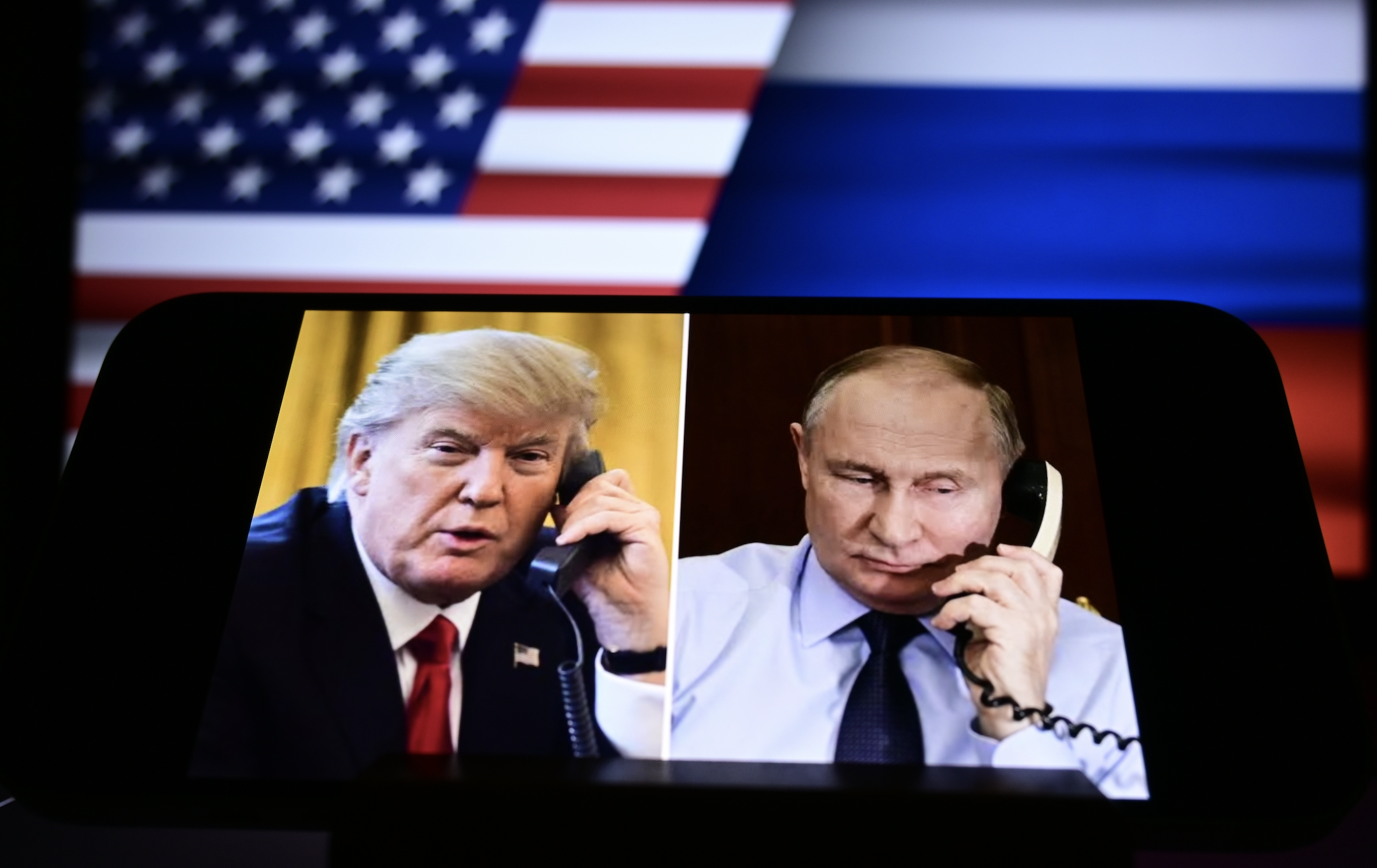
In few areas of U.S. foreign policy has the “TACO” (Trump Always Chickens Out) meme been so apparent as with Donald Trump’s relationship with Russian President Putin.
The U.S. President has, time and again, parroted Russian talking points about the war in Ukraine, disparaged Ukrainian President Zelensky, and sought bilateral peace deals with Moscow over the heads of Zelensky and European leaders, only to be rebuffed by Putin’s intransigence. Trump then turns to threats of sanctions and increased support to Ukraine (notably mooting deliveries of Tomahawk cruise missiles) to force Russia to the table. He repeatedly fails to follow through on those threats.
However, this dynamic is now finally shifting as Trump’s apparent frustration with Putin appears to have reached a boiling point. After cancelling a planned summit with Putin in Budapest, the Trump administration announced significant new sanctions on October 22 against Russia’s largest oil majors, Rosneft and Lukoil (sanctions now cover roughly 75% of Russian oil production). These measures don’t come into effect until November 21, and their impact will depend on enforcement, but they do mark a new willingness to impose real costs on Moscow for its failure to negotiate in good faith. That willingness – in combination with continued US weapons sales and battlefield support – underlines a strikingly positive shift from the disastrous Trump-Zelenksy Oval Office meeting in February, when Trump appeared ready to abandon Ukraine.
What’s changed? First, Zelensky and European allies have learned how to appeal to Trump’s better instincts and manage down his worst. Second, Trump appears to be learning that he has less leverage over Ukraine than he first believed and must increase leverage over Russia if he hopes to force any concession from Putin.
Recent reports that Kyiv and European allies are working on a “12-point” peace proposal underline the first observation, less for the substance of the plan than for showing how the Trump management strategy of Zelensky and European leaders has improved since February. Three thoughts underscore this dynamic:
- The reported proposal of a “Peace Board” chaired by Trump demonstrates a stronger understanding in Kyiv and European capitals of the need to play to Trump’s ego (with a nod to Trump’s 20-point Gaza peace plan) and place him at the center of any peace effort (playing to his obsession with the Nobel Prize). This builds on previous efforts to appeal to Trump’s priors (e.g., flattering him with a summit of European leaders in Washington after the Trump-Putin Alaska summit, Ukraine signing a critical-minerals deal that matches his transactional instincts.
- The plan’s preemptive appeal to Trump’s desire to play peacemaker (as well as Ukraine’s loud and repeated commitments to agree to a ceasefire) puts Kyiv and European leaders on an inside track against Putin, forcing him to either agree to reasonable confidence-building measures or prove he has no intention of ending, or even pausing, the war. For example, Russia’s rejection, again, of Trump’s ceasefire proposal helped lead to the cancellation of the Trump-Putin summit in Budapest.
- Perhaps most important, Europe’s sustained and growing practical military and financial support to Ukraine reduces Trump’s leverage to force Ukraine into a bad deal. (The failure to agree to a €140 billion loan for Ukraine backed by frozen Russian assets shows there are some limits to this support, but the trend remains). Even if the U.S. decides to abandon Ukraine, it likely could maintain its war effort, with Europe able to backfill much of U.S. support. Key intelligence, reconnaissance, and logistical support may be exceptions, but Europe is reportedly moving to fill even some of these gaps.
While Trump is always susceptible to Putin’s influence – demonstrated by his pre-bilateral call with Putin and subsequent repetition of Russian talking points during his October 17 meeting with Zelensky – Ukraine and its European leaders are now better able to counteract this influence. This erects a much stronger backstop to the risk of a U.S.-Russia deal that cuts out Ukraine and Europe.
The second factor influencing the Trump administration’s shifting policy comes more from a slow recognition of two fundamental realities than any change in facts on the ground. While Russia’s possible capture of the city of Pokrovsk in the coming days would be a blow to Ukraine, it would not be likely to significantly change the course of the war.
- Trump’s initial conviction that Russia is destined to win the war and that Ukraine doesn’t “have any cards” without US support is simply wrong. Ukraine has suffered terribly and faces serious constraints (most notably on manpower), but there is no indication that it is losing the war. To the contrary, this year’s Russian offensive has fizzled out with only marginal gains while Ukraine has inflicted significant losses on Russian forces (over 100,000 soldiers dead this year alone) and brought the war home to Russia with strikes on refineries that have spurred gas shortages. (As I wrote recently for Policy, the Kremlin’s propaganda campaign stating that Russian victory is inevitable in fact suggests a certain level of concern in Moscow about realities on the ground).
- The U.S. does not have sufficient leverage to force Kyiv accept an agreement on Russia’s terms, which would essentially threaten the existence of an independent Ukraine. On the flip side, Trump’s belief that his personal relationship with Putin and tendency of bowing to nearly every Russian demand would coax the Kremlin into a workable peace deal has also been proven wrong.
All things being equal, Putin seems unlikely to back down from his maximalist war aims (which include the demilitarization of Ukraine and replacement of its government with pro-Russian proxies). Three years into the war, he has not only staked the legitimacy of his regime on winning this conflict but also transformed much of the Russian economy to support the war effort while cannibalizing civilian industry; backing down is now not only a politically difficult but economically painful prospect. The only way to bring Putin back to ceasefire and peace negotiations on terms that offer any hope for success is to build additional leverage by further damaging oil revenues and bolstering Ukraine’s military to prove that Russia cannot win on the battlefield. The new sanctions demonstrate that the Trump administration is now closer to recognizing this fact. It is a positive departure from Trump’s early strategy of only carrots for Putin and sticks for Ukraine, but this new strategy will require commitment and patience to work.
For the measures to have teeth, Trump must not only fully implement the sanctions on November 21, he must also follow through on secondary sanctions threats targeting additional entities within the major purchasers of Russian oil – notably China, India, Turkey, the UAE. Without such enforcement, importers of Russian oil will quickly develop workarounds to the new sanctions. Comments following Trump’s meeting with Chinese President Xi – the largest purchaser of Russian oil – at the APEC summit in South Korea suggested that Trump is unlikely to follow through with major secondary sanctions on China, but ratcheting up pressure on other buyers like India and Turkey could still have an effect.
Importantly, the new oil sanctions should also be married with enhanced military support for Ukraine. European purchases of U.S. weapons for transfer to Ukraine and talks on a deal to exchange Ukrainian drone technology for US weapons purchases are positive signs. For more immediate effect, the Trump administration could loosen restrictions on the use of U.S. and European long-range strike weapons inside Russia. (Trump has decided against sending Tomahawks, but this issue was largely a red herring, there are a number of other suitable long-range systems).
It remains possible that the TACO meme will once again reassert itself if Trump backs down from sanctions threats after another call with Putin in which the Russian president reasserts his influence or makes more empty promises. That would be an unfortunate development that only delays real peace talks and extends the war. But it does now appear, at least, that Ukraine and European allies have developed the means to push back and tell their own story.
Policy Contributing Writer Fritz Lodge is a principal at The Scowcroft Group, where he provides strategic risk advisory services on issues including the Russia-Ukraine War, the Middle East, and sanctions and export controls.