
Letter from Washington: The Economic Anomalies of Trump’s Tariff Activism
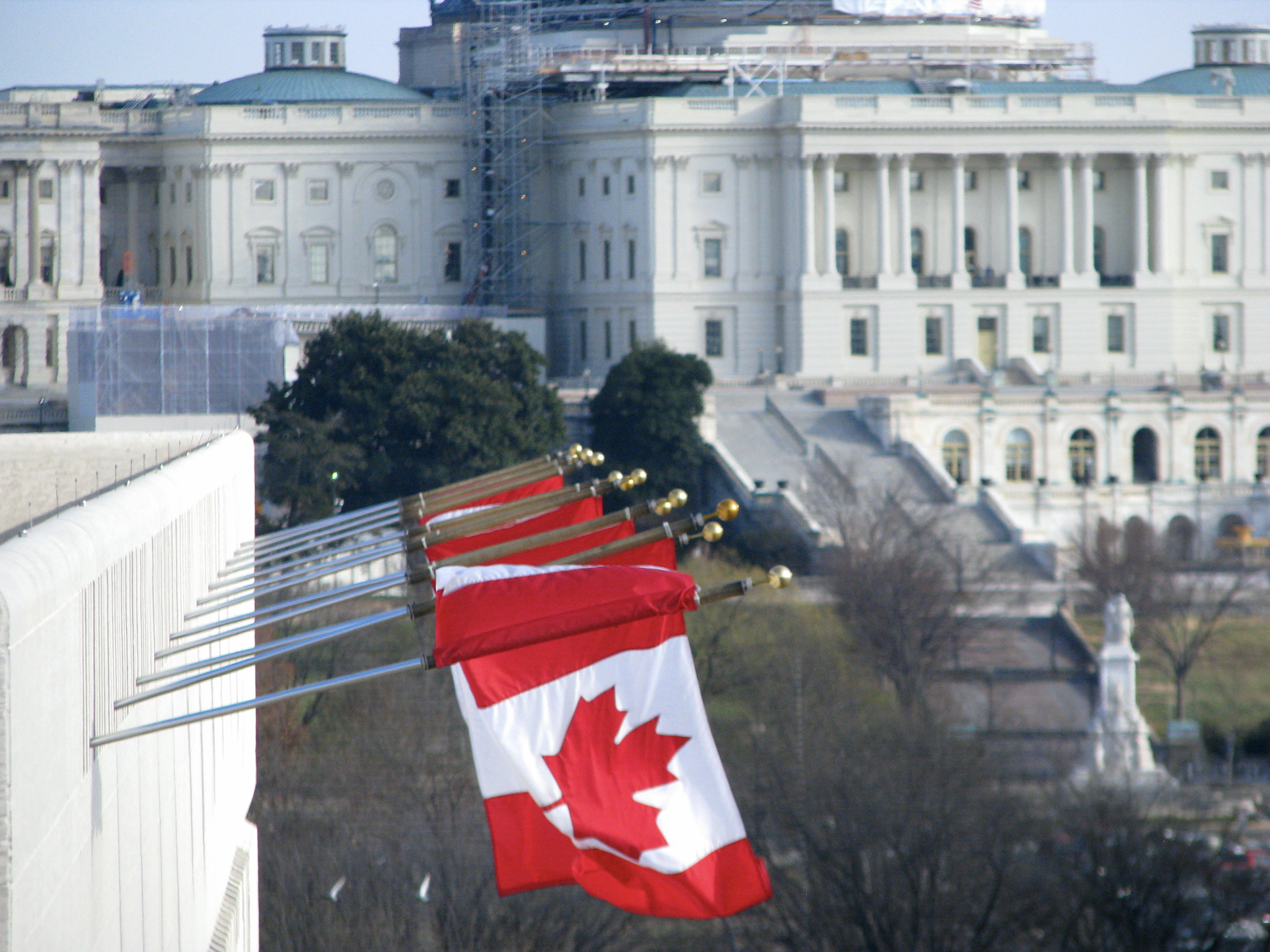 How much certainty do private-sector decision makers now have on tariffs?/Shutterstock
By Tom Gallagher and Kevin Nealer
August 5, 2025
Even as there is new evidence of the near-term negative impact of Donald Trump’s tariffson the US economy, Trump’s recent, unprovoked escalation of duties on Canada prompts the question: Where is US trade policy headed and what long-term systemic changes does it portend for bilateral trade and investment?
There are two underappreciated structural features of Trump’s tariff activism that are rewriting supply chains and investment patterns in North America and globally. Understanding why they are different from past trade activism is essential to right-sizing the Trump tariff risks now and going forward.
First, after WWII, the US presided over successive reductions in government’s role in the international economic sphere. This was based on a positive-sum view of trade. Key to realizing those benefits were highly credible commitments on trade and investment that were honored by subsequent presidents and incorporated into global regimes by trading partners.
The largest previous burst of protectionism — under President Ronald Reagan —consisted of short-term measures designed to accommodate political pressures for import restraint before returning to the long-term trend of more open and expanding trade. Reagan’s tariff and quota regimes (for steel, autos, semiconductors) were time-bound, as tariffs are meant to be under international rules.
Trump’s tariffs are meant to permanently rewrite trade flows and address systemic deficits, not to placate short-term import sensitivities. They promise no goal or end date, and nothing the affected country can do will stop them. They are in no sense negotiations since trading partners are offered nothing in return for their compliance save the end of contrived, coercive uncertainty via the dubious reward of a fixed long-term duty.
This departure from the longstanding “most favored nation” (MFN) commitments of global rules, notably in our trade dynamic with Canada — as well as the consultation and dispute resolution processes laid out in 20 US free trade agreements (FTAs) and the World Trade Organization’s dispute settlement system — effectively means the US has quietly quit those obligations without formal notice to trading partners or Congressional approvals.
The Washington consensus is dead; most participants simply haven’t recognized that new reality dictated by unilateral US actions that have produced a new status quo.
Second, for decades, the US (and almost all foreign governments’) resort to tariffs has been product specific. Import-sensitive sectors were given time to adjust by application of tariffs, quotas, or other border measures (e.g., restraint agreements). Trump’s tariffs are not on specific products; they are (mostly) on countries. (Sec. 232 penalties on steel, aluminum, chips, and pharmaceuticals are a separate punitive track, also not dependent on fair trade rules.)
The Trump tariff regime does not even pretend to address unfairly traded goods (dumped, subsidized or less-than-fair value sales). In addition to injecting an element of nationalism into the trade system, this produces anomalous results, such as tariffs on our largest export market, Canada.
The potential for transshipment to lower-tariff countries is massive and involves the kind of microeconomic details this administration is not likely to master, especially because the cutting edge of the policy is International Emergency Economic Powers Act (IEEPA) authority and sectoral Sec. 232 cases, neither of which rely on US private sector comments or guidance (the former due to its original design as an emergency authority and the latter due to the highly accelerated pace of investigations).
The policy is focused on two completely non-traditional goals:
- Trump policy characterizes trade deficits as a sign of unfair trade policies and is based on a zero-sum view of trade, with higher tariffs the means to grow the US slice of the pie while increasing revenue.
- In addition to re-wiring current account trends, Trump tariffs are also focused on behavior modification in non-economic spheres. They are sanctions by another name, meant to bend the behavior of other countries to US will in domains as varied as defense spending, immigration, drug policies, or personal vendettas that Trump has against the internal politics of target countries. The result for trading partners has been a cacophony of demands across different government functions – often contradictory or made inconsistently by US negotiators.
How much certainty do private-sector decision makers now have on tariffs?
Trump’s policy produces a substantial increase in government’s role in international economics. As that role in his second term has been largely defined by disruption, volatility and misrepresentation, a major change under Trump is that the credibility and integrity of US commitments is simply gone. Any hoped-for stability in policy will be short-lived.
Going forward, Trump will inevitably change tariffs to influence future developments. Anyone contemplating an investment in a business that imports into the US, or even anyone who wants to build a business that would replace now-discouraged imports, has to ask the question: How long will current tariff rates remain in effect?
This effect may continue – in some form – beyond the end of this administration, for two reasons:
- Even if a future administration seeks a return to the old order, Trump has expanded the Overton Window defining what is now possible; trading partners can no longer be safe in the assumption that a deal reached under one president will be respected by another.
- The allure of tariffs as a source of federal revenue (now at the highest level since 1913) means the tariffs risk becoming a “sticky” feature of government policy – harder to roll back even if goods trade deficits self-adjust.
As a macroeconomic own goal, the parallel to Brexit is instructive; Brexit didn’t cause a recession, but it depressed growth by discouraging investment. Characterized as a change in trade policy, by far the most important artifact of Britain’s withdrawal from the EU has been felt in a systemic reduction of investment in the UK that shows every sign of being a permanent penalty on British growth.
In the US, there is every indication that Trump’s trade policies are producing a similar investment effect, both in significantly diminished FDI directly attributable to tariff instability and in evidence of foreign investor diversification away from the US.
What about the quid pro quo investment commitments agreed by the EU, Japan, and South Korea? Our base case is that they are unenforceable press releases, unsupported by sovereign wealth funds (SWFs) or other channels through which those governments could move huge sums – even if local politics would permit such diversion of assets to the US.
But it wouldn’t take much for these hollow promises to morph into a major step-up in government involvement in cross-border capital flows. If any version of these commitments does materialize and isn’t offset by other foreign capital flows, it would result in a higher US current account deficit. And it would entail an unparalleled US government intervention in directing capital.
For Canada, the country most impacted by America’s every economic challenge, the pace and nature of these policy changes will require an approach both vigilant and adaptive. Countries that took the lower tariff deals thus far seem to have varying degrees of buyer’s remorse, now realizing that path offers no safe endgame because the demand signal from Washington may not stop.
Tom Gallagher and Kevin Nealer are Principals of The Scowcroft Group, a Washington based geopolitical risk consultancy.