
Louise Penny’s ‘The Black Wolf’: A Mystery for Our Conspiratorial Times
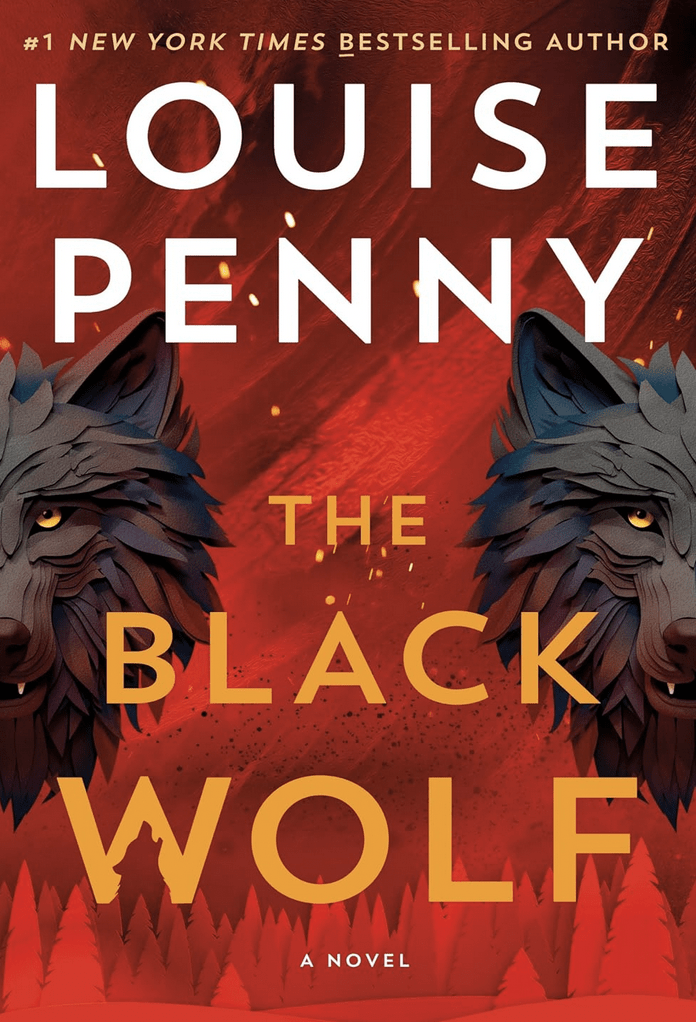
By Louise Penny
Macmillan Publishers, October 2025/384
Reviewed by Maureen Boyd
January 23, 2026
I came late to the Louise Penny fan club. Recommendations first came from friends, then from an increasingly diverse group of Americans who loved the mysteries solved by Chief Inspector Armand Gamache of the Sûreté du Québec in the idyllic Eastern Townships — the bilingual “Vermont Nord” that hugs the very real, long-undisputed Canada-US border.
Readers and reviewers praise Penny’s Agatha Christie-style plots, which feature the quirky characters of the village of Three Pines, in addition to twists, turns and bombshell endings.
The formula works. The former CBC journalist’s books now consistently debut on the New York Times bestseller list and have sold close to 20 million copies in 35 languages. Her friendship with Hillary Clinton resulted in the two co-writing the bestselling political thriller State of Terror, a novel featuring a female Secretary of State facing international crises.
Her 20th Gamache novel, The Black Wolf debuted at #1 on major Canadian and American lists when it landed in October. The timeliness of the plot had much to do with its popularity, featuring, as it does, political conspiracy theories, misinformation, corruption and a US plan to take over Canada.
Based on War Plan Red which is a real historical contingency for a U.S. invasion of Canada developed in the 1920s, the book’s plan is updated and weaponized by the conspirators, using social media and propaganda to manipulate public opinion and sow distrust. Penny has had to constantly remind people this was all written before the re-election of President Donald Trump.
While you can read The Black Wolf on its own, it is much better to start with The Grey Wolf, in which Gamache uncovers and foils a plot to poison Montreal’s drinking water. The book ends with Gamache realizing that is only a precursor to something more sinister in The Black Wolf.
The titles refer to a Cree legend (also attributed to Cherokee native traditions) told to Gamache of the constant battle between the Grey Wolf which represents compassion and strength, and the Black Wolf, which represents cruelty and aggression. Penny uses it as a metaphorical framework for every person’s internal conflict between positive and negative, our angels and devils. The wolf that wins is the wolf that is ‘fed’.
It’s Gamache’s job to figure out who is the Black Wolf — whether a high-ranking politician, senior law enforcement official or Mafia boss, and what their endgame is. He and his two longstanding seconds-in-command work together in secret, not knowing whom to trust, concerned about internal corruption and betrayal.
 Alfred Molina as Armand Gamache in the Netflix series Three Pines/Netflix
Misinformation, fake news, deception, and the weaponization of truth all figure prominently, along with repeated references to 1984 and Animal Farm.
In the end, they connect the dots among wildfires, water scarcity, and an engineered environmental disaster manufactured as a pretext to invade Canada.
Is it a fun read? Absolutely. My only concern after reading The Black Wolf was that people who look for conspiracies might think this level of malignant political corruption is already happening; that there were so few people that Gamache could trust could further feed cynicism. It makes me want to re-binge The West Wing for its idealistic portrayal of American governance.
But I love the Canadian setting and the prescience of this book. One pivotal moment is set in the bilateral landmark of the Haskell Free Library and Opera House that has straddled the Canada-U.S. border for more than a century.
It’s where, last January, U.S. Homeland Security Director Kristi Noem jumped back and forth across the painted border line brazenly and bizarrely shouting “USA Number One” on the U.S. side and “51st State” on the Canadian side.
Previously, Canadians had entered the library walking through the one entrance on the U.S. side but Homeland Security later put an end to that easy access. Penny has contributed $50,000 to the construction of a new door on the Canadian side where patrons can pass through U.S. Customs.
Penny originally planned to launch Black Wolf at the Kennedy Center. Last fall, she said she would no longer travel to the U.S.
Within hours of the announcement of the rel0cated launch at Ottawa’s National Arts Centre, rapturous Canadian fans snapped up all 2000 seats in Southam Hall. Penny’s friend, CBC veteran Paul Workman, hosted the discussion. Workman is familiar to Canadians from his reporting at CBC and then CTV, where he was London Bureau Chief. It’s fun to see his starring fictional role in The Black Wolf, as his character uses his journalistic credentials and social media accounts to counter the disinformation and live-stream the invasion-ending event.
This is Louise Penny’s year — she’s been everywhere, with features in the Washington Post, long-length interviews on multiple Canadian media, a live show on The Current airing from the Haskell Library and more requests than she can handle.
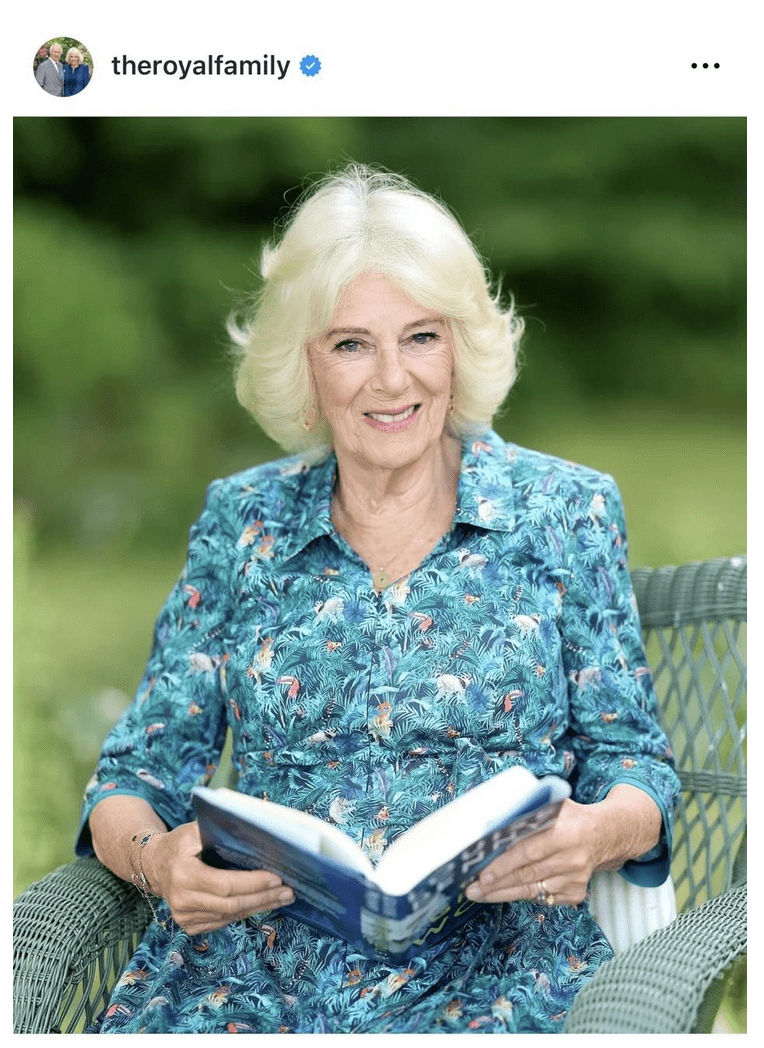
Penny’s fans include Queen Camilla, who posted a photo of herself in July reading The Grey Wolf, and who featured it in her book club, The Queen’s Reading Room. It’s all fitting attention for the multi-award winner and member of the Order of Canada.
Maureen Boyd is chair emerita of the Parliamentary Centre, a nonprofit organization that has worked for the past half-century in more than 70 countries supporting legislatures to better serve their citizens.