
Mark Carney’s Delegation Deficit
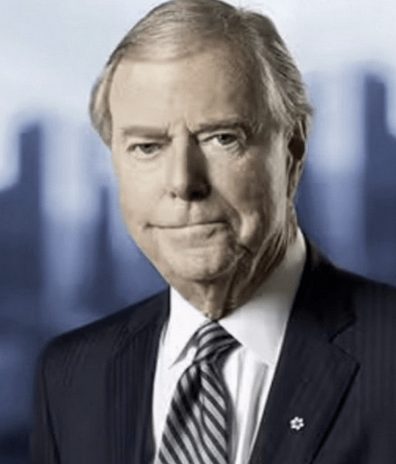
By Don Newman
August 3, 2026
Since he was elected Liberal Party leader in March of 2025 Mark Carney has been the party’s greatest asset.
He immediately turned the party fortunes around by presenting as the best possible option for standing up to Donald Trump’s economic war and annexation threats in 2025, erased a 20-point public opinion deficit, and led the Liberals to victory in an election which, weeks earlier, had seemed a one-way ticket to the political wilderness.
Once in government, it only got better. A few seats short of a majority in the House of Commons, Carney lured — or welcomed, depending on the source — four floor crossers from the Conservatives and one New Democrat, creating a majority Liberal government without the necessity of an election.
Now, after less than a year and a half in office, the Liberals are still topping the polls, and Carney has an overwhelming lead as the person most people prefer to be prime minister.
Which means that it is now time for Carney to pull back. Not disappear — that would be impossible. But pull back from being the face of every new government program and every government decision. So far, Carney has been doing that almost full time. Plus, his peripatetic travelling around the world has kept him on screens at home and elsewhere.
Successful performers know that they have to create a little mystery; a demand for their appearances based on a shortage of supply, and they ration their public exposure accordingly.
When he first became prime minister, Carney was a largely unknown quantity. People knew he had been governor of the Bank of Canada and the first non-Brit to be governor of the Bank of England. They were familiar with his unique, global credentials as a central banker and economic troubleshooter. As a politician, he was unfathomable. It turned out he was a natural.
Even after more than a year in the most high-profile job in the country, Carney has been successful at keeping his private life just that — private. But his public presence is constant. And that is what he should learn to curtail.
Carney’s was the only face of monetary policy, and he bore the responsibility for that policy. Being prime minister requires an ability to triage, and triage demands delegation.
As a central banker, he managed staff and deputies in Ottawa and then in London. Carney’s was the only face of monetary policy, and he bore the responsibility for that policy. Being prime minister requires an ability to triage, and triage demands delegation. If it seems he doesn’t have sufficient confidence in his ministers to delegate, Canadians won’t either.
Carney is going to have to let more of his cabinet ministers step forward. They are the ones who should start announcing regional development programs, health care initiatives, and housing programs. Of the 28 full ministers in the cabinet, fewer than a handful are household names and those mostly because they were in government before Carney arrived.
Foreign Affairs Minister Anita Anand and Canada-US Trade Minister Dominic LeBlanc get some face time. That Minister of Transport Steve MacKinnon is also government house leader helps his profile. Of the newcomers recruited by the prime minister, Energy Minister Tim Hodgson seems to have the most leeway to speak out on issues.
The junior cabinet ministers, the 10 secretaries of state, and parliamentary secretaries assigned to assist cabinet ministers could be in a witness protection program and have more profile.
Some of this is going to have to change. Carney is going to have to be front and centre at the big events like the Canada Investment Summit in Toronto on September 14 and 15. But most events he should start to hand off.
In the past, prime ministers who have been reluctant to do so paid a price. Justin Trudeau began to slip as prime minister after the Covid pandemic. Trudeau had given the daily briefings during lockdown from the steps of Rideau Cottage, and while he got points for that, once it was lifted, Canadians were ready for a change.
In the case of Pierre Trudeau, his personality so dominated his cabinet that when he and voters soured on each other, the Liberal party paid the price both in the polls and at the polls.
There are two timeless arguments for any PM to delegate more. The first is that it helps with cabinet morale — both in terms of personal validation for ministers and politically in their ridings. The second is that it reinforces the notion to Canadians that the government is a team, not a one-man show — especially these days, when they can see a one-man show in Washington all day, every day.
In 2026, the counter-arguments are that in a highly competitive, cacophonous content sphere the prime minister guarantees coverage, and that message control is more crucial than ever in a political-propaganda context where narrative warfare has added a whole new dimension to the classic ministerial scandal.
Still, shifting the political spotlight usually increases the longevity of the star who occupies it. Mark Carney should step back.
Policy Columnist Don Newman is an Officer of the Order of Canada, and a lifetime member and a past president of the Canadian Parliamentary Press Gallery.