Middle East War: The Strategic Value of Kharg Island
March 15, 2026
For the first two weeks of his regional war in the Middle East, Donald Trump and some of those around him have framed his Iran strategy as one akin to a Vietnam rerun—drop enough ordnance and hope the enemy will eventually succumb.
This has been Secretary of Defence Pete Hegseth’s script, which has eery echoes of his predecessor Robert McNamara’s delusion that brute firepower would defeat the Vietcong. It did not work then, and it is not working now. Iran’s rulers have a much higher threshold for pain than the Americans and are not likely to surrender when martyrdom is an article of faith.
So, what’s Plan B after the U.S. and Israel run out of targets to bomb? There are signs it may be to seize control of Iran’s prized Persian Gulf oil hub, Kharg Island, and the cash flow that comes with it.
Kharg Island is a heavily fortified hub roughly 500 km northwest of the Strait of Hormuz through which roughly 90% of Iranian crude exports flow, and from which most of Iran’s government revenues come. A U.S. Marine expeditionary force now headed to the Middle East along with the Japan-based USS Tripoli amphibious assault ship are seen as an indication that this may be Trump’s plan.
It may also explain why American strikes over the weekend were directed at the island’s air defences, missile batteries, and Revolutionary Guard facilities, but not its oil installations. Trump told NBC News on Saturday, “We may hit it a few more times just for fun,” which belies its true value as a target.
The military action is just the overture. The real play will be financial. We should remember that Trump’s transactional universe is governed by two rules: grab the best piece of real estate at a discount, then sell it and make a fortune.
Suppose the United States captures Kharg Island and its export infrastructure. What then? Shut down the pumps? Not likely. If Trump has learned anything from his Venezuelan caper, it is that in order to control a country, you don’t need to occupy it. You simply need to get custody of its principal source of revenue.
If the Americans get control of Kharg Island—a big if—they may well decide not to stop Iran from selling its oil. Instead, they will control how the proceeds are distributed. Think of it as the Development Fund for Iran: Washington holds the purse and Tehran gets a ration card.
Here’s how that deal might look. Iran can keep exporting oil, mainly to China—its principal buyer—but the proceeds from those sales would be escrowed under U.S. supervision, as they were in Iraq after 2003.
Funds would be released only to cover basic imports, government salaries, and social needs—not missiles, drones, or naval reconstruction. If Iran misbehaves, the money stops. For a regime whose budget still depends overwhelmingly on oil sales, that would be a powerful leash.
In this plan, Beijing’s tankers could continue lifting Iranian crude, and the Chinese navy could patrol the Strait of Hormuz to protect their cargoes while understanding, of course, that continued access depends on mutual restraint.
If China starts slipping weapons into Iran or decides to roll the dice on Taiwan, Trump can simply turn off the valves on Kharg Island and cut vital oil flows. Energy leverage thus becomes a powerful deterrent on two fronts.
In return, Washington would accept the new status quo rather than regime change or any path to democracy, which never seemed credible as a Trump goal. Tehran gets to keep its flag, its clerics, and its sovereignty, but agrees, in return, not to fund foreign militias or crush domestic dissent with impunity.
In return, Washington would accept the new status quo rather than regime change or any path to democracy, which never seemed credible as a Trump goal.
If the regime behaves, there might even be a White House handshake and a “peace” ceremony with its top Mullah. Trump has never hidden that he values a deal over principles. Human rights and democracy do not stir him. Power and control do.
As for Iran’s nuclear ambitions? Washington might say to Israel that they are now Netanyahu’s problem. Israeli Defence Forces can send in a special operations team to destroy what remains of Iran’s centrifuges and enrichment sites as well as find the unaccounted enriched uranium, which is likely buried under a big pile of rubble.
Iran would also have to agree to terminate its nuclear program once and for all and to use its substantial oil and gas reserves instead of nuclear power to run its electricity grid.
If all this sounds far‑fetched, consider Iraq’s post‑invasion precedent. After 2003, the U.S. used its dominance of the dollar‑based financial system to keep Baghdad’s oil money on a short leash. U.N. Resolution 1483 created the Development Fund for Iraq, channelling all oil export receipts into accounts controlled by the U.S.‑led Coalition Provisional Authority.
Even after formal sovereignty returned, Iraq’s revenues remained parked at the Federal Reserve Bank of New York, ostensibly to stabilize and protect the country’s finances but effectively keeping them under American custodianship. Every dollar earned from oil passed through the Fed’s hands before reaching Baghdad.
That control gave the Treasury and Fed real influence over how Baghdad spent its money. It’s all very simple. If you control the funds, you control the client.
In the case of Venezuela, there is even less transparency. Revenue from its oil sales was first kept in a bank account in Qatar controlled by U.S. Secretary of State Marco Rubio. That account has now been replaced by a U.S. Treasury Department account that, as of mid-February, contained more than $1 billion. No wonder the Venezuelans are playing nice.
Trump’s Plan B would likely adapt some variant of these models to the Gulf. Kharg Island would become a collateral asset and a source of strategic leverage. Iran’s oil exports would continue under U.S. supervision, with revenues passing through the Fed, and sanctions enforcement would shift toward a standing escrow system.
For Trump, that’s solid ground—a conflict now managed with money instead of bombs.
Of course, there are plenty of “ifs.” Iran refuses to play. The war escalates. China finds the arrangement risky.
But for a president who measures success in real estate deals and money, it would be about as good as it gets. If nothing else, it would be a plan of sorts, and that is a lot more than Washington has revealed so far.
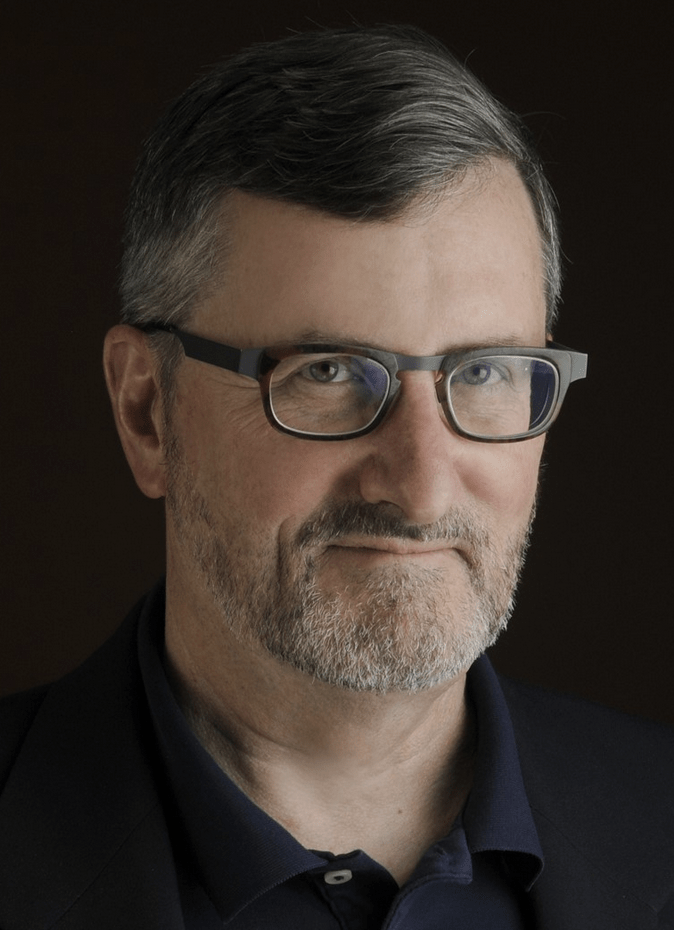
Policy Contributing Writer Fen Osler Hampson, FRSC, is the Chancellor’s Professor and Professor of International Affairs at Carleton University, and president of the World Refugee & Migration Council. He is co-chair of the Expert Group on Canada-US Relations.