
On Balance: Rewiring How the Federal Government Works
By Kevin Lynch and Jim Mitchell
October 22, 2025
That landmark Economist cover of 22 years ago – “Canada’s New Spirit” – is, sadly, a distant memory. Canada today is seriously underperforming its enormous potential, and public confidence in the future is waning. We are beset with anemic productivity growth, weak economic performance, declines in per-capita incomes, persistent affordability problems, structural fiscal deficits and a doubling of our national debt over the last decade.
And that was before President Trump unleased his tariff and sovereignty attacks on our country.
When it comes to how well Canada is doing, government matters. And for some time now it has been a significant factor in our underperformance. The idea that how you govern determines your success as a government may seem like common sense, but in today’s politics, the focus is on communications, message alignment, endless consultation and, particularly, control.
This creates and fosters imbalances in how governments operate. Governance systems that are out of balance typically generate unintended, and often negative, consequences.
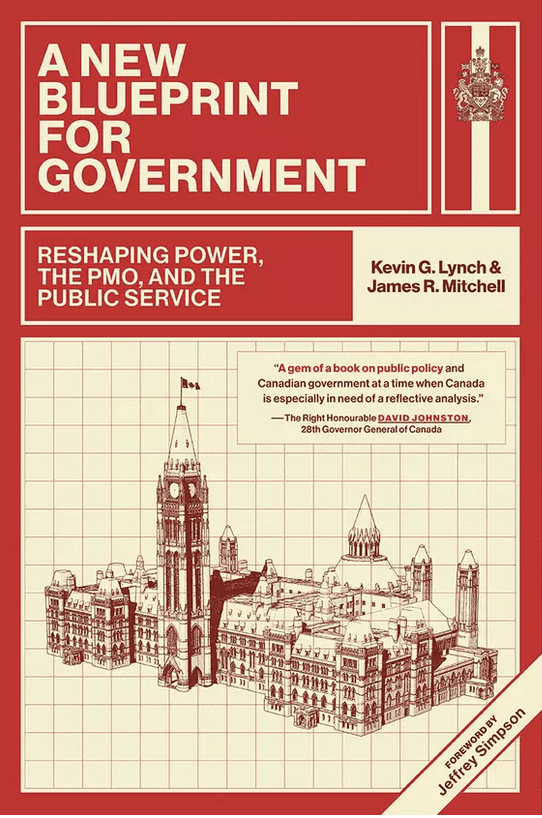
A key to success in our Westminster system of governance is balance, yet imbalances have been pervasive in how the federal government operates for some time. We wrote our new book — A New Blueprint for Government: Reshaping Power, the PMO and the Public Service (University of Regina Press) — to shine a spotlight on the “balance problem” and to make some common-sense suggestions for restoring balance that will help improve outcomes for Canadians.
So, what are the imbalances that should worry us the most?
First and foremost is the power imbalance between cabinet and PMO. This can be solved by restoring cabinet to its traditional role as the decision-making body in government (not PMO), and by empowering cabinet ministers again with clear authority and accountability.
PMO should return to its traditional role of supporting the Prime Minister, not trying to run the government. It also means reducing the size of cabinets, which have become too large and unwieldy, and slimming down a government operating structure that suffers from too much complexity, too many priorities and too much message control.
Related to this is the re-balancing of roles and responsibilities between public servants and political staff. Each has its proper role in providing advice to ministers but those should be distinct streams of advice, with the non-partisan, professional public service encouraged to speak truth to power.
Second, the government’s relationship to Parliament has also become unbalanced, with Parliamentary committees not treated — as they were in the past — as a serious element of the governing process. Greater independence and more resources for Parliamentary committees would help to restore balance provided that all parties cease to use them simply as platforms for political grandstanding.
The third aspect of the balance problem is whether we have fit-for-purpose federal institutions in this new and very difficult world. The public service of Canada is one core national institution in need of renewal. Having grown by more than 40% over the last decade, it must become leaner, more productive, and better equipped for today’s digital age.
Renewal means cutting excessive layers of management, chopping red tape, eliminating ineffective oversight mechanisms and rebuilding a culture of getting things done. In this regard, and particularly given the complexity of managing the largest workforce in the country, the Treasury Board should return to its mandate as a true management board.
When it comes to how well Canada is doing, government matters. And for some time now it has been a significant factor in our underperformance.
We also have to seriously up our game on defence, on border security, on intelligence and on national policing. The RCMP, for example, continues to devote the majority of its resources to contract policing for many provinces, municipalities and territories, even amid a radically changing threat environment that includes transnational criminal gangs, international terrorist networks, cyber threats by hostile actors, foreign interference, money laundering and cross-border drug smuggling. These threats point to the urgent need for a new focus by the RCMP on national policing, together with new capabilities and expanded resources.
Similarly, while the government has announced massive increases in future defence spending, we lack a modern defence strategy to guide the proposed investments in new kit, and there are serious problems with recruitment and retention in our already-depleted military.
Fourth, over recent years the lens through which policies are developed has seemingly lost a sense of balance. Where are the policy considerations balancing, for example, government spending on current consumption versus spending on investments for the future? Or between redistribution-oriented policies and growth-oriented policies; or between whether a policy is in the “federal lane” or that of another jurisdiction; or between deficits today versus the debt burden passed on to future generations (intergenerational equity)?
One vivid example of current policy imbalance is productivity and growth: we are in a productivity crisis, yet nowhere in government has there been a focal point for tackling stagnant living standards and sputtering growth. Similarly, chronic tinkering with the immigration system has distorted the economy and eroded public support for immigration. Regulatory systems have become barriers to growth rather than supporting smart growth. And climate change policies have contributed more to complexity and regional and sectoral tensions than to reducing carbon emissions.
The fifth area of imbalance is the one that is perhaps most evident to Canadians — the poor delivery of government services. The Trudeau government paid limited attention to delivering programs and services, operating as if the policy announcement itself was what counted most, as opposed to implementation.
Lack of attention to execution and delivery have led to bottlenecks everywhere — CRA, immigration, passports, ArriveCan, Phoenix, and the list goes on. Getting service delivery right is an essential element of balanced and effective governing.
Finally, after decades of being a global leader in fiscal probity, we have a growing problem of fiscal imbalance. In recent years, fiscal anchors have been abandoned, fiscal forecasts have lost their credibility, fiscal spending has galloped ahead of the economy and the national debt has more than doubled. On November 4, 567 days after the last budget, Canadians will get a new federal budget which will be a reckoning for the Liberal government of Mark Carney, especially in terms of dealing with policy and fiscal imbalances.
One can only hope that the budget will contain credible fiscal anchors, meaningfully reduce the deficit over time, and establish a realistic narrative on rebuilding productivity and growth while dealing with Trump’s tariffs and diversifying our trade links.
Despite these concerns about how the federal government has been operating, our book is optimistic about Canada’s future. These imbalances holding us back are correctable, provided there is political will and public support for change. Complacency is our greatest risk. In a country whose constitution celebrates “peace, order and good government”, government really does matter and government at its best is what Canadians are capable of, want, and deserve.
Canadians must understand that in a radically changing world, the status quo is not a viable option, either for government or the private sector. If we are to grow and prosper as a country, we have to do things differently, focus more on results, be bolder in our aspirations and invest more in the future. Canada has so much potential. To realize it, we need a new blueprint for how government operates and a business sector that invests in growth and innovation.
Recapturing the can-do spirit and confidence exemplified by that 2003 Economist cover should be the objective. That is the message of our book.
Policy Contributing Writer Kevin Lynch was Clerk of the Privy Council and Vice Chair of BMO.
Jim Mitchell is an Adjunct Professor at Carleton University and former senior public servant.