
On Being Canadian as a Teacher, and Student, of History
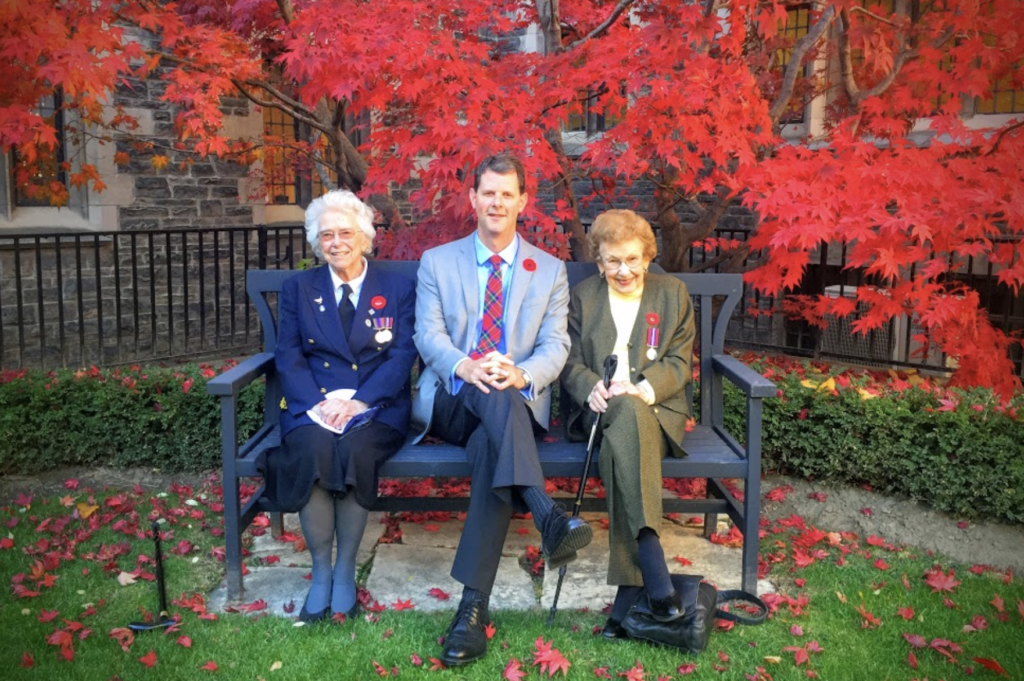 Outside Toronto’s Bishop Strachan School with alumnae and WWII veterans Suzie Stohn (L) and Sally Williams (R) in 2016
This piece is part of our Policy series On Being Canadian.
September 3, 2026
The turn of the calendar to September will always take me back to the classroom, a place where I spent most of my 30-year career teaching Canadian history.
I took the job and the subject seriously. At the beginning of the school year, when parents came to meet their child’s teacher and find out about the courses their offspring were about to take, I always told the room that this course – Grade 10 Canadian History – might be the most important one that their child will take in high school (in Ontario it is taught in Grade 10). I meant it.
The study of history teaches young people about who we are and where we’ve been, and invites a question about who we want to be moving forward. Knowing something about your past plays an essential role in answering that question. There is lots to know.
The Globe and Mail was onto something in a 2011 editorial that asserted: “Canadians today will be able to appreciate this country better if they understand that it did not simply leap into being because of a political deal in 1867, and indeed that there was human life here before the Charter of Rights and Freedoms.”
The Canadian identity was at the core of what I taught students. In fact, were I still teaching today, I would have used excerpts from the range of essays published in this series as a way of getting students to start thinking about and discussing the topic. My teaching notes and lessons are filled with quotations, photographs, commentaries, and political cartoons — all asking students to engage with the question of identity.
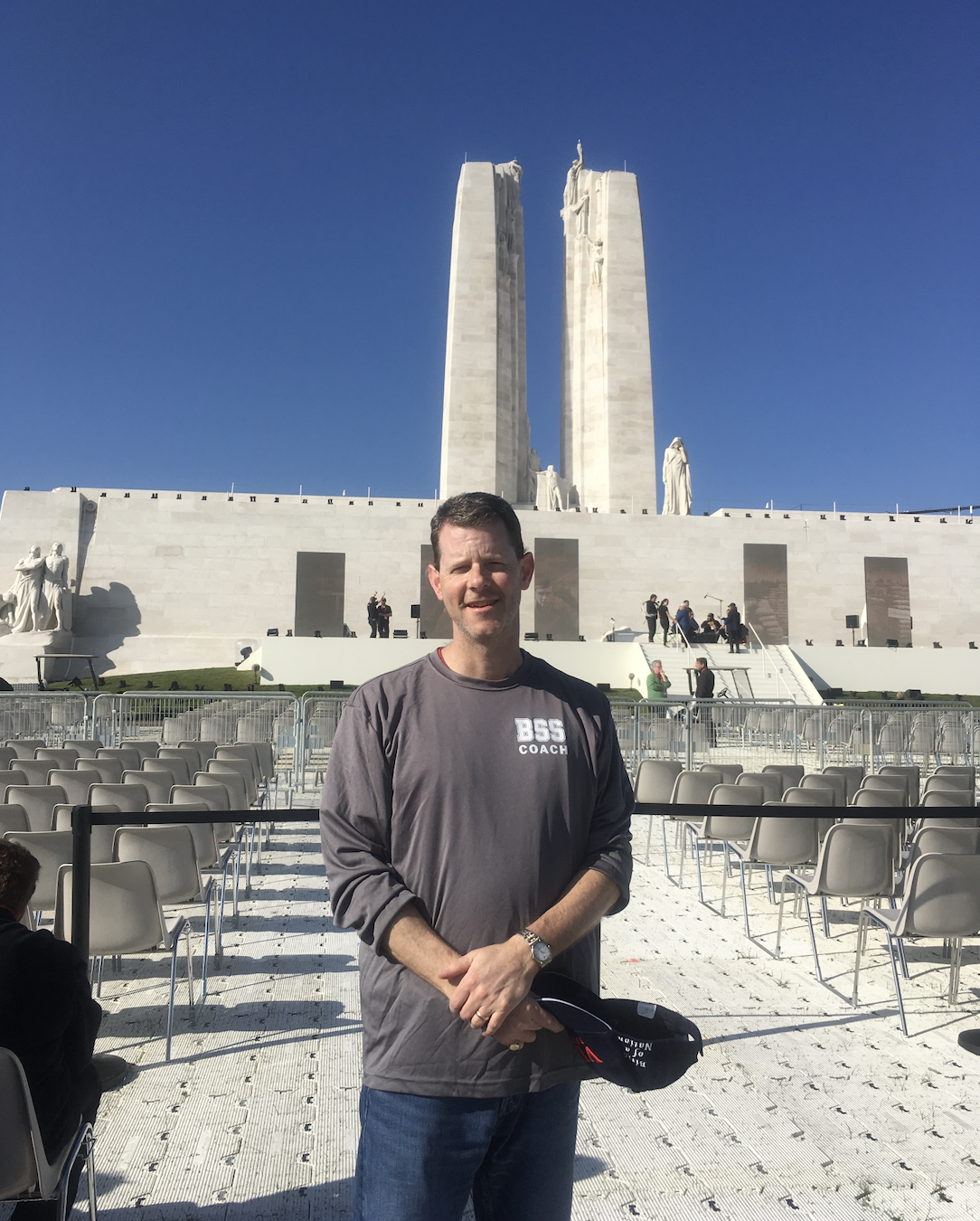
On a school trip to Vimy Ridge in 2017
Canadian identity means different things to different people. But young people will have no context for how to define it if they are not taught about the country’s history in the first place.
They need to learn the vocabulary and content to participate meaningfully in any discussion. Where does Canadian identity come from? How do we know what it means to be Canadian? How do we come to understand some of the common experiences of the country? The only way to put all of the pieces together is to know and understand our history.
Unfortunately, only four provinces require a course in Canadian history in order to graduate from high school (Manitoba, Ontario, Quebec, and Nova Scotia). This has always been perplexing, but its folly is underscored during a period when the sovereignty of the country has been under assault as never before. How can you care about your country’s sovereignty if you don’t know what it is protecting in the first place?
Given how little our students learn about Canadian history, I treated teaching it as a sacred trust. We were on a journey together, and we would all learn a lot about the country.
How satisfying it was to introduce teenagers to the sacrifice and drama of the Great War – which enthralled them – and infuse it with stories from letters, war art, and poetry. Or to teach about Canada-US relations while examining lyrics of The Guess Who and their 1970 song “American Woman” (though Burton Cummings denies it was political).
My job always gave me a deep sense of being Canadian. Teaching Canadian history was a gift because it was a passport to my country’s past. Each year was an opportunity to explore something new, change an emphasis, or drill down on a topic.
They also loved learning about the Cold War, which invariably seemed to have relevance to current events. A look at the 1972 Summit Series combined the political and cultural as they discovered one of those great moments in the nation’s past where any Canadian of a certain age could tell you where they were when it happened.
My job always gave me a deep sense of being Canadian. Teaching Canadian history was a gift because it was a passport to my country’s past. Each year was an opportunity to explore something new, change an emphasis, or drill down on a topic.
I loved to share the stories of great Canadians — from Arthur Currie and Oscar Peterson (in an address to Parliament, U.S. president Bill Clinton called him “the greatest jazz pianist of our time”) to Elsie MacGill and Bobbie Rosenfeld. There is no shortage of heroes, heroines, pioneers, innovators, and virtuosos.
There are also the stories of where we’ve failed; the stories of state-sponsored prejudice and short-sightedness, of vision clouded by abuse of power or fear or historical grudges. Those were just as important for me to teach and for them to learn — as cautionary tales, as lessons in how imperfection, humility, and pride can coexist, and as roadmaps for our unfinished work as a nation.
My last decade in the classroom came in the years following the release of the Final Report of the Truth and Reconciliation Commission in 2015. In addition to excerpts from the report, I assigned my students Augie Merasty’s 2017 memoir, The Education of Augie Merasty.
The whole country was working on atonement and this short book gave the students an insightful glimpse into residential schools that raised as many questions as it answered. It was another step in understanding who we are. As Murray Sinclair, the commission’s chair, had said: “Education got us in this mess and education will get us out of it.”
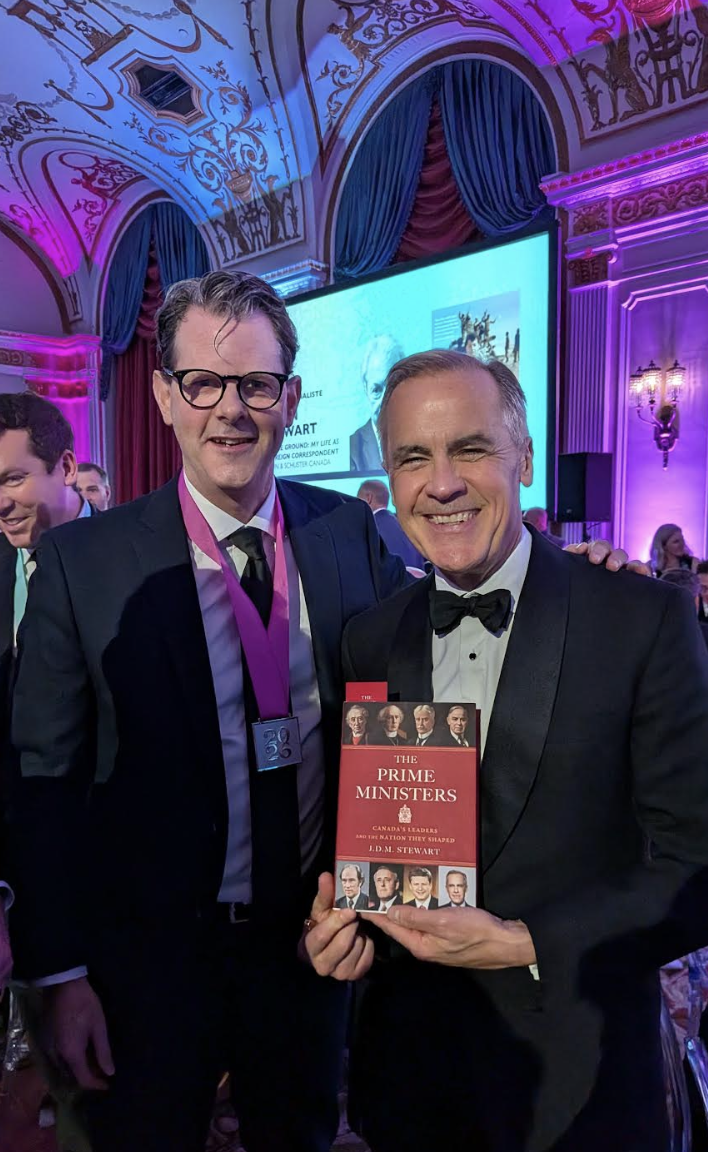
With Mark Carney and my latest book, ‘The Prime Ministers’, at the
2026 Politics & The Pen dinner in Ottawa
These days, I spend more time as a student of history, in keeping with my research as a prime ministerial historian and writer — a second vocation that has allowed me to engage with the Canadian identity through its most prominent leaders and the characteristics that have informed that leadership.
On the question of where we are today, I close with a quotation that combines my love of Canadian history, my interest in prime ministers, and a message from the past to a fraught and complicated present.
No former student of mine will be surprised that it comes from Sir Wilfrid Laurier.
One of Laurier’s gifts was to tell the growing country how much he loved it. When he travelled to Western Canada by rail in 1910, he stood in front of a crowd in Medicine Hat, Alberta: “I left home a Canadian to the core,” he told them. But after imbibing the air and spirit of the West, “I return ten times more Canadian.”
Laurier, who served as prime minister from 1896-1911, always appealed to the better angels of Canadians. My favourite quotation of his, which I cited every year, most years more than once, was, “Canada has been the inspiration of my life.”
It has also been the inspiration of mine, and of the great gift of being able to share it with new generations.
J.D.M. Stewart is a historian, author, and former teacher. He taught high school history for 30 years, including 22 at Bishop Strachan School in Toronto. His latest book is ‘The Prime Ministers: Canada’s Leaders and the Nation They Shaped’.