
On Being Canadian: Speaking Truth to Power. Fearlessly.
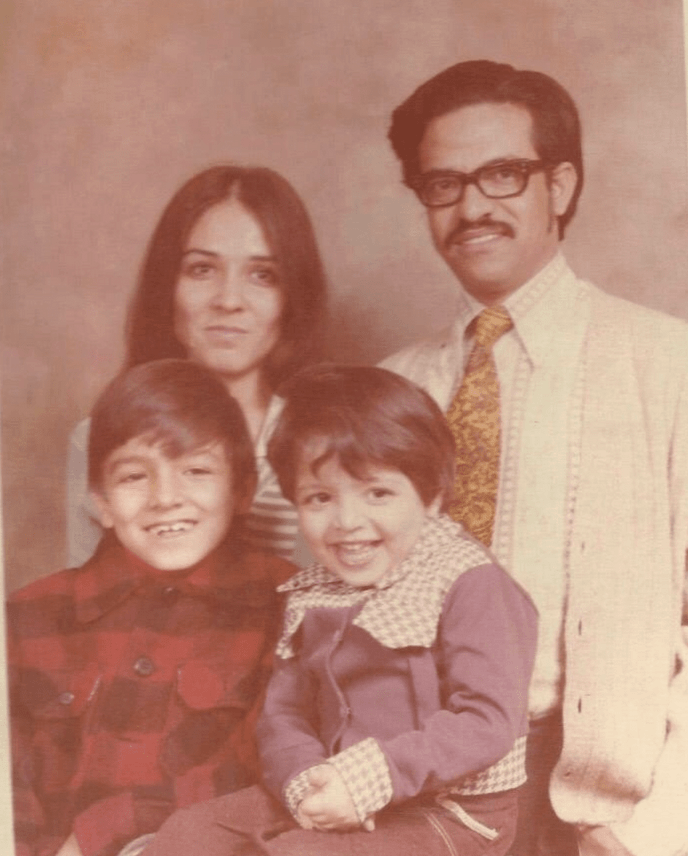
 Former journalist Syed Hyder with son Sheroo, wife Amina and son Goldy/Courtesy Goldy Hyder
By Goldy Hyder
July 23, 2025
Some readers will know my family came to Canada from India more than 50 years ago, but fewer know why. It’s an important story, not least because it defines what I think it means to be Canadian.
To me, being Canadian means speaking truth to power.
Back in India, my father was a journalist. It was a politically contentious time, and he felt it was his responsibility as a reporter to tell the truth even if it upset powerful people. He did so, despite warnings, without fear or favour. Yet, it wasn’t without consequences.
One day, when I was still a toddler, I was playing out in the front yard with my grandmother when someone threw a Molotov cocktail at our house. It wasn’t a random attack. My father had turned down inducements, brushed off threats, but this was a turning point.
My grandmother told my father that he had a choice to make; he could stay in India and bow to those who were pressuring him or stay true to his principles, keep his family safe, and pursue a life overseas. This wasn’t a hard choice for my parents, even though moving would prove difficult. In 1974, we moved to Calgary, where my parents, who arrived here with $28, built a successful insurance agency.
There were several reasons why my parents chose Canada. An aunt had moved here just a few months earlier, but the most important was we’d be protected. Canada was known the world over as a safe haven for those who were fleeing political persecution.
I was playing out in the front yard with my grandmother when someone threw a Molotov cocktail at our house. My father had turned down inducements, brushed off threats, but this was a turning point.
My brother and I were raised knowing we’d come to Canada so we could speak truth to, and about, those in power. It’s our right and responsibility as citizens because the central tenet of living in a democracy is that one must not fear retribution from government.
Over the course of my career, I’ve had the opportunity to test that proposition more than a few times. I came to Ottawa to work for the leader of a political party in opposition, the Right Honourable Joe Clark, who fearlessly held the government to account.
For years after leaving Parliament Hill, I would appear on television as a freelance political commentator and would often have to challenge or criticize the federal government of the day – irrespective of whether that government was Liberal or Conservative.
Even now, in my current non-partisan role, there are situations where I have to speak out against government policy on behalf of the Business Council of Canada’s members and the workers they employ. I’ve never once been worried that I’m putting my family at risk.
Sure, there’ve been times when an individual in a position of authority or influence has suggested half-ominously that my criticism “didn’t win me any friends”. Once or twice, someone has hinted that they wouldn’t answer the phone if I called.
In those cases, my reaction wasn’t to back down or tone down my public comments. Instead, I took comfort in the conviction that anyone who acted this way wouldn’t last long in Canadian politics or business. Thus far, that’s proven to be truer than not.
None of this is to suggest that being Canadian means we’re entitled by some unlimited right to make up baseless criticisms of someone just because they are in power. An essential element of speaking truth to power is you need to speak the truth.
To that end, I often paraphrase the late U.S. Senator Daniel Patrick Moynihan: Everyone is entitled to their own opinion, but not to their own facts. Again, speaking truth to power is both a right and a responsibility. The responsibility is to get the facts right.
Coincidentally, there’s another Moynihan quote that reflects my view on this subject. It’s ‘coincidental’ because he wrote it in 1975 shortly after he left India, where he’d been U.S. ambassador, months after my family left India for Canada.
Speaking then of his own country, Moynihan said the time had come for “the American spokesman…to be feared in international forums for the truths he might tell.” President Ford liked it so much he made Moynihan ambassador to the United Nations.
I have to speak out against government policy on behalf of the Business Council of Canada’s members and the workers they employ. I’ve never once been worried that I’m putting my family at risk.
While I don’t think Canadians should aspire to be feared, we could aim to be recognized and respected for the truths we tell – whether to each other or those outside our borders. At this inflection point in history, Canada can again be a safe haven for truth.
Especially now, beyond the imperative to speak truth to power, we must speak hard truths. That is to say, speaking honestly and candidly about the uncomfortable realities we must face and the unpleasant choices we must make as the world around us changes.
These are unprecedented times, where longstanding verities no longer offer us a guide for how to seize the opportunities before us. Now, more than ever, nobody has a monopoly on good ideas. Our leaders need to hear the collective wisdom of Canadians.
And, for this reason, speaking truth to power in Canada can and must be constructive. We should debate, discuss, and even disagree – that’s fine. The important thing is we talk things out. That’s when we’re at our best, when Canadians unite in purpose.
My parents brought us to Canada half a century ago because it was no longer safe for them to speak truth to power. As a parent, I refuse to let Canada become a place where speaking the truth is an existential threat. Speaking truth to power is being Canadian.
So, speak up Canada. Fearlessly.
Goldy Hyder is President and CEO of the Business Council of Canada.