
On Being Canadian, Through the Lens of Higher Education
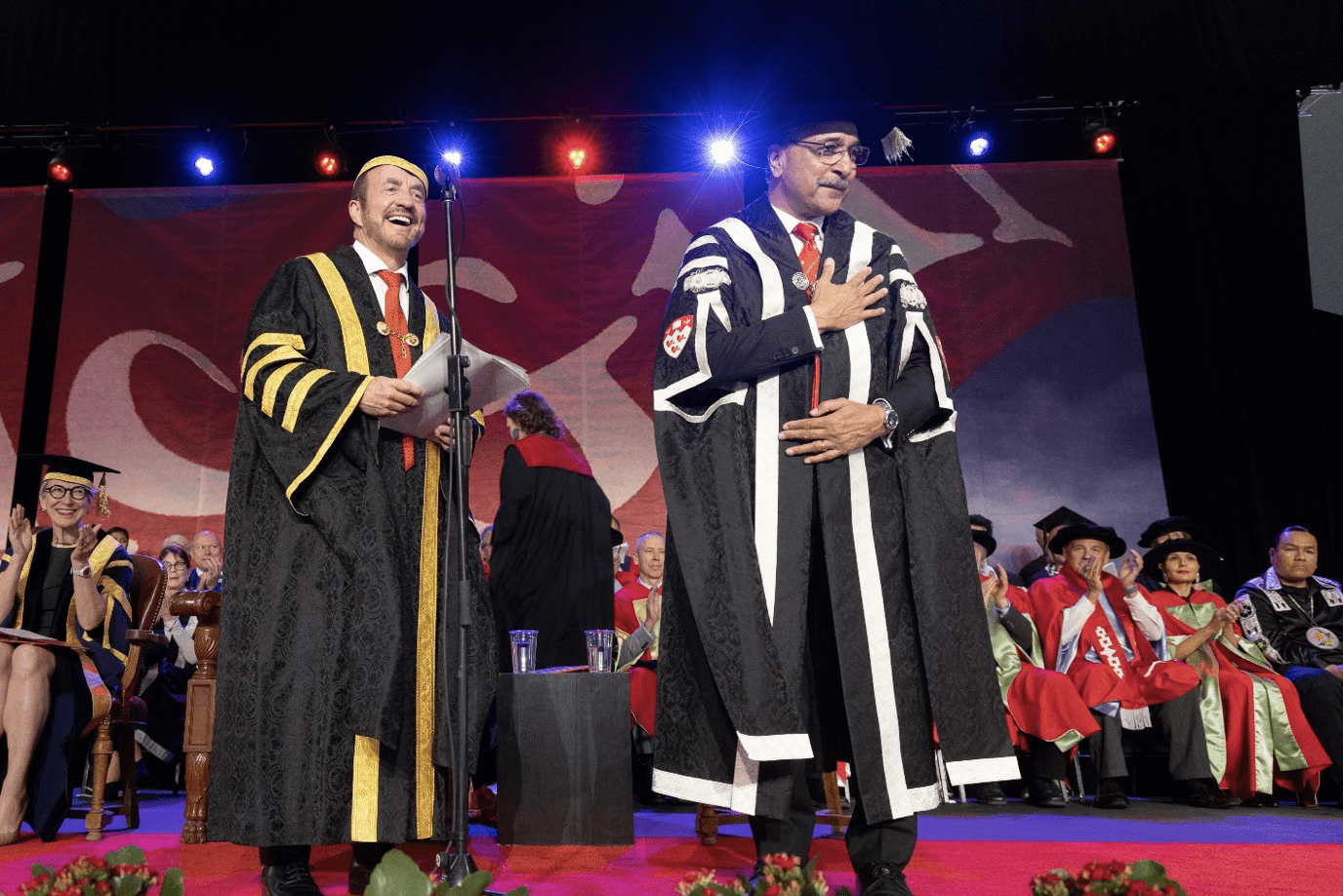 Inauguration of Deep Saini as McGill University’s 18th President and Vice-Chancellor, May 2023/McGill University
By Deep Saini
August 25, 2025
I arrived in Canada in 1982 as a postdoctoral fellow eager to pursue my research in plant biology at the University of Alberta. Like many international scholars, I entered the country on a temporary work permit. But, as the years passed, and I built a life and career here, the notion of Canadian citizenship became a subject for serious consideration.
For me and my wife, Rani, becoming Canadian was not merely a transaction of practicality, employment, or economics. It was a deeply emotional commitment to a country we would call “ours.” And because India does not permit dual citizenship, it also meant relinquishing our Indian passports, further adding to the complexity and weight of that choice.
To guide us in making this decision, we gave ourselves a kind of litmus test: we asked, “If Canada and India were ever at odds, where would our loyalties lie? Which side would we stand up for and defend?” We had resolved that we would move forward with citizenship only if our answer to that question was “Canada.”
Well, we applied for Canadian citizenship on the day we got our answer with clarity and conviction, nearly 40 years ago. Today, that same personal litmus test feels newly relevant.
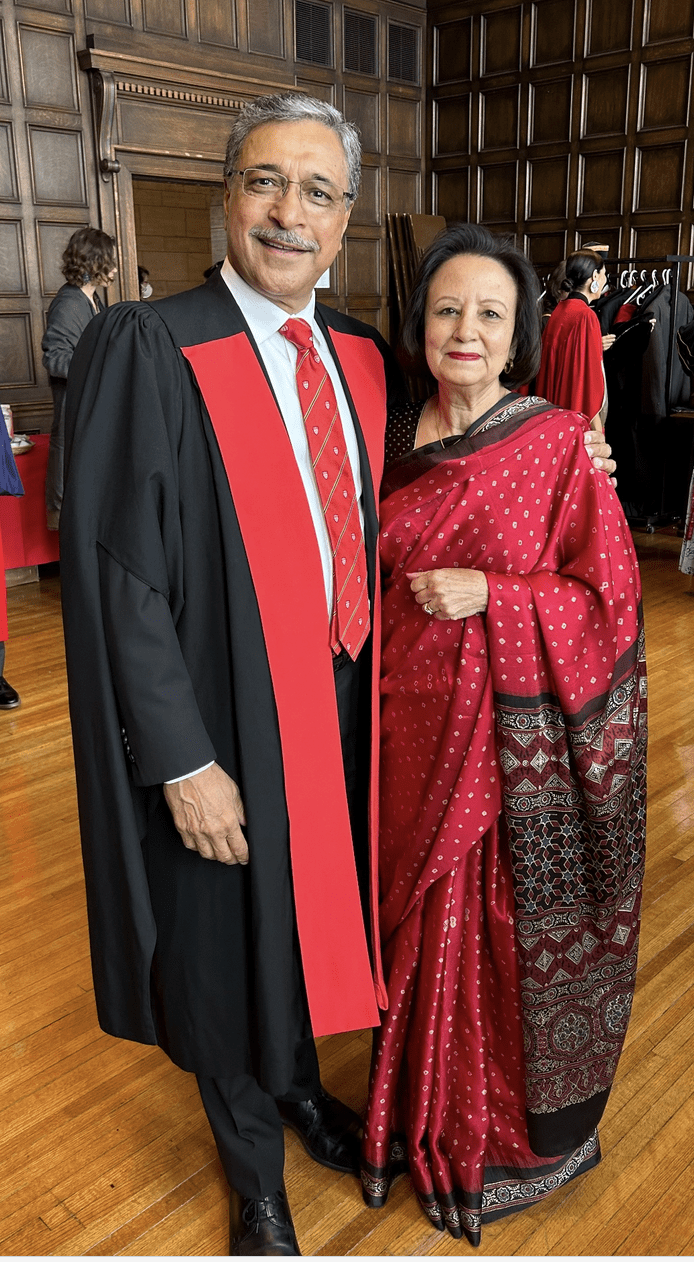
With wife, Rani, May 2023/McGill University
As Canada faces a trade dispute with the United States and pressure to assert itself, independently and confidently, on an increasingly competitive global stage, many Canadians are feeling a renewed sense of duty to stand up for their country and its future
Looking back on my own journey, I believe one of the most important levers Canada has to strengthen its future is its institutions of higher education.
I say this not just because I currently head McGill University, but because of the journey I’ve taken — a variation on those so many Canadians have taken — to get to where I am.
If you trace the arc of my life and career, one theme stands above all others: the transformative power of education—not only to shape an individual life, but to alter the trajectory of entire generations and, by extension, nations. For me, that story begins with my father, Chanan Singh Saini.
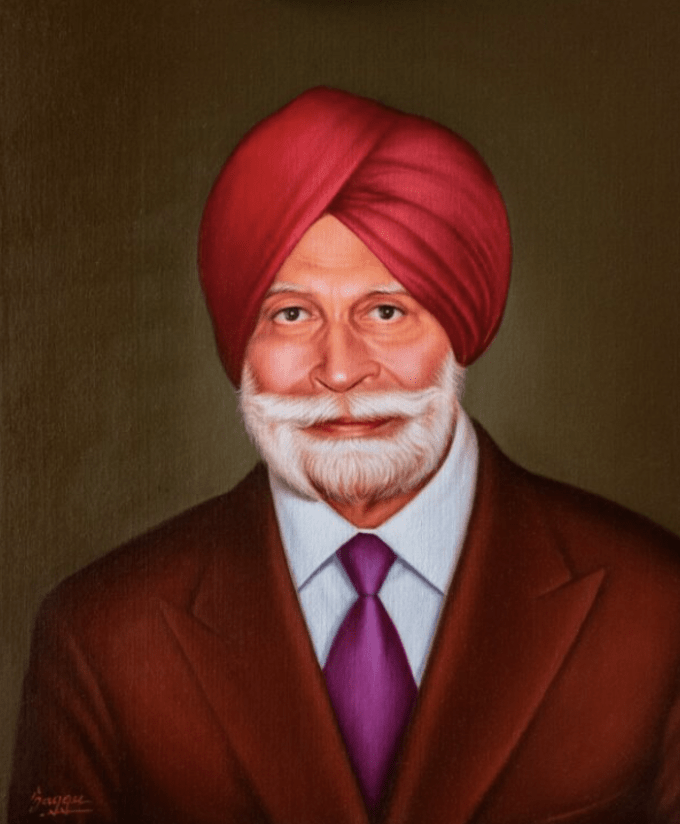
Portrait of Chanan Singh Saini
My father grew up in the 1920s in Punjab, India, as the youngest of five children in a subsistence farming family. Schooling was never part of the plan—instead, every pair of hands was needed in the fields to put food on the table.
One day, while running an errand in their village, he stumbled upon a one-room school in a temple. The teacher called him over, offered him candy and an alphabet book, and welcomed him in. What could have been a single school day became a generational turning point.
When my grandfather opposed the idea of Chanan attending school, the teacher visited the family, determined to bring him back. He convinced my grandfather to let my father attend, even offering to pay the tuition costs himself. Against all odds, my father completed high school, later earning the equivalent of a forestry degree. He retired as a government administrator.
Most importantly, he instilled in his four sons the value of education—a belief that has guided me from my early studies in plant biology to my work as a professor, researcher, and university leader.
Like a second, intangible passport, education opened opportunities for me across continents that my ancestors could scarcely have imagined: it allowed me to live in four of Canada’s provinces and work at six of its leading universities; it gave me the opportunity to learn and work in French, my fifth language; and to meet and collaborate with brilliant scholars, many of whom remain close colleagues and friends to this day. These experiences imparted a profound understanding of Canada and its place in the world, uniquely fashioned through the lens of our very accessible higher education system—a point of distinction both nationally and internationally.
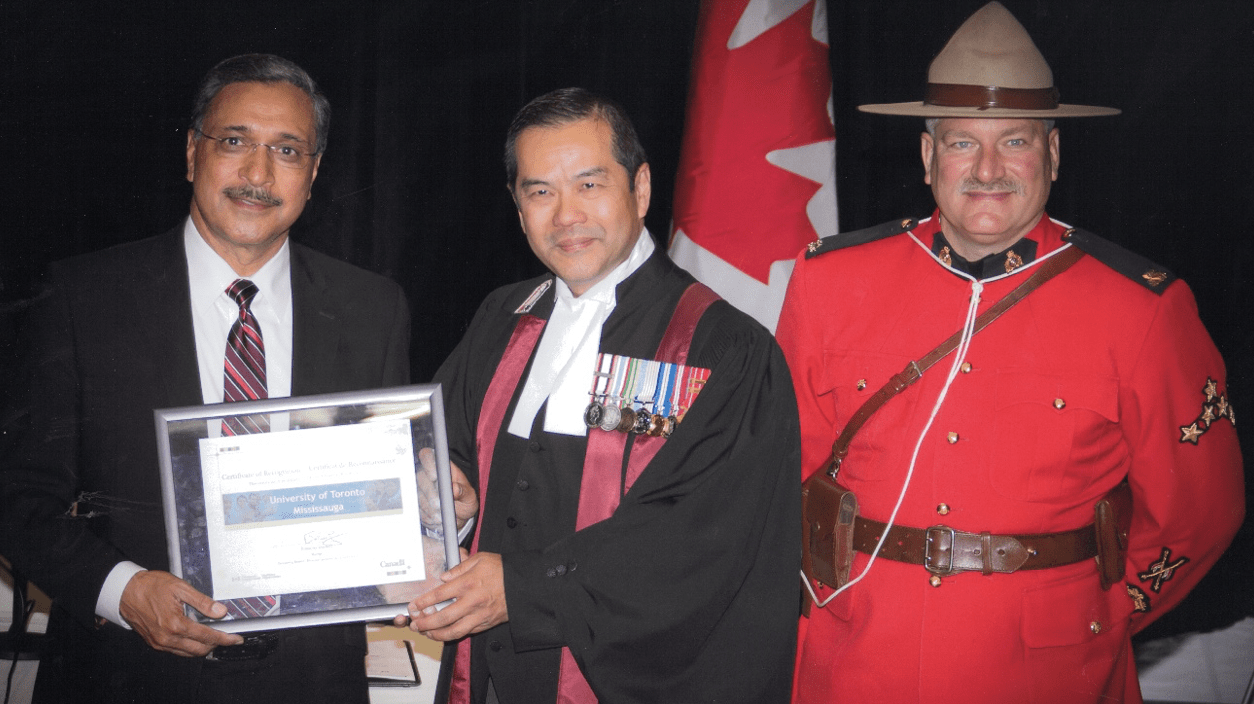 Accepting a certificate of recognition on behalf of University of Toronto Mississauga for hosting a Canadian citizenship ceremony in May, 2015/Courtesy
Every year, I am reminded vividly of education’s transformative power. I see it in the students who arrive on campus from across Canada and around the world, bringing with them boundless ambition and potential. Over the course of their studies, they develop the skills, knowledge, and confidence to turn those ambitions into reality. By the time they cross the stage at convocation, they are prepared not only to enter the workforce, but also to contribute actively as engaged citizens, as entrepreneurs who create new enterprises and employment, and as the leaders of tomorrow.
I witness the same transformative power in the impact of university research and knowledge mobilization—from breakthroughs in artificial intelligence, health care, and sustainability, to discourses that meaningfully shape public policy and strengthen our democratic institutions. These contributions are not abstract; they create important, tangible impacts that ripple across communities, economies, and generations.
At this pivotal moment for Canada, I feel a renewed sense of duty to the country I chose with great conviction over four decades ago. Working with colleagues in Canada’s higher education sector, we have an opportunity—and, indeed, a responsibility—to shape a more competitive, prosperous, and inclusive Canada.
Together with our partners in government, industry, and across communities, we can define Canada’s future on our own terms: a future characterized by bold initiatives and innovation, a robust and growing economy, strong and vibrant democratic institutions, and a skilled, adaptable workforce prepared to meet the challenges ahead.
In a time of unprecedented change, we have the power to ensure that Canada remains a country of opportunity for all—just as it was for me—for generations to come.
Deep Saini is the President and Vice-Chancellor of McGill University.