
Our Policy Special Series: ‘On Being Canadian’
 Shutterstock
As questions of Canadian identity and sovereignty have taken on existential interest recently, we’ve invited Policy contributors to share their notion of what it means to be Canadian and the experiences that have informed that definition. Welcome to our Policy Special Series: On Being Canadian. With many thanks to all the writers who’ve generously contributed.
We open with Policy columnist and McGill Institute for the Study of Canada Director Daniel Béland, who looks at the recent pressures being brought to bear on the Canadian identity, both internal and external. “National identity is a complex alchemy of history, geography, political institutions, policies, and principles,” writes Béland. “And there is much, much more than an ‘artificial line’ that delineates Canada’s.” Here’s Daniel Béland with A Milestone moment for the Canadian Identity.
Our Canada and the World columnist, Jeremy Kinsman, has served as Canada’s ambassador to the European Union, to Russia, to Italy and as high commissioner to the UK. In On Being Canadian: Who are We Now?, Kinsman intertwines Canadian identity and Canadian foreign policy over the past half century. “An existential threat,” Kinsman writes, “can provide the certainty of knowing who we are not.”
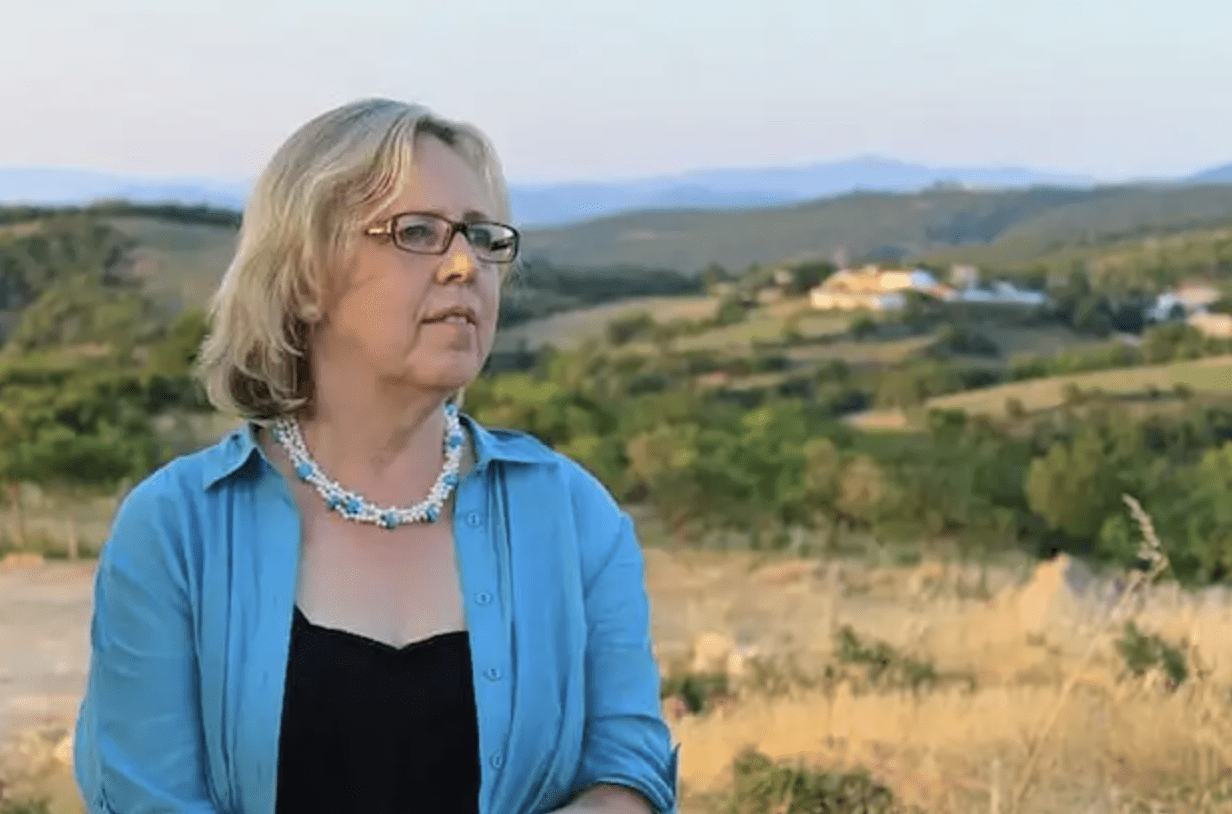 Green Party Leader Elizabeth May/Green Party of Canada
As a Canadian who started out American before her parents moved to Cape Breton, longtime Policy contributing writer and Green Party of Canada Leader Elizabeth May has a special take on being Canadian. “The notion that Canada is different — that it is more than an extension of the United States,” writes May, “isn’t an abstract one to me. It informed the event that made this country my home.” Here’s Elizabeth May with On Being Canadian: With Elbows Up, and Arms Outstretched.
Former career diplomat and Policy Contributing Writer Sen. Peter Boehm served in El Salvador in the days when it was among the most perilous hardship posts on the Canadian foreign service map. In his piece, ‘Soy un Diplomatico Canadiense’: When Being Canadian Can Save Your Life, Sen. Boehm describes a memorable encounter with a squad of guerrillas that could have gone another way. “This assumption of good will that has greeted me throughout my diplomatic career from the White House to the Bundestag to the gunpoint checkpoints of El Salvador,” writes Boehm, “may be the most potent element of Canadian soft power we have.”
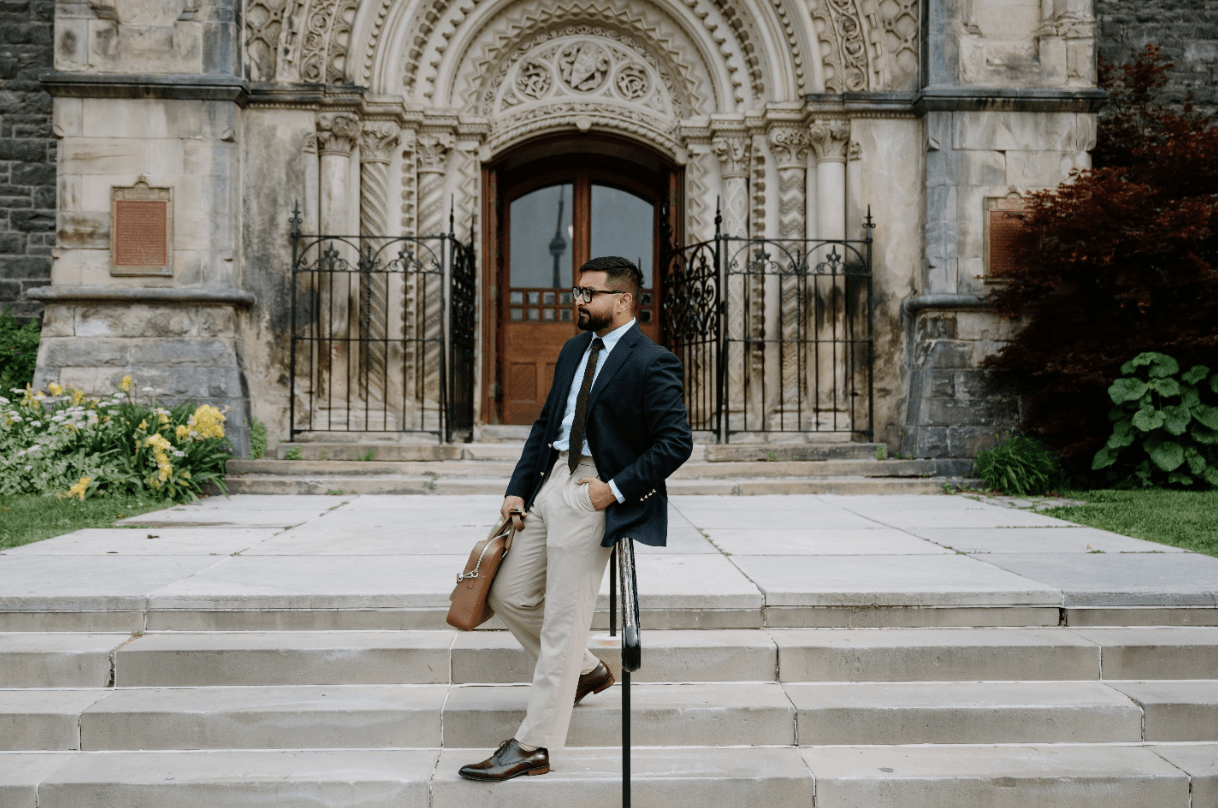 Anil Wasif at the University of Toronto/Courtesy Anil Wasif
Anil Wasif first came to Policy four years ago through our Emerging Voices section, which spotlights policy analysis and opinion by rising-star graduate students. Since he left McGill’s Max Bell School with his MPP, Anil has filed some of the best Policy analysis we’ve published. For this series, he has filed a gem of a piece. “Repeatedly challenge our values, our relationships, or our identity, and you’ll find that a nation that perfects the art of a polite queue can also be fiercely protective of its place,” Anil writes of Canada. “It’s a different kind of iron resolve.” Here’s Anil Wasif with On Being Canadian: Postcards from the Annex.
From longtime Policy contributing writer, former Maclean’s editor, and current Historica Canada President Anthony Wilson-Smith, we have a piece on how his role producing 13 years’ worth of the iconic Heritage Minutes has informed Tony’s sense of what it means to be Canadian. “My favourite line about our country comes from former Liberal Leader Stéphane Dion,” writes Wilson-Smith: ‘Canada is a country that works better in practice than in theory.’ Politics aside, we constantly re-invent ourselves as a country.” Here’s Tony Wilson-Smith with On Being Canadian, Minute by Minute.
Former career diplomat, Policy contributing writer, prolific book reviewer and Global Exchange podcast host Colin Robertson looks at the ways in which Canadians are different from our neighbours. “There has always been more division and ambiguity about our shared history and less exuberance to our nationalism,” writes Robertson. “It was not as if our ‘founding nations’ set out to create a Canada in opposition to a colonial status quo.” Here’s Colin Robertson with On Being Canadian: Why We’re Different.
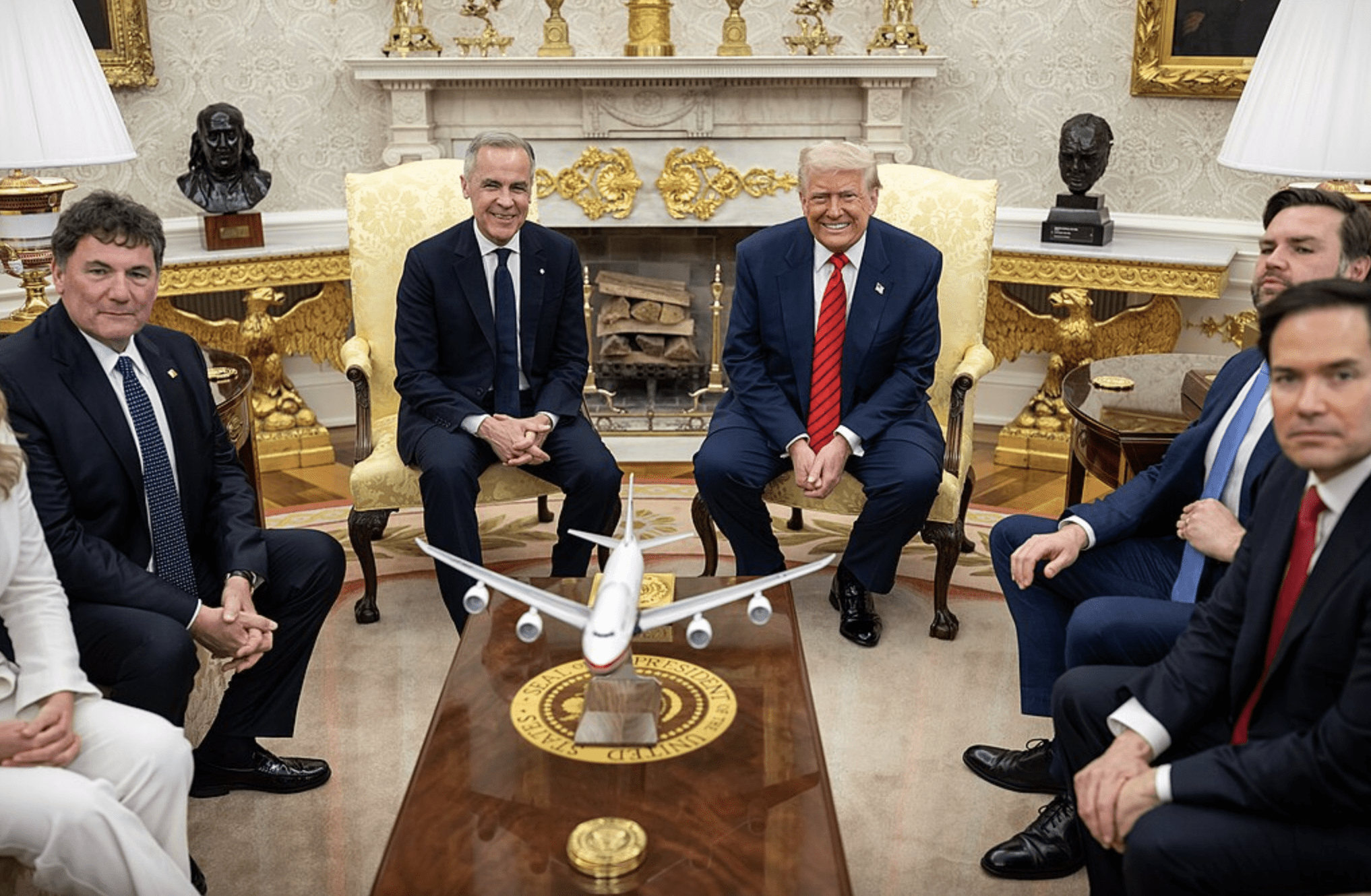 On being Canadian when being American isn’t what it used to be/WH
From Policy Editor Lisa Van Dusen, a look at being Canadian amid the unprecedented bilateral dynamic between Canada and the United States. “In Canada’s current experience of a boundary-challenged American president, the drama is, alas, more Mark Burnett than Richard Curtis,” writes Van Dusen. “But the geopolitical stakes are quite real.” Here’s Lisa Van Dusen with Being Canadian in a Time of Bilateral Conflict.
Longtime Policy Contributing Writer Robin Sears has spent much of his career abroad in, among other roles, as an advisor to German Chancellor Willy Brandt, a diplomat in Tokyo, and a management consultant in Hong Kong. “My father, the late Val Sears, served when I was a kid as a foreign correspondent for The Toronto Star,” writes Sears. “We would listen to him, rapt, during brief, scratchy phone calls from places we could not find on a map: Biafra, Luanda, Vladivostok. It lit a fire in me to see those strange, distant worlds.” Here’s Robin Sears with On Being Canadian: The Perspective of Distance.
Though many of our readers will know Policy Contributing Writer Graham Fraser from his 10-year service as Canada’s Commissioner of Official Languages, he spent much of his career as a respected political journalist and author, including the four years Graham spent as The Globe and Mail‘s Washington bureau chief. “Rather than making me feel more at home,” writes Graham of his time in DC, “my years in Washington only made me feel more like a foreigner in America.” Here’s Graham Fraser with On Being Canadian: Seeing Canada from America.
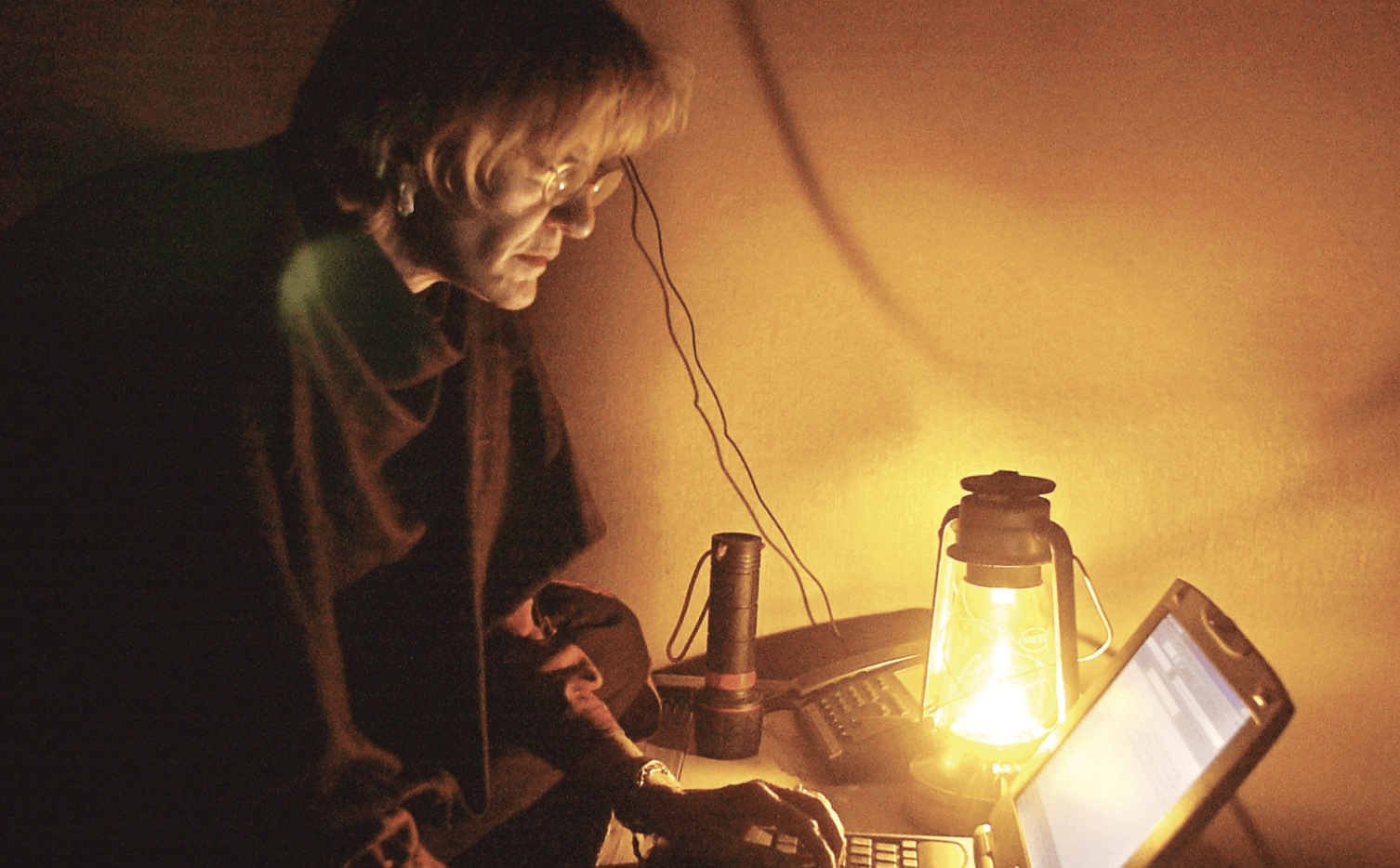 Kathy Gannon in the fall of 2001, during the anti-Taliban coalition bombing of Kabul/AP
From the legendary, Timmins, Ontario-born Associated Press correspondent and Policy contributor Kathy Gannon, a wonderful piece on what being Canadian has meant to her, from Kathy’s early days interviewing John Diefenbaker and Tommy Douglas to an encounter with Osama bin Laden’s bodyguard during her tenure as the pre-eminent correspondent on Pakistan and Afghanistan. “Being Canadian in war zones has always meant more to me than just not being American, although that has served me well on more than one occasion,” writes Kathy. Here’s Kathy Gannon with On Being Canadian: From Timmins to Afghanistan, More than Not Being American.
Among the tests of character that have shaped the Canadian identity was the country’s contribution to World War II, notably to D-Day. “Our soldiers, nurses, airmen, sailors, and those who supported the war effort at home — they may not have known it at the time, but they embodied what it means to be Canadian,” writes Christopher LaBossiere, President of the Juno Beach Centre in Courseulles-sur-Mer, Normandy. “They came from every part of Canada, every walk of life, united by a sense of something larger than themselves: duty to the ideals our country stood for and to the future they hoped to secure for generations to come.” Here’s Chris LaBossiere with On Being Canadian: An Identity Forged in Sacrifice and Service.
 Former journalist Syed Hyder with son Sheroo, wife Amina and son Goldy/Courtesy
In 1974, journalist Syed Hyder arrived in Calgary with his wife, two sons and $28, having fled India because his journalism had made him a target of the powerful people he covered. Fifty years later, his son, Goldy, is president of the Business Council of Canada. “My parents brought us to Canada half a century ago because it was no longer safe for them to speak truth to power,” writes Goldy Hyder. “As a parent, I refuse to let Canada become a place where speaking the truth is an existential threat. Speaking truth to power is being Canadian.” Here’s Goldy Hyder with On Being Canadian: Speaking Truth to Power. Fearlessly.
For Forest Products Association of Canada President Derek Nighbor, an appreciation for the role of trees and forests in the life of Canada is more than vocational. Growing up in the lumber town of Pembroke, Ontario, writes Nighbor, “The lessons of living in a community where the benefits of active forest management were clearly understood and knowing a forestry job was a well-paying, family-supporting job has stayed with me throughout my life.” Here’s Derek Nighbor with, On Being Canadian: Seeing the Forest.
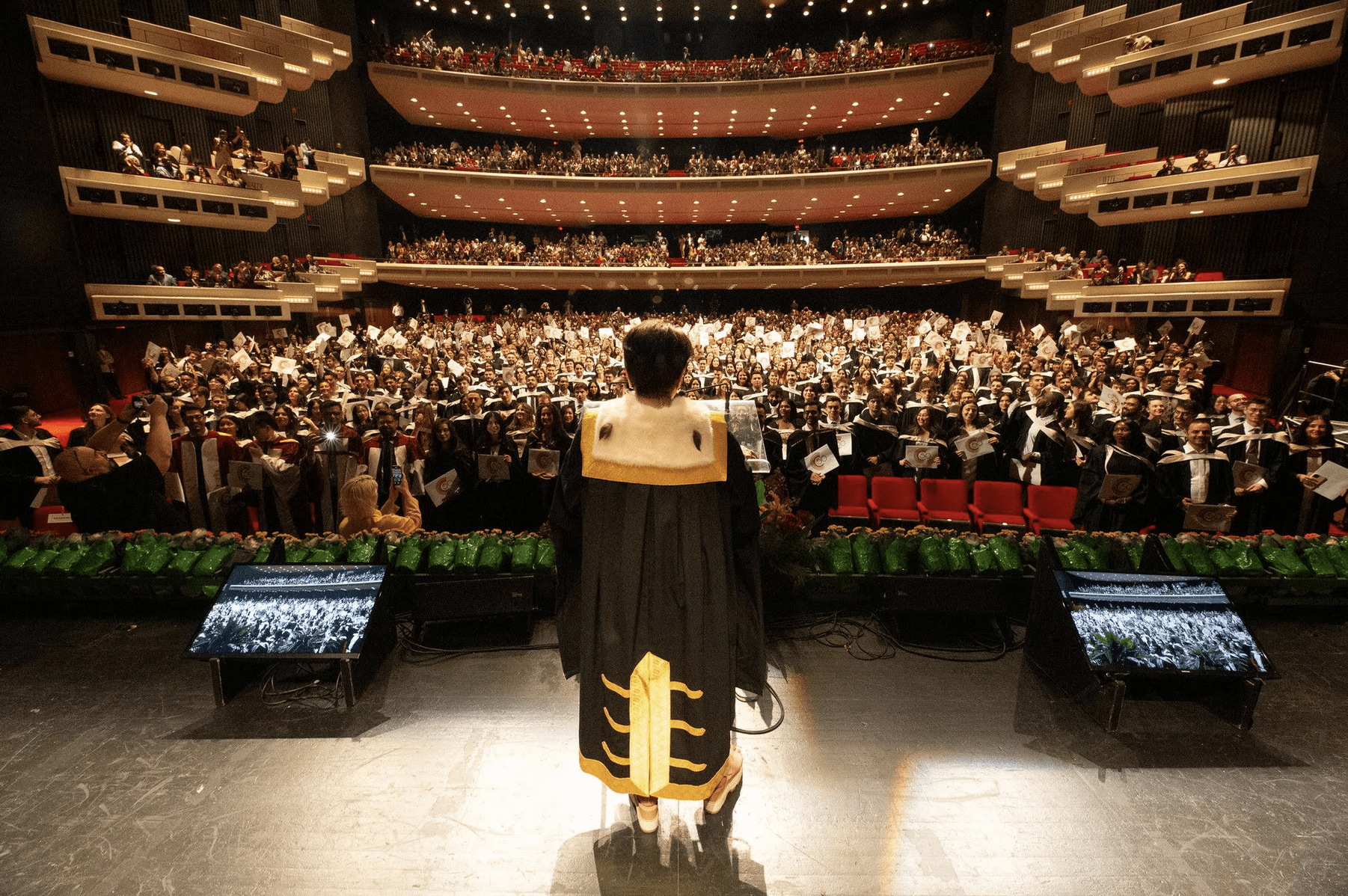 Concordia Chancellor Gina Cody at a spring 2025 convocation/Concordia University
Gina Parvaneh arrived in Montreal at 22, fleeing Iran’s political upheaval and seeking the freedom to “dream big”. In 1989, she became the first woman in Canada to earn a PhD in building engineering. Today, Gina Cody serves as chancellor of Concordia University, whose School of Engineering and Computer Science bears her name. “Mine was just one of many lives whose trajectory was forever altered by geopolitics and fate,” she writes. “As my own story demonstrates, when you help immigrants make a living, they become free to make a life.” Here’s Dr. Gina Cody with On Being Canadian: Paying Forward My Canadian Dream.

Instilling pride in the next generation
Amid the ongoing Middle East political and humanitarian nightmare unleashed by the Hamas massacres of October 7th, 2023, life has changed for Canada’s Jewish community. For Policy contributor Howard Fremeth, who left his role at the Business Council of Canada in the wake of the Hamas attacks to serve as VP Communications for the Centre for Israel and Jewish Affairs (CIJA), being Canadian has been different. “For Canadian Jews, as for Jews everywhere, everything changed on October 7, 2023,” writes Howard. Here’s Howard Fremeth with On Being Canadian in a Time of Normalized Antisemitism.
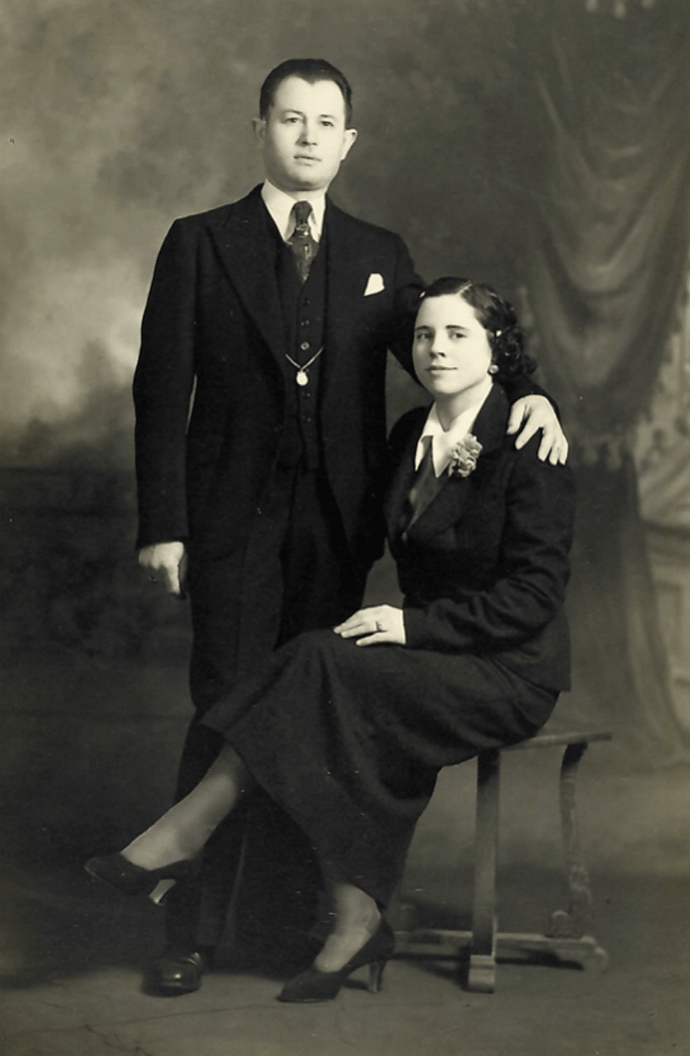
Cateno and Anni d’Aquino/Courtesy
Thomas d’Aquino is well known to our readers as founding CEO of the Business Council of Canada, bestselling memoirist, and longtime Policy contributing writer. Tom’s family history has inspired both his relationship with Canada and his wonderful piece on being Canadian. “The experience of my father, who fled fascism and dictatorship, has never left me,” writes Tom. “As I reflect on all of Canada’s strengths and advantages, I return over and over again to the huge gift that is Canadian democracy.” Here’s Tom d’Aquino with On Being Canadian: The Power of Democracy.
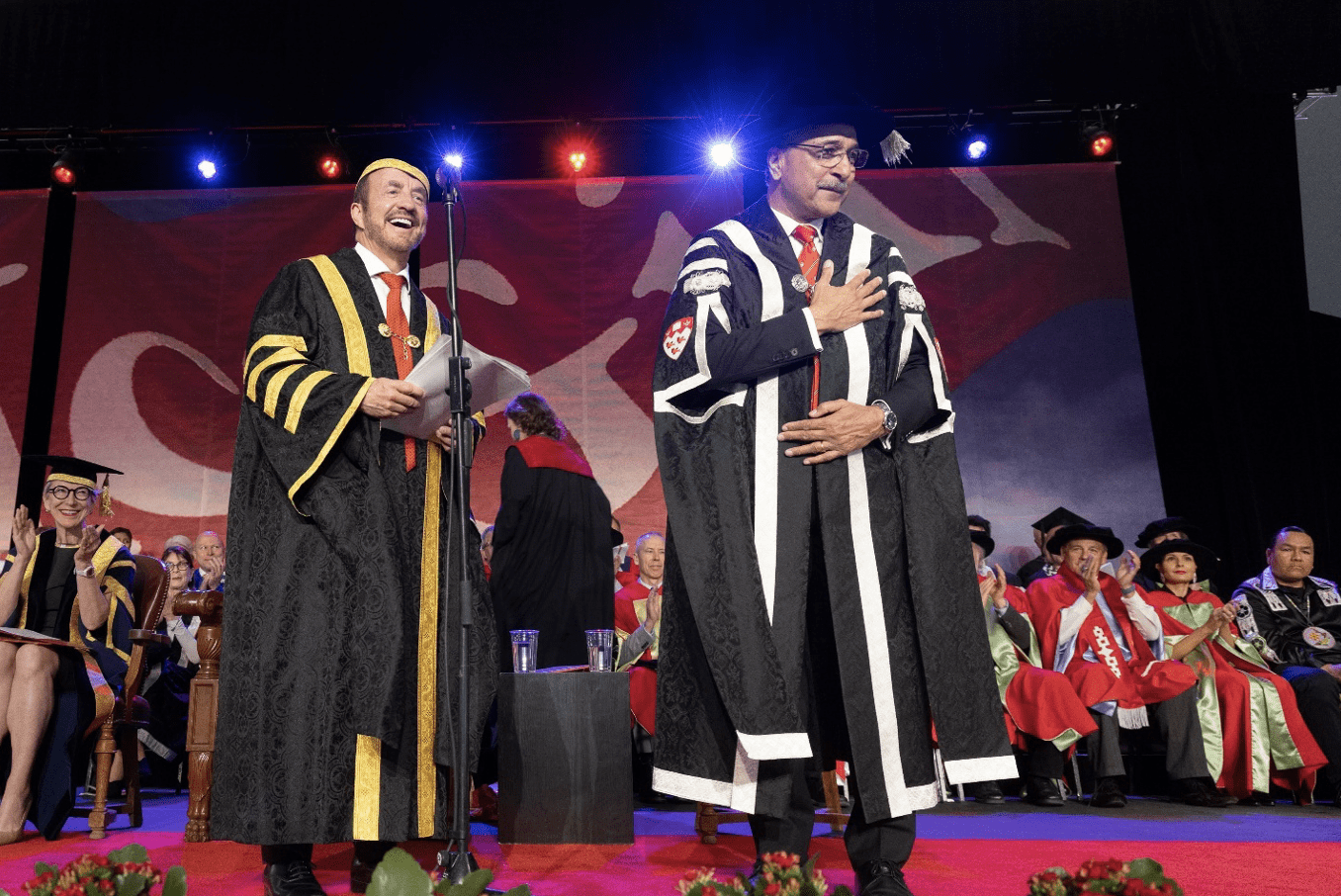 Inauguration of Deep Saini as McGill University’s 18th President and Vice-Chancellor, May 2023/McGill University
As a leader in Canada’s post-secondary education system, McGill President and Vice-Chancellor Deep Saini spends his days immersed in the nuts and bolts of running a university. But as the son of a father who had to fight to attend school in Punjab, Saini appreciates education on a whole other level. “Like a second, intangible passport,” he writes, “education opened opportunities for me across continents that my ancestors could scarcely have imagined.” Here’s Deep Saini with On Being Canadian, Through the Lens of Higher Education.
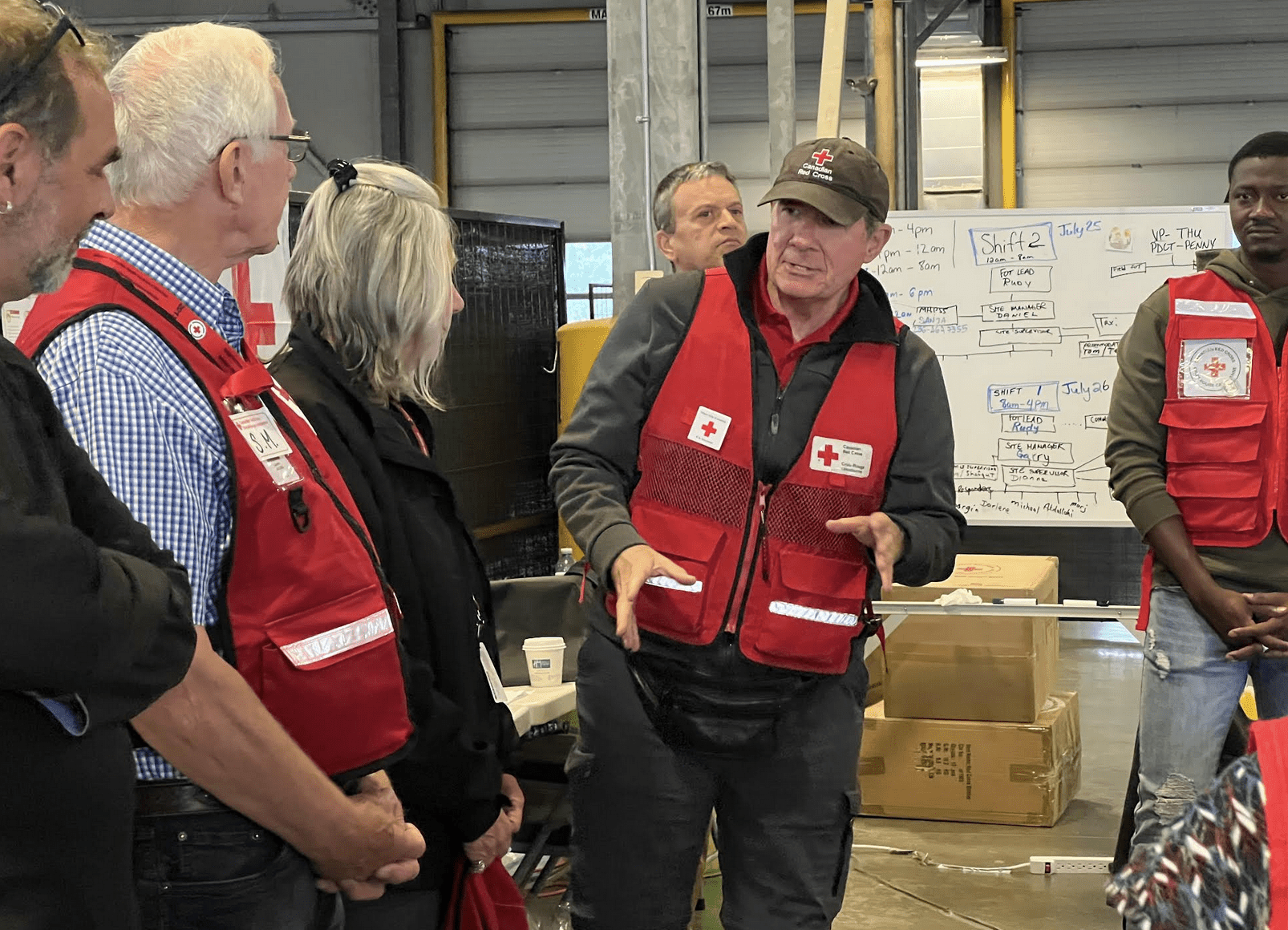 Guy Lepage in Edmonton, preparing to welcome evacuees from the 2024 Jasper wildfires/CRC
In August of 2005, journalist-turned Ontario-government policy advisor Guy Lepage took his first Red Cross deployment to assist Katrina survivors. Since then, he has served in more than 30 deployments from Haiti to Hungary, most recently helping victims of Canada’s wildfires. “What does Canada mean to me, as a Red Cross humanitarian worker wearing the iconic red vest?” writes Lepage. “At home and abroad, I believe what defines us is that in times of crisis, Canadians often think first about their neighbours before they think of themselves.” Here’s Guy Lepage with On Being Canadian: Bringing Out the Best in Our Worst Moments.
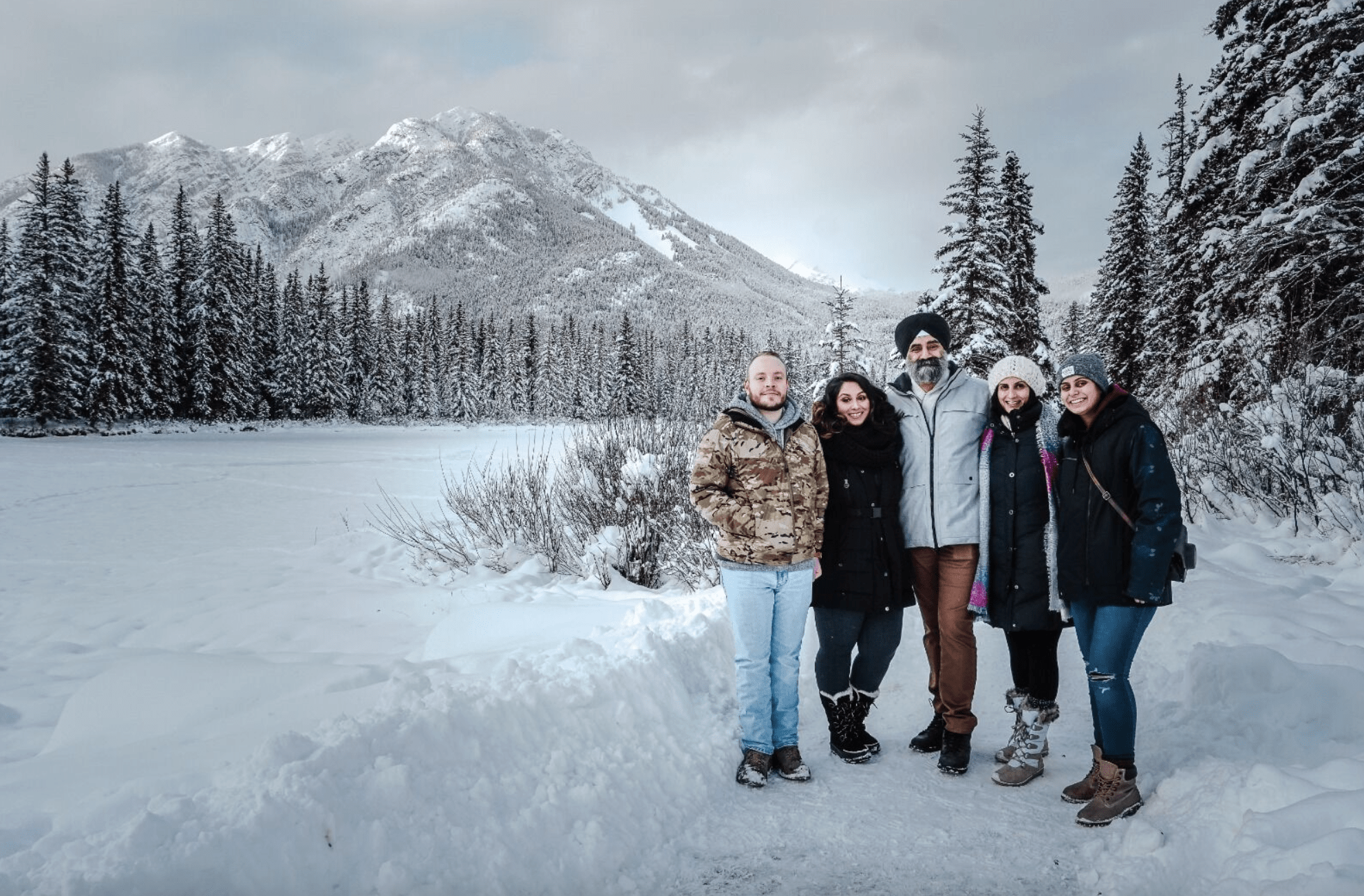 Sen. Baltej Dhillon (centre) with (L-R): Son-in-law Ryan Jorgensen, daughter Onkar, wife Suroj and daughter Rasna
For Baltej Singh Dhillon, the meaning of being Canadian begins with liberty; a theorem he proved when, in 1990, he won the fight to fulfill his dream of serving in the RCMP while wearing his turban on duty. “In Quesnel, British Columbia, my first posting, there were rumors that a bar went so far as to put up a $5000 bounty for anyone who could knock off my turban,” now-Senator Dhillon, recalls. “Yet I also saw another side of Canada. I saw allies, who stepped forward in solidarity. They understood from their own history that defending the rights of one group was essential to defending the rights of all.” Here’s Senator Baltej Singh Dhillon with, On Being Canadian: The Space We Make for Each Other.
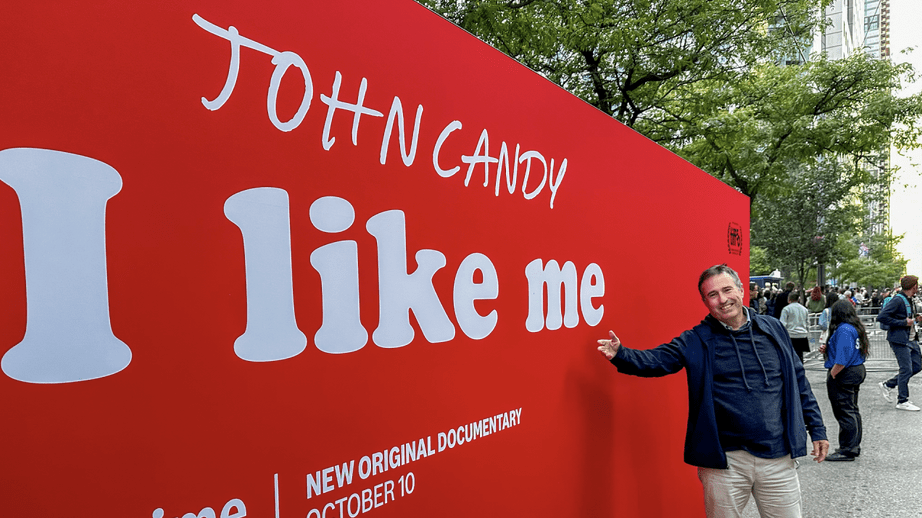 John Stackhouse, being Canadian at the TIFF premiere of ‘John Candy: I Like Me’/Courtesy
When RBC Senior Vice President John Stackhouse attended the TIFF 50 premiere of the documentary John Candy: I Like Me, the look back at the life of the beloved late comedian seemed about bigger things. “He mostly played passive, even submissive, characters — but never wavered from his core values,” writes Stackhouse, a former Globe and Mail editor, of Candy’s on-screen persona. “Those characters, like the star, were rooted in decency, humility and kindness. Sound like a country you know?” Here’s John Stackhouse with On Being Canadian: A Candygram for Canada at TIFF 50.
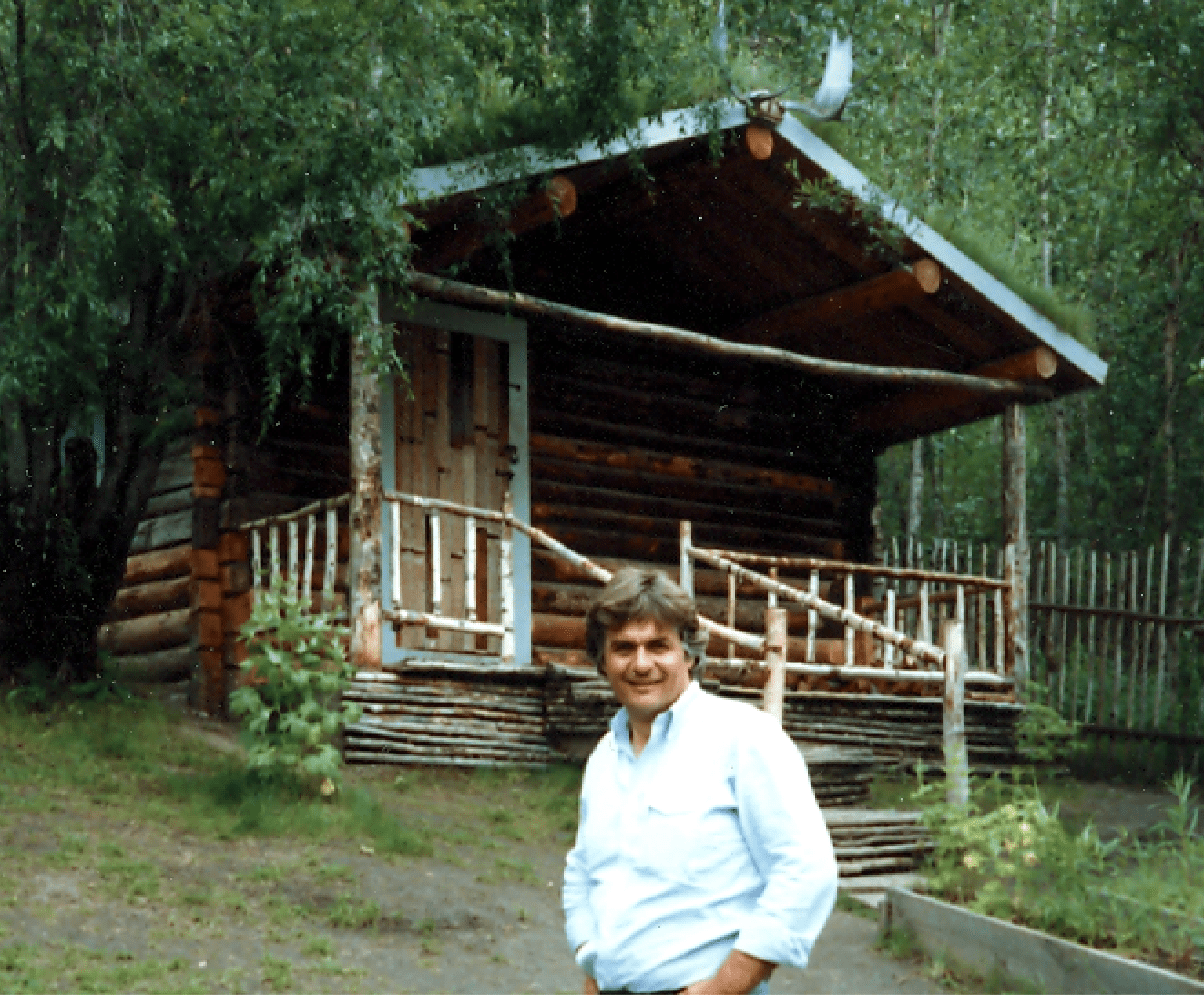 Viceregal Consort Whit Fraser outside Robert Service’s Yukon cabin/Courtesy
Many of our readers will remember Whit Fraser from his career as a CBC reporter covering national politics. But Fraser first made his name as a journalist specializing in Northern coverage, which is how he met his wife, Mary Simon, Canada’s first Indigenous Governor-General. “I am among the dwindling number of Canadians who heard the Toronto Maple Leafs win their last Stanley Cup in 1967, listening to a scratchy shortwave radio with a group of locals in the tumbledown Quonset hut that housed the Canadian Legion in Frobisher Bay,” writes Fraser in From North of North to Rideau Hall: A Canadian Journey. “Wearing heavy parkas and clustered in three small cheering sections — the English Leafs fans, the French and the Inuit united behind the Habs. The place was so damn cold, we kept the beer in the fridge to keep it from freezing.”
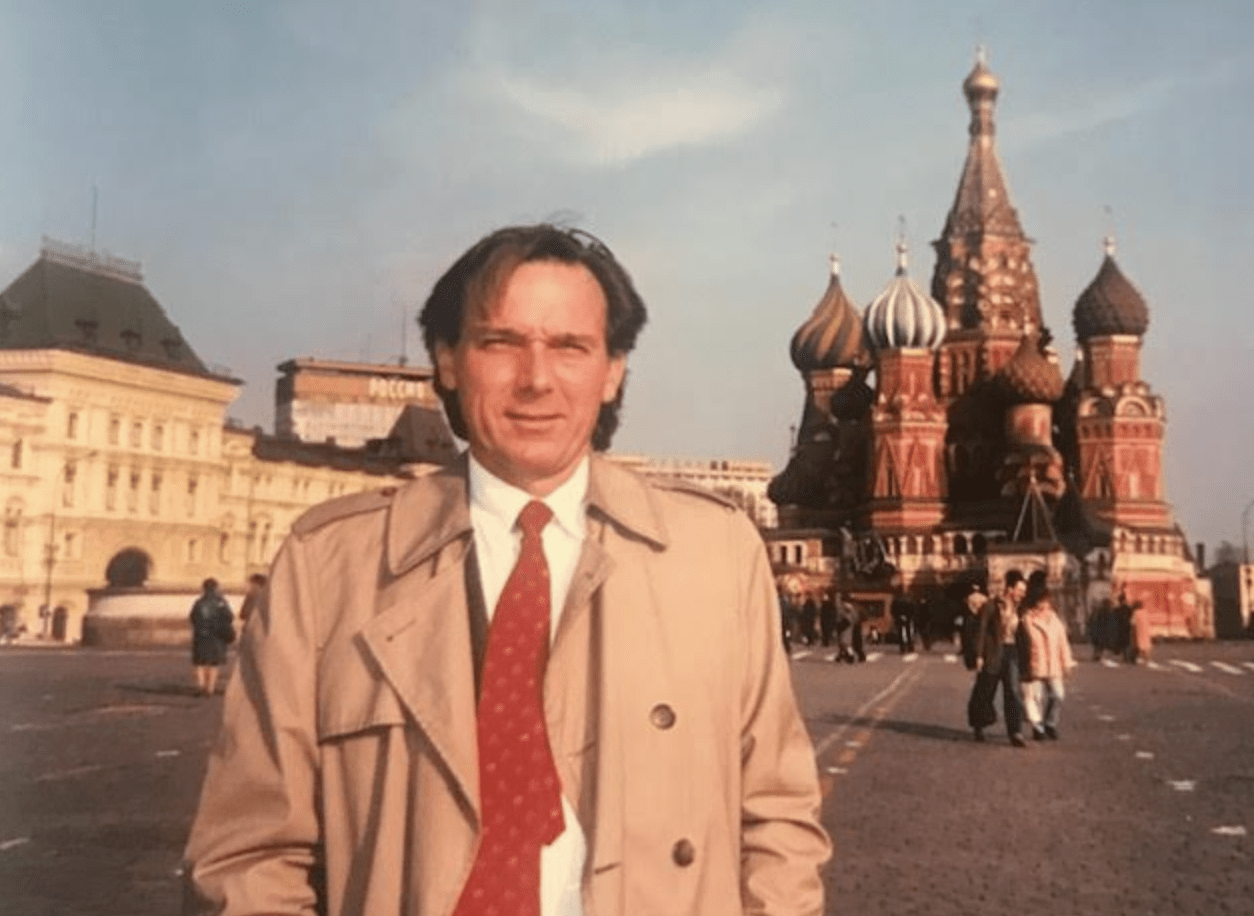 Peter Kent covering Russia for NBC News
For years, Canadians knew Peter Kent as a foreign correspondent and anchorman before he made the leap into elected politics. Kent was born in a Canadian Army hospital in Hampshire at the height of WWII, to a Canadian Army intelligence officer and an Army nursing sister, both from Alberta. “They married under an arch of fellow officers’ swords,” he writes, “and the reception at the Waldorf in London was interrupted by an air raid, so they spent their wedding night with 100 other people in the basement bomb shelter.” Peter went on to cover war stories from Vietnam to the Middle East. “I’m grateful to carry the passport of a country whose relationship to power,” he writes, “is best summed up as restraint by reflex and gallantry when required.” Here’s Peter Kent with, On Being Canadian, in War and Peace.
With heartfelt thanks to all the writers who’ve contributed to this series.
Visit us at Policy, where you’ll find our latest Policy Specials, Columns, Dispatches, Analysis, Book Reviews and Verbatim sections, plus The Week in Policy and our archived print issues.