
Preparing the Canadian Labour Market for AI
 Shutterstock
By Kevin Page and Djeima Ramos
April 14, 2026
Canada needs to make workforce upskilling a central pillar to the Pan-Canadian Artificial Intelligence (AI) Strategy. The global economy is entering an AI-accelerating phase. Countries that have relatively large knowledge economy sectors, like Canada, face higher exposure to AI-driven change.
Budget 2025 focused on AI infrastructure investments. Budget 2026 must expand the focus to AI workforce upskilling.
AI is a big deal for the global economy. Current investments in AI infrastructure vary in the $2.5 to $3 trillion (US) range. Current core AI market size is in the $350 to $650 billion (US) range including hardware, software, cloud infrastructure, robotics and services.
Estimates by the Vector Institute indicate that AI has contributed about $20 billion annually to the Canadian economy over the past five years. They estimate a 1.5% boost to the level of labour productivity by 2035.
Approximate estimates of AI annual capital investment in Canada are likely in the $3 to $5 billion range – federal ($300 to $500 million); provincial ($100 to $200 million); private venture capital ($1.5 to $3 billion); corporate research and development (+/- $1 billion). Expect these numbers to grow.
A study by Deloitte Canada’s AI Institute has highlighted that Canada has international street cred in AI – talent, publications, patents, and venture capital.
Economic policy makers are naturally focused on what AI might do for productivity – growth in output relative to inputs of labour and capital. Will it make us wealthier (i.e., our economies bigger)? If it does, then we will have new conversations about income and wealth distribution and investments in public goods.
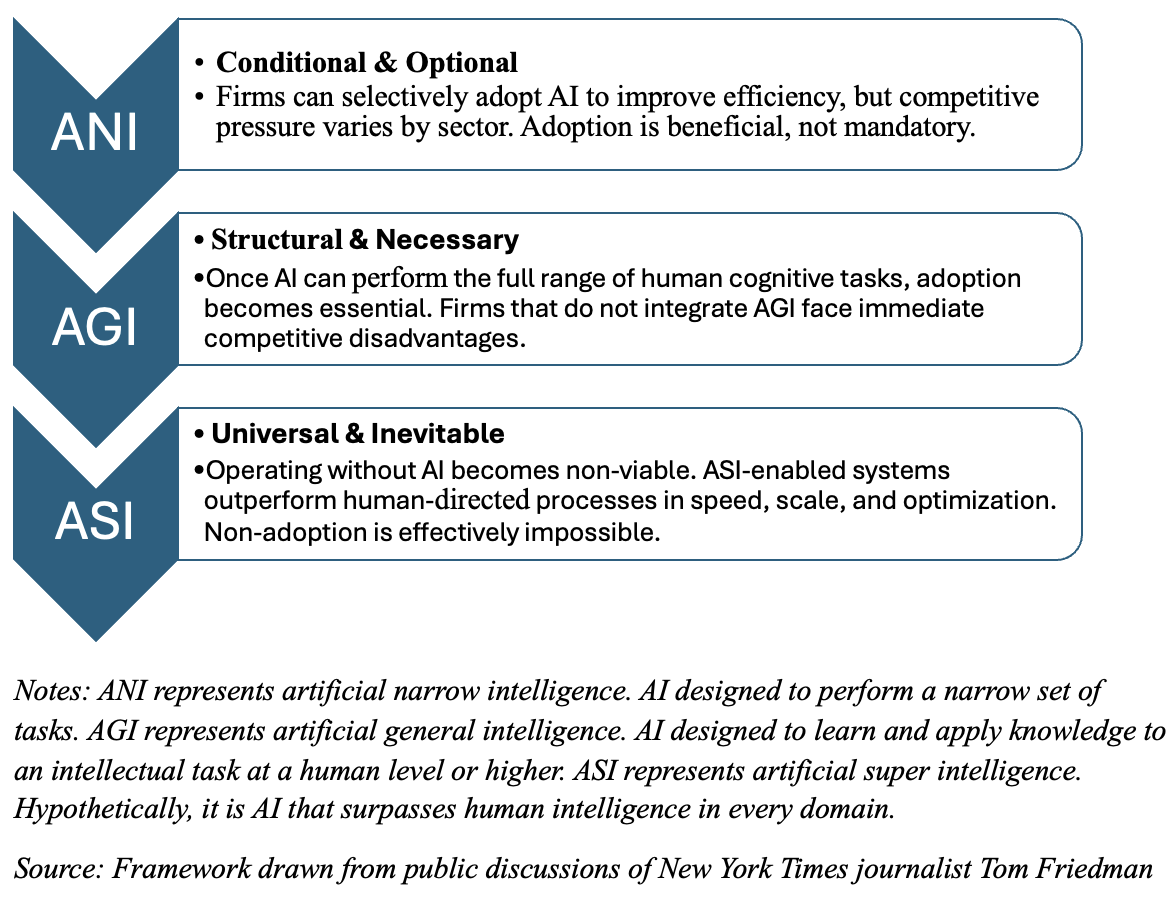
Economic policymakers must also focus on the inevitable disruption that will flow from implementation. To remain competitive, Canadian firms will need to capture AI productivity enhancements (Chart 1).
Chart 1: AI Adoption and Firm Competitiveness
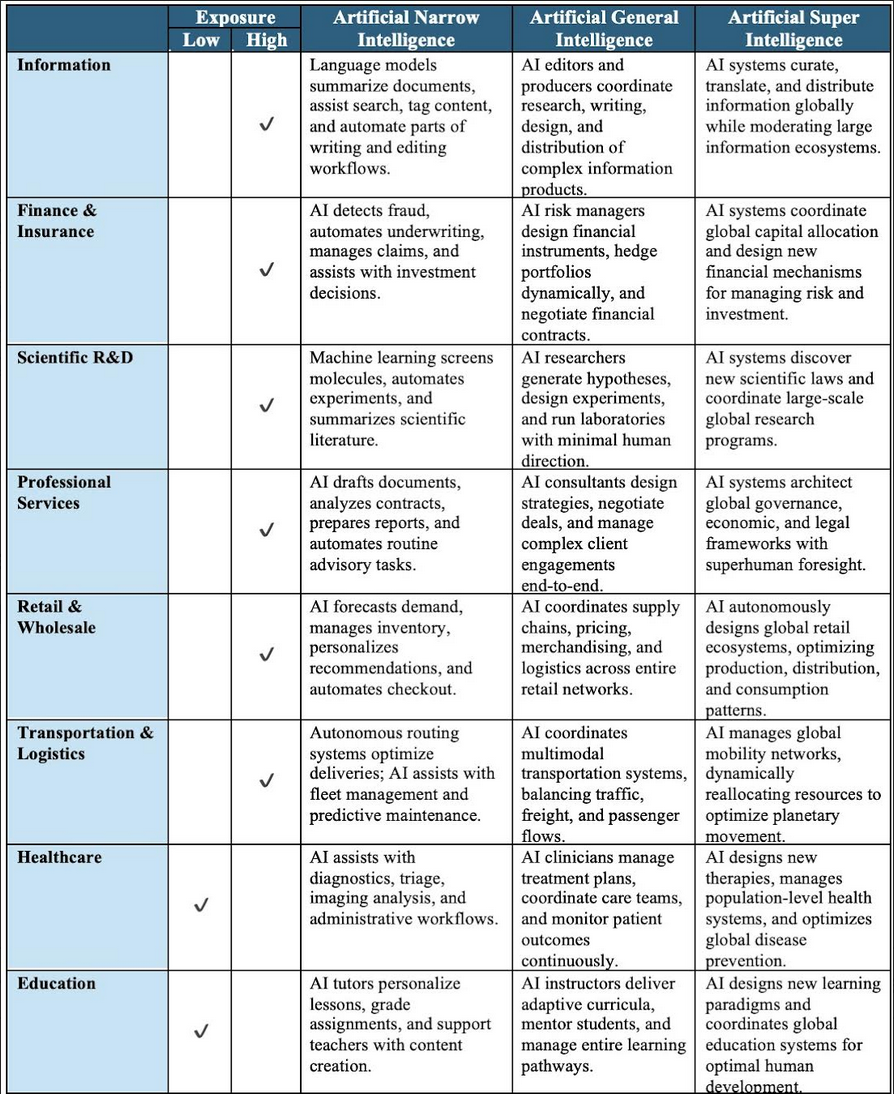
Recent studies on potential labour market disruption from AI in Canada (Statistics Canada 2026; Future Skills Centre 2025) highlight that AI is driving a major shift in skills requirements. AI will transform work. Chart 2 highlights potential impacts to workflows across the goods and service sectors.
Chart 2: Potential AI-Related Changes to Workflows in the Goods Sector
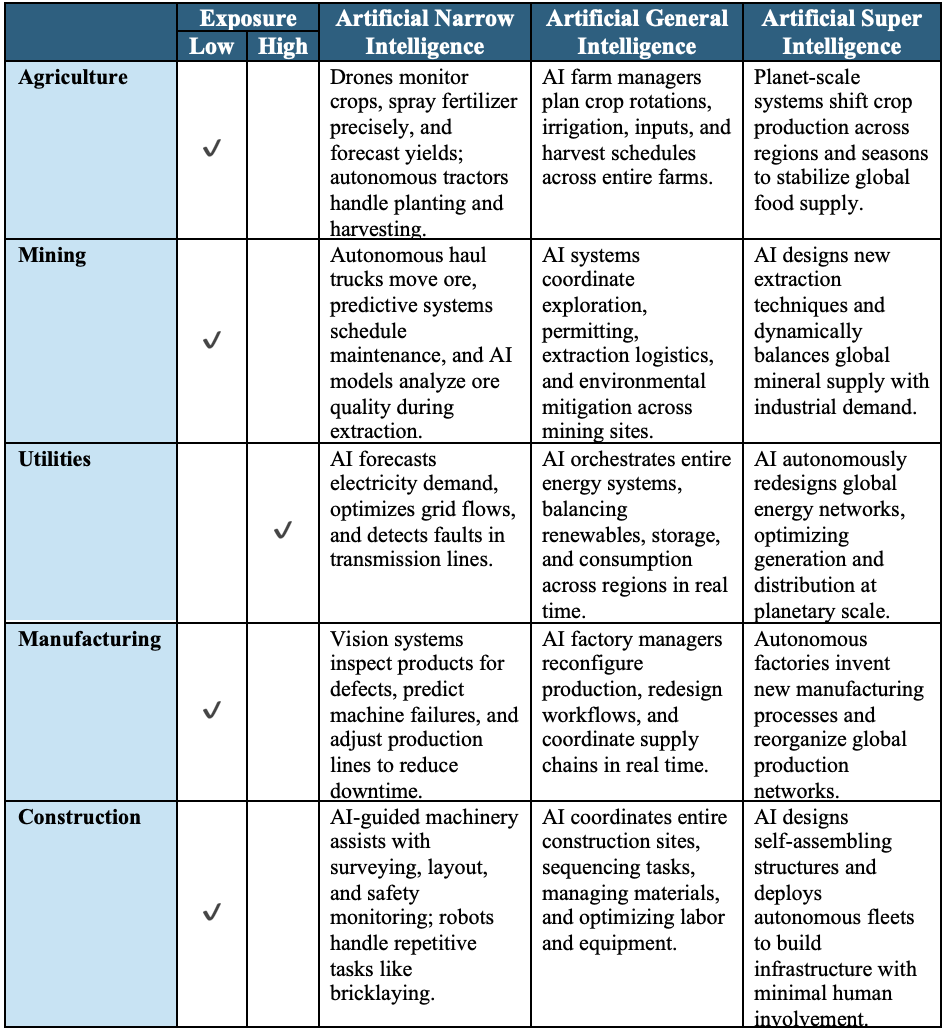
Source: Generated with Microsoft Co-Pilot and ChatGPT
Chart 3: Potential AI-Related Changes to Workflows in the Services Sector
It is estimated by the Future Skills Centre that close to 60% of all jobs will be impacted by AI – divided equally between AI-competing (automation prone) and AI-augmenting.
Canada’s Pan Canadian AI strategy has three pillars – talent and research, commercialization, and standards. Budget 2025 made additional investment in AI sovereign public infrastructure ($900 million over 5 years) and highlighted powers of the new Minister of AI and Digital Development to identify and support strategic infrastructure investments.
With business adoption increasing rapidly according to Statistics Canada, the government needs to move expeditiously to add a fourth pillar to Canada’s AI Strategy – Literacy and Workforce Upskilling.
Canada’s workforce AI training is fragmented and slow to launch. It is not standardized. Some colleges offer certificates but there is uneven access across the country. Small-medium enterprises (SMEs) are lagging.
Canada can study the training approaches in the US and Europe. US programs are industry driven. European programs are government driven — national literacy; digital skills; SME supports.
Recent research by Argentinian economist Eduardo Levy Yeyati (CEPR, 2026) highlights the importance of countries managing labour market shocks by matching the speed of retraining with adoption.
The strategic risk is that Canada becomes a country that is successful in developing AI, but less successful in adopting. This would limit opportunities for productivity gains. Budget 2026 must continue to strengthen Canada’s AI strategy.
Kevin Page is the President of the Institute of Fiscal Studies and Democracy (IFSD) at the University of Ottawa, former Parliamentary Budget Officer and a Contributing Writer for Policy Magazine.
Djeima Ramos is a fourth-year undergraduate economics student at the University of Ottawa.