Selective Sovereignty and Autocratic Aggression: It’s Time for a New Arctic Bargain
 ‘The Arctic of the future will be shaped not only by ice and minerals, but by the ideas we choose to defend,’ writes Lloyd Axworthy/Shutterstock
By Lloyd Axworthy
December 28, 2025
I remember clearly a conversation in Luleå — known as the gateway to Swedish Lapland — with then U.S. Deputy Secretary of State Strobe Talbott, as we negotiated the founding bargain of the Arctic Council.
It was the mid-1990s, and Canada was shepherding the Council into being via the 1996 Ottawa Declaration. The critical issue was whether to include national security in its mandate.
Our compromise was deliberate and profound: security would be excluded. In return, the United States accepted something unprecedented in international governance: the formal inclusion of Indigenous peoples as Permanent Participants.
This was no procedural detail. It was the heart of what we called the human security agenda— the conviction that Arctic security was about people, environment, and dignity, not just flags and forces. That bargain defined the Council’s character and its success.
For nearly three decades, the Council helped insulate the Arctic from great-power rivalry. It created a space where Arctic states — including Russia and the United States— and Indigenous Peoples could collaborate on science, environmental protection, and sustainable development. It proved that sovereignty could be strengthened through cooperation, not diminished by it.
Today, that same bargain leaves us exposed.
The renewed U.S. focus on Greenland brings this tension into sharp relief. Washington insists it respects Greenland’s sovereignty, yet its actions—special envoys, strategic rhetoric, and policies framed in terms of “national security necessity”— point to a more assertive, unilateral understanding of sovereignty.
That understanding squares with the selective sovereignty embraced by autocracies whereby it is invoked to discourage “interference” in their own affairs but vanishes as a rationale for keeping them out of the affairs of smaller states, especially democracies (Taiwan, Ukraine, now Greenland).
This shift by Washington treats cooperation as optional and multilateral institutions as constraints. We now face a governance vacuum. When sovereignty is pressured through strategic posturing, investment leverage, or unilateral assertion, there is no Arctic forum equipped to respond collectively. Into this vacuum steps a narrower, more muscular idea of state power.
What troubles me equally is the response of other Arctic states, Canada included. We have rightly affirmed Greenland’s sovereignty but have said little about how to protect it through collective mechanisms. There has been scant appetite to think creatively about strengthening Arctic cooperation as the old rules strain. We have not yet rallied the Arctic Council or imagined new forms of collaboration to reinforce decades-old norms.
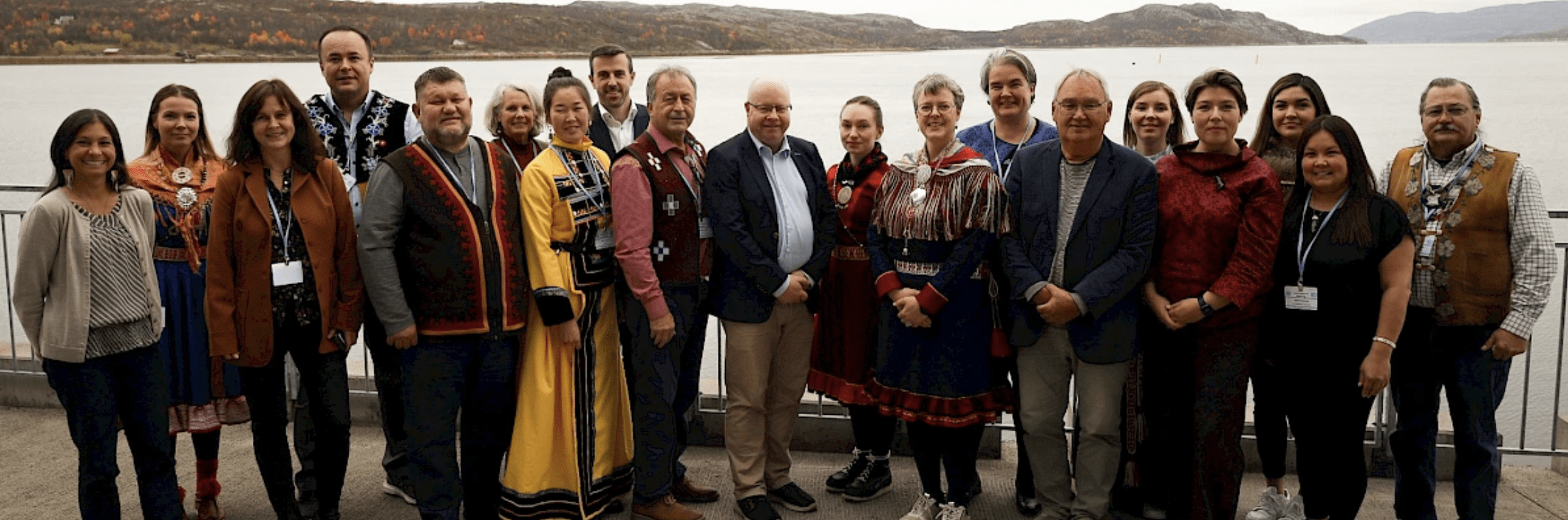 The Arctic Council Norwegian Chairship (2023-25) meeting with Indigenous Permanent Participant Organizations in Norway, October 2023/Indigenous Peoples Secretariat
The Council, by design, cannot fill this gap. We excluded security because we believed—rightly, at the time—that it was the price of keeping the Arctic peaceful and inclusive. That choice reflected a 1990s confidence amid the post-Soviet spread of democracy that major powers would restrain themselves. Today, that assumption is unsustainable.
Canada should not be passive. We are an Arctic nation that helped design this system. We argued then, and must argue now, that middle powers are safest when rules restrain power. The question is not whether the Arctic Council has failed, but whether we are prepared to adapt Arctic governance to new realities.
The answer is not to abandon the Council, but to build alongside it. Canada should lead a diplomatic initiative with the Nordic states—Denmark (including Greenland), Iceland, Norway, Sweden, and Finland—to create a complementary forum focused on strategic stability, civilian security, and reinforcing norms. This would not be a military alliance or a NATO substitute.
It would be a platform where Arctic states committed to a liberal international order can speak with one voice, name destabilizing actions, and reaffirm a foundational principle: that sovereignty in the Arctic is best protected through cooperation, transparency, and law—not through pressure and rhetoric.
Crucially, this new forum must carry forward the Council’s seminal innovation: institutionalized Indigenous participation as Permanent Participants. If we learned anything in Luleå, it is that legitimacy in the Arctic flows from inclusion. Narrowly defined state security misses the point. Human security—the safety, rights, and voice of Arctic peoples—is what gives sovereignty its enduring meaning.
Skeptics will argue that new institutions risk fragmentation, or that security should be left to NATO. But NATO is a military alliance, not a forum for comprehensive Arctic governance or Indigenous partnership. Fragmentation is already occurring because existing institutions are being bypassed, not because we are building new ones.
The Arctic is changing faster than our governance. Climate change is opening access, strategic competition is intensifying, and the language of sovereignty is being reshaped to privilege power over partnership.
The Arctic Council was a product of imagination and trust, built on the belief that restraint could be negotiated and inclusion was a strength. If those values still matter—and I believe they do—then Canada must once again be willing to convene, innovate, and lead.
The Arctic of the future will be shaped not only by ice and minerals, but by the ideas we choose to defend. It is time to forge a new bargain, before the old one’s wisdom is lost in the thaw.
Lloyd Axworthy was Canadian Minister of Foreign Affairs from 1996 to 2000. He is former Chair of the World Refugee and Migration Council and author of the memoir My Life in Politics.