
The Carney Economic Agenda Meets First-Nations Friction
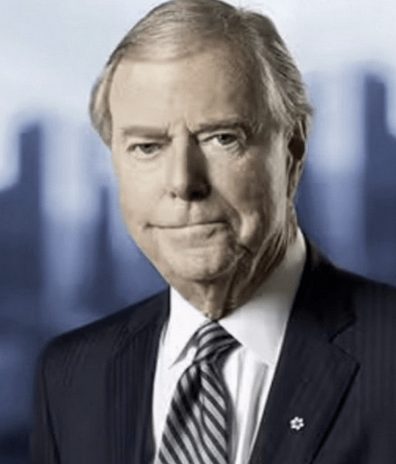
By Don Newman
July 19, 2026
Two recent developments have exposed weaknesses in relations between Indigenous communities and the rest of Canada that could derail the Carney government’s infrastructure, energy, and growth agendas as well as progress towards reconciliation.
Last Tuesday, it was announced that five First Nations in British Columbia have agreed to pay up to one billion dollars for a majority equity position in a massive storage tank near Kitimat. The tank will be needed if LNG Canada’s owners decide to proceed with the expansion of its export terminal on the Pacific Coast.
The deal fits nicely with Prime Minister Mark Carney’s plans to attract Indigenous equity participation major infrastructure projects tracked for quicker completion by the government’s Major Projects Office.
On Wednesday, the day after the deal was announced, National Chief of the Assembly of First Nations Cindy Woodhouse Nepinak was threatening to go to court to protect Indigenous treaty rights if the organization feels those rights are infringed upon by the decisions of the MPO.
Woodhouse Nepinak told the AFN annual meeting in Ottawa that the organization is in favour of economic growth that drives prosperity, but not if it affects Indigenous rights or legal obligations that governments have to Indigenous people. By the time their meeting was over, the AFN chiefs had unanimously resolved to oppose the Carney government’s major projects agenda wherever it weakens environmental protections or sidesteps Indigenous rights.
Since many of the projects submitted for fast-tracking to the MPO encompass large swaths of rural Canada, the possibility of disagreements over Indigenous rights, ownership, and environmental concerns seems likely.
One high-profile source of contention could be the plan for a second bitumen pipeline from Alberta to a terminal just south of Vancouver.
Since many of the projects submitted for fast-tracking to the MPO encompass large swaths of rural Canada, the possibility of disagreements over Indigenous rights, ownership, and environmental concerns seems likely.
The pipeline proposal — the result of the Memorandum of Understanding (MOU) between the Federal and Alberta governments — was submitted to the Major Projects Office in July and is expected to be confirmed as a “project of national interest” by October 1st.
Some controversy may be abated because the new pipeline would follow closely the existing route of the expanded Trans Mountain Pipeline (TMX), which began operations in May, 2024, after long delays, cost overruns, court challenges and with the Trudeau government finally purchasing the project to see it through to completion.
However, there are parts of the route that vary from the Trans Mountain, particularly closer to Vancouver, where the new pipeline will deliver bitumen to be loaded onto tankers at a different port than TMX.
The concerns of the AFN are not new. They first surfaced about a year ago as the Major Projects Office was being set up. In August of 2025, the Prime Minister met separately with the AFN, Métis and Inuit groups to try and assuage their concerns. Clearly, at least in the case of the National Chief, that is a work in progress.
This fall, on October 26th, a meeting will be held between First Nations leaders, the Prime Minister, and the Premiers. However, that will follow the Canada Investment Summit a major invitation-only conference of many of the world’s largest investors that Carney will host September 14-15 in Toronto, hoping to sell them on $1 trillion dollars of investment in Canada, much of it on infrastructure projects.
The federal government created the Indigenous Loan Guarantee Program to help First Nations groups acquire equity positions in major infrastructure, natural resources and energy projects. But in the case if the LNG Canada storage tank investment, money will be raised by MNT Investments, a limited partnership representing the economic development arms of the participating First Nations.
Based on what is known so far, the five First Nations project sounds like a template for the development of the major projects that will be required if Canada is to transition its economy, reduce dependence on the United States and build the projects and infrastructure needed.
In contrast, the potential conflicts warned about by the AFN National Chief sound like a continuation of the way Canada has been limping along in recent years.
The choices should be clear. Canada no longer has time for the old approach. The world is changing and already moving on. Can this country keep up?
Policy Columnist Don Newman is an Officer of the Order of Canada, and a lifetime member and a past president of the Canadian Parliamentary Press Gallery.