
The Diplomats: Finnish Ambassador Hanna-Leena Korteniemi
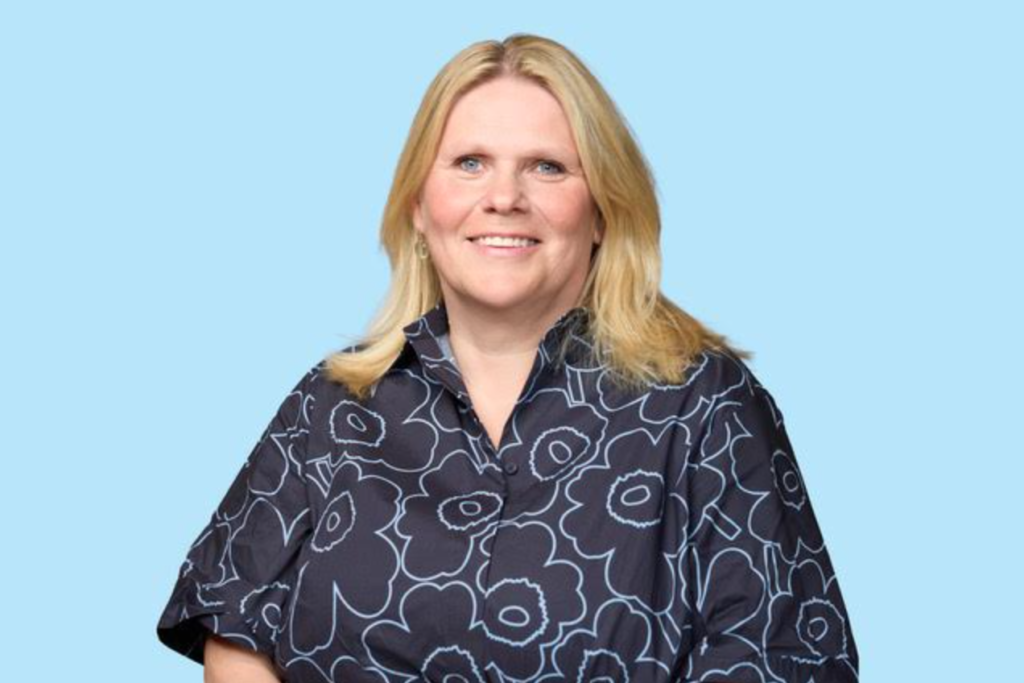 Finnish Ambassador to Canada Hanna-Leena Korteniemi/Embassy of Finland
The Diplomats is a Policy email interview series featuring ambassadors and high commissioners accredited to Canada. In each instalment, Policy Contributing Writer Maureen Boyd, C.M. — whose career has spanned politics, government and media, and who accompanied her diplomat husband on postings around the world — explores the bilateral issues, foreign policy priorities and global perspectives shaping diplomacy with Canada.
Her Excellency Hanna-Leena Korteniemi has been Finland’s Ambassador to Canada since January 2025. Before coming to Ottawa, she spent five years as Director of the Unit for North America in Finland’s Ministry for Foreign Affairs. Her earlier postings include Finland’s Permanent Mission to the United Nations in New York and its Embassy in Washington, and she has also served as a Transatlantic Diplomatic Fellow at the U.S. Department of State.
Maureen Boyd: You came to Ottawa in January 2025 after five years as Finland’s Director for North America. Since then, Canada and Finland have established a foreign and security policy Strategic Partnership, and President Alexander Stubb’s visit last April produced new agreements on Arctic and maritime cooperation, defence and sovereign technology. How has the relationship changed from the one you watched from Helsinki, and what should come next?
Ambassador Korteniemi: Looking from the other side of the Atlantic, I already saw Canada as one of Finland’s closest and most natural partners. Since arriving in Ottawa, I have come to appreciate even more just how exceptional this relationship is. It is based not only on shared interests, but also on shared values, profound trust and a remarkably similar way of looking at the world. I have described Finns and Canadians as kindred spirits, carved from the same block of ice, and I mean that in the best possible sense.
What has changed is that this natural affinity has taken on a much more strategic character. Russia’s war of aggression against Ukraine, Finland’s membership in NATO and the growing geopolitical importance of the Arctic have brought our foreign and security policy priorities even closer together. President Stubb’s visit in April demonstrated that we are now moving decisively from political alignment to practical cooperation in defence, Arctic and maritime capabilities, and sovereign technologies.
What should come next is delivery. We need to translate our agreements into investments, projects and capabilities that strengthen our shared security and resilience on both sides of the Atlantic. That means sustaining our strong support for Ukraine, deepening cooperation in the Arctic, connecting our defence and technology industries, and making full use of our complementary expertise.
The relationship has never been stronger. The opportunity now is to ensure that it also becomes more consequential. One might say, we need to move the puck on the ice.
Maureen Boyd: President Stubb has spoken of “values-based realism”, which Prime Minister Mark Carney has also embraced. How does Finland put values-based realism into practice?
Ambassador Korteniemi: Values-based realism means being principled about our objectives and pragmatic about how we pursue them. In practice, it means holding firm to our principles without allowing differences to prevent cooperation where it is both possible and necessary. It combines conviction with dialogue, and principle with the ability to act.
Our values are clear. We stand for democracy, human rights, national sovereignty, international law and the right of every country to determine its own future. The realism part is perhaps best captured by the idea that we must defend those principles in the world as it is, not the world as we might wish it to be. This distinction between principle and pragmatism has been central to how both President Stubb and Prime Minister Carney have articulated the concept.
Our support for Ukraine is the clearest example. Finland’s position is firmly grounded in principle, borders cannot be changed by force, and Ukraine has the right to defend its sovereignty and territorial integrity. Effective support requires practical action, sustained investment and the ability to build broad coalitions around a shared purpose.
This is also the thinking behind the ad hoc coalitions described by President Stubb and Prime Minister Carney in their joint article in The Economist this summer. In a more fragmented international landscape, countries must be able to form flexible, issue-specific coalitions with partners that may not agree on everything but are prepared to work together toward a concrete objective. Depending on the issue, that could mean supporting Ukraine, strengthening Arctic security, securing critical-mineral supply chains or developing trusted technologies.
I want to stress that such coalitions are not an alternative to multilateral cooperation. Finland remains deeply committed to the United Nations and other international institutions. Smaller, more agile coalitions can generate momentum and ultimately reinforce the wider multilateral system.
Maureen Boyd: Canada, Finland and the United States are moving the ICE Pact from planning to delivery, while the hull of Canada’s Polar Max icebreaker is being built at Helsinki Shipyard, owned by Canada’s Davie. How do you see the Canada-Finland maritime partnership evolving beyond building icebreakers?
Ambassador Korteniemi: The opportunity extends far beyond the construction of individual icebreakers. In April, Finland and Canada signed a Memorandum of Understanding on maritime cooperation that provides a broader framework for collaboration across our maritime industries, including shipbuilding, Arctic technologies, research and industrial partnerships. Our maritime ecosystems are already becoming increasingly interconnected, as the Polar Max project clearly demonstrates.
Finland brings a 90-year tradition of designing and building icebreakers, together with world-class expertise in understanding ice, operating in extreme conditions and developing technologies for cold climates. Canada brings extensive experience in building and operating vessels in Arctic and polar conditions, a strong maritime industrial base, and deep knowledge of the North. These capabilities are highly complementary.
The Nordica provides a very concrete example of where this partnership can lead. A Finnish multipurpose icebreaker is now supporting Canadian Coast Guard operations in the Canadian Arctic through a partnership involving an Inuit-owned Canadian company. This is not simply a Finnish vessel operating in Canadian waters. It brings together Finnish icebreaking and operational expertise, Canadian capabilities, and Indigenous leadership and knowledge.
Looking ahead, I see opportunities to deepen cooperation across the entire maritime value chain. There are opportunities for collaboration in research and development, workforce training, resilient supply chains, port and maritime infrastructure, communications and navigation technologies, and the maintenance and operation of Arctic-capable vessels. We should also connect our companies, research institutions and northern communities more closely.
Ultimately, the partnership is not only about building ships. It is about building the expertise, industrial capacity and long-term relationships needed to keep the Arctic stable, secure, sustainable and prosperous.
I have described Finns and Canadians as kindred spirits, carved from the same block of ice, and I mean that in the best possible sense.
Maureen Boyd: Canada and Finland also agreed in April to work together on sovereign AI, high-performance computing, quantum, telecommunications and critical minerals. That is an ambitious list. How do you turn that into tangible results?
Ambassador Korteniemi: Both governments are firmly focused on turning the ambition of April into tangible results. The key is to identify the most promising opportunities, connect the right companies and research institutions, and move quickly towards projects with clear commercial and strategic value.
Quantum technology is one particularly promising area. Finland and Canada both have strong research communities, innovative companies and significant expertise across the quantum ecosystem. There is genuine interest on both sides in closer cooperation, from research and workforce development to commercialization. Our task now is to identify where our capabilities are most complementary and help promising technologies move from the laboratory to practical applications and global markets.
In telecommunications, we already have an exceptionally strong bridge between our countries. Nokia has been part of Canada’s innovation landscape for decades and has a major research and development presence in Ottawa. Its work on advanced networks, high-speed optics, quantum-safe infrastructure and next-generation connectivity demonstrates how Finnish expertise and Canadian talent can combine to create technologies for global markets.
Critical minerals are another area where cooperation is already well established. Canadian companies have a significant presence in Finland’s mining sector. Agnico Eagle’s recent expansion in northern Finland is a powerful example. That represents a major vote of confidence in Finland and provides a strong foundation for deeper cooperation across sustainable mining, processing and critical-mineral value chains.
Tangible results will not come from trying to do everything at once. They will come from concentrating on areas where our strengths are complementary, removing barriers to cooperation, and turning shared ambition into investment, innovation and greater economic and technological resilience.
Maureen Boyd: Finland’s approach to “comprehensive security” makes national preparedness a shared responsibility among government, business, civil society and citizens. Some 50, 000 volunteers take preparedness and defence-related courses each year. What could Canada learn from Finland about preparing its citizens for a crisis?
Ambassador Korteniemi: Finns tend to be cool, calm and collected in a crisis. But that confidence does not come from assuming that nothing will go wrong. It comes from preparing together and knowing that society has the capacity to respond.
Finland’s comprehensive security model is a whole-of-society approach that brings together public authorities, businesses, civil society organizations and individuals. Preparedness is integrated into normal decision-making, and each part of society understands its role in safeguarding the country’s vital functions.
It all begins with trust in institutions, mutual trust across society, and confidence in citizens’ willingness to do their part. That trust cannot be created in the middle of a crisis. It must be built over time through openness, competence and regular cooperation.
The aim is not to make people fearful, but to build confidence and a sense of security through reliable information, practical training and meaningful ways to contribute. Finland has also placed particular emphasis on countering hybrid threats, including cyberattacks, disinformation and interference with critical infrastructure. Since these threats cross traditional boundaries, responding to them requires close cooperation across society.
Every country must develop a model suited to its own society. Finland’s experience suggests that preparing citizens is not about alarming them. It is about trusting them, involving them and giving them the skills to contribute. From what I have seen in Canada, the same strong sense of community and civic responsibility already exists here. That provides an excellent foundation on which to build. Preparedness, when done well, does not create panic. It creates resilience.
Policy magazine serves as an independent, nonpartisan platform for insight and analysis on Canadian, U.S. and international politics and public policy, written by policy and political professionals.