
The Diplomats: Malaysian High Commissioner Shazelina Abidin
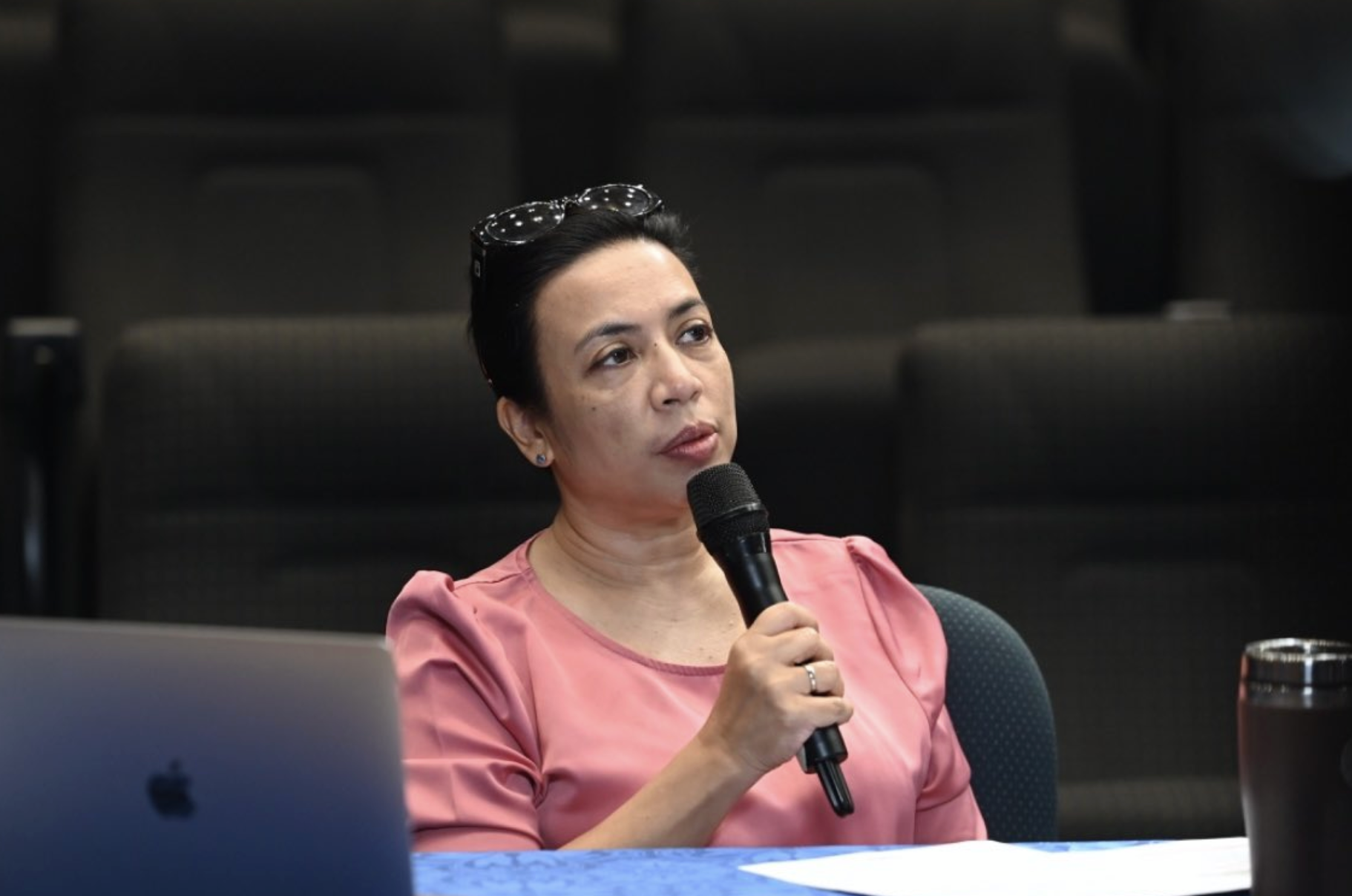
The Diplomats is a new Policy email interview series featuring ambassadors and high commissioners accredited to Canada. In each instalment, Policy Contributing Writer Maureen Boyd, C.M. — whose career has spanned politics, government and media, and who accompanied her diplomat husband on postings around the world — explores the bilateral issues, foreign policy priorities and global perspectives shaping diplomacy with Canada.
Dr. Shazelina Zainul Abidin has been the High Commissioner of Malaysia to Canada since December 2024. A veteran of nearly 30 years with the Malaysian Ministry of Foreign Affairs, Dr. Abidin headed the Institute of Diplomacy and Foreign Relations of Malaysia (IDFR) from 2021 to 2023. She is currently serving as chair of the Women Heads of Diplomatic Missions in Ottawa.
Maureen Boyd: Prime Minister Mark Carney argues that middle powers have an increasingly important duty to strengthen international cooperation during a period of geopolitical uncertainty. As a member of ASEAN and with Canada as an Indo-Pacific partner, what specific opportunities are there for Malaysia and Canada to work together—both bilaterally and through regional and multilateral institutions?
High Commissioner Abidin: The idea of middle powers is a potent one. Look at the United Nations in the 1980s and 1990s — a lot of things got done because ‘middle powers’ banded together to push through their agenda. So we ended up with the Beijing Platform of Action, and the Earth Summit, among others. The strength of the middle powers concept was in its numbers; international relations as a study will tell you that there are superpowers, major powers, and there are small powers. Those in the middle can be loosely classified as middle powers, and that’s a huge chunk of the countries that exist today. One of the more important traits of a middle power is that it punches above its weight, and that is the one ingredient that has been missing from Canada’s foreign policy in recent years. Canada used to be the lead innovator for a number of international relations norms: anti-mine ban treaty, human security, the responsibility to protect. It needs to reclaim that position and stake its status as an independent middle-power country.
 High Commissioner Abidin (second from right) at Niagara Falls in August, 2025/Courtesy
Canada was one of ASEAN’s earliest dialogue partners, forging that relationship way back in 1977. But somehow Canada never really capitalised on this position. Today, ASEAN is Canada’s fourth largest trading partner with total trade amounting to more than CAD42 billion. This only represents around 1% of ASEAN’s total trade with the rest of the world. Given that ASEAN’s intra-trade is nowhere near the 35% mark, this presents an opportunity for countries such as Canada to gain a foothold into the ASEAN market. Steps are already made in that direction, but it remains to be seen whether Canada will be able to stay the course this time.
Maureen Boyd: Canada and Malaysia have enjoyed nearly seven decades of diplomatic relations, while economic ties have grown significantly through the CPTPP and Canada’s Indo-Pacific Strategy. Looking ahead, which areas of the bilateral relationship — from trade and investment to education, clean technology and innovation — offer the greatest potential for deeper collaboration?
High Commissioner Abidin: In June of 2025, the first shipment of LNG Canada made its way from Kitimat to Asia Pacific ports. Malaysia is pleased to be one of the major players in this venture, which also marks the culmination of more than 10 years of hard work. Investing in massive infrastructure such as the LNG Canada is not easy and can only be done when the conditions are right, with the support of both provincial and federal governments. The investment also marked a pivotal moment for the Canada-Malaysia relations. It marked the maturity of the relations between the two countries.
Of course, there are many more unexplored areas of cooperation between Malaysia and Canada, including in digital innovation, AI technology, and clean energy, including nuclear energy. These are currently being pursued.
In addition, Malaysia and Canada need to build upon those areas in which they already have strong, robust cooperation — education, trade, the automotive industry, and aeronautical services. Malaysia has 10 designated airlines within the 59-strong ASEAN network, providing ample opportunity for Canada’s aviation industry. CAE Kuala Lumpur has been key in training pilots across Asia Pacific to the standards required to fly not only Airbus but also Boeing planes. Malaysia’s own automotive industry consists of 27 vehicle manufacturers and over 641 component manufacturers, and is thus able to complement the Canadian automotive industry in its quest eastwards.
The lowest-hanging fruit, at least from my point of view, is the visa waiver between the two countries. Right now, Canadians who want to enter Malaysia may do so visa-free for 30 days. Malaysians, on the other hand, are subjected to strict visa requirements on their application, discouraging not only students from coming to study in Canada, but also businessmen from establishing joint ventures or making the connection with their Canadian counterparts. I still believe that the Malaysia-Canada relationship is running on the steam of the person-to-person contact made in the 1980s and 1990s, when Malaysians would come to study in Canada and then develop a preference for doing business or establishing contacts with Canadian entities. When these person-to-person contacts thin out, then the preference for economic linkages also thin out.
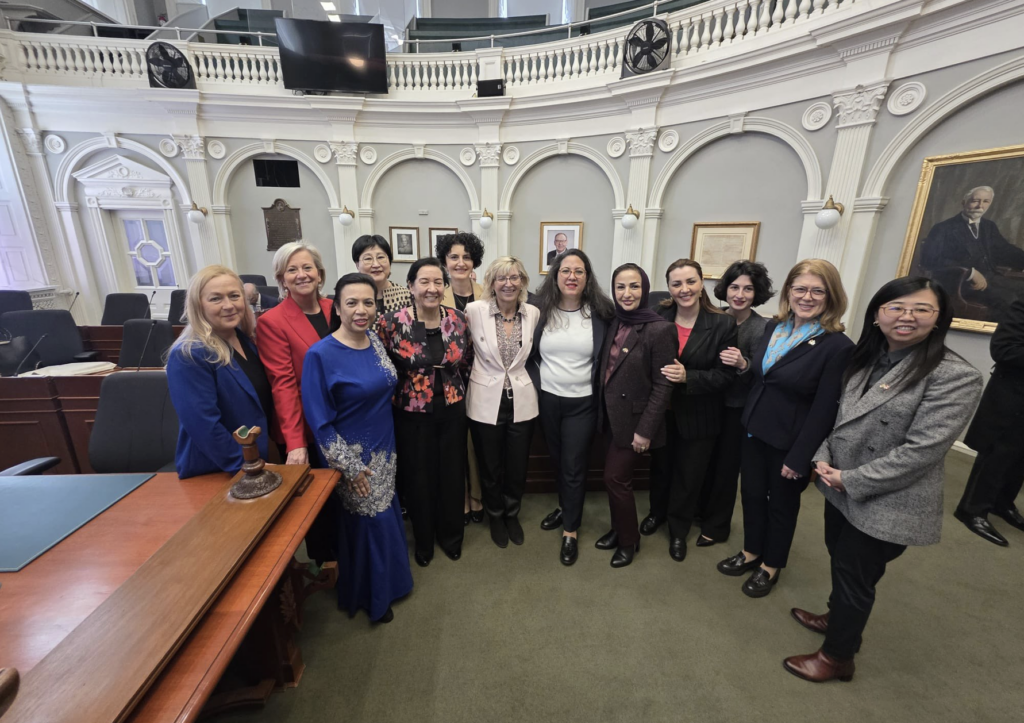 The Women Heads of Diplomatic Missions members at the Nova Scotia Legislature, May 6, 2026/Courtesy
Maureen Boyd: As chair of the Women Heads of Diplomatic Missions in Ottawa, what do you hope this network can accomplish beyond celebrating women’s achievements? Are there specific initiatives or collaborations you hope to see emerge over the coming year?
High Commissioner Abidin: The Women Heads of Diplomatic Missions in Ottawa (WHDMO) are a force unto themselves. There are currently 35 strong, independent — yes, opinionated — female foreign heads of mission in Ottawa. The amazing thing about the WHDMO is not that it provides a platform for the women ambassadors, high commissioners and CDAs to network; it is that the WHDMO, with all those powerful individuals within it, can function at all. I put this down to excellent teamwork mentality and the setting aside of our egos at the door.
At our last annual general meeting in February, we came up with a wish list of things that we wanted to do. Among them were efforts to raise awareness of women’s health, collaboration with the female senators and Members of Parliament of Canada, and talks and forums on specific subject matters related to our diplomatic work. We took the opportunity while in Halifax in May this year to corner Siemens into agreeing to partner with us for October’s Cancer Awareness month — they have a mobile mammogram which they have agreed to put at our disposal for the day, subject to further negotiations.
Maureen Boyd: You recently convened diplomats to mark the International Day of Women in Diplomacy. Women currently hold 22.5% of ambassadorial positions worldwide, an increase of 1.5% over 2024, according to the 2025 Women in Diplomacy Index. Beyond recognizing this progress, what concrete actions do governments, foreign ministries and international organizations need to take to achieve a meaningful increase in women’s representation in senior diplomatic leadership over the next decade?
High Commissioner Abidin: A recent study in the UK identified the barriers for women attaining higher positions within the diplomatic field, among them unfavourable conditions for overseas assignments and lack of support for the family unit. This is particularly true of young female diplomats with responsibilities towards a young family. I am not saying that women diplomats should be given preferential treatment; that would be going beyond the pale. But what can be done is to match skills and capabilities to the need to have those skills and capabilities in a particular location. Senior diplomatic leadership can only be effective if the individual has come up through the ranks, performing better than average, and constantly allowed to reinvent and upskill themselves.
I have personally stood on the shoulders of the women before me, and the support of my male colleagues. You would be surprised how many people today can see past gender to the skills possessed by an individual. Things have certainly changed — even within my lifetime — and are constantly improving. We need to drive this momentum; keeping the status quo or standing still would be a regression of the effort, not maintaining the standards. If we don’t progress, we backslide, there are no two ways about it.
Finally, I would like to point out that women in diplomacy is not just about women diplomats. It is about every single woman who represents a government, an agency, an interest on the international stage. It is about making the women who represent us count.
Policy magazine serves as an independent, nonpartisan platform for insight and analysis on Canadian, U.S. and international politics and public policy, written by policy and political professionals.