
The Diplomats: Peruvian Ambassador Manuel Talavera Espinar
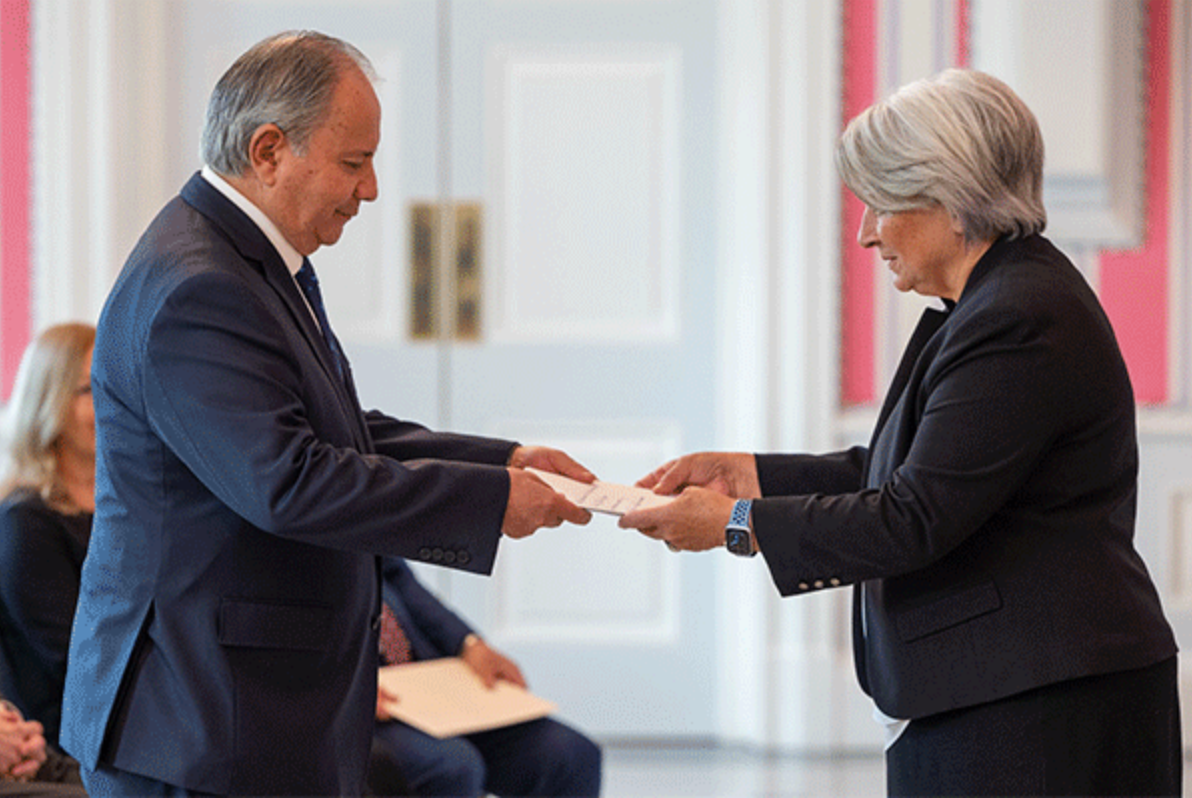 Peruvian Ambassador Manuel Talavera Espinar presents his credentials to Governor-General Mary Simon, September 25, 2023/MRE
The Diplomats is a Policy email interview series featuring ambassadors and high commissioners accredited to Canada. In each instalment, Policy Contributing Writer Maureen Boyd, C.M. — whose career has spanned politics, government and media, and who accompanied her diplomat husband on postings around the world — explores the bilateral issues, foreign policy priorities and global perspectives shaping diplomacy with Canada.
His Excellency Manuel Talavera Espinar has served as Peru’s Ambassador to Canada since July 2023 and will conclude his posting later this year. His departure comes at a significant moment for Peru following the election of President Keiko Fujimori. Peru is also navigating growing competition between the United States and China while seeking to expand trade and investment. Ambassador Talavera reflects on these developments and the future of Canada–Peru relations in this Q&A with Policy Magazine contributing writer Maureen Boyd.
Maureen Boyd: As you prepare to leave Canada after more than three years, how do you assess the Canada-Peru relationship, particularly in trade, investment and mining? Where do you see the greatest opportunities for further cooperation?
Ambassador Talavera: Relations between Peru and Canada are currently at an all-time high. Peru is Canada’s second-largest trading partner in South America, with bilateral trade reaching CAD 9.1 billion, and the third-largest destination for Canadian investment in the region.
Our relationship has been further strengthened by the signing, in 2024, of a government-to-government agreement to complete the irrigation of 60,000 hectares along Peru’s coast through the Chavimochic III Project. It has also been reinforced by the Canada Pension Plan’s CAD 4.6 billion investment in Inkia Energy, a leading renewable energy producer, in February 2026.
At the same time, in light of the evolving international landscape and the central role that mining plays in our bilateral relationship, Peru and Canada signed a Memorandum of Understanding on critical minerals in 2026. This agreement aims to strengthen the resilience of our value and supply chains while opening new avenues for cooperation in this strategically important sector.
Maureen Boyd: Peru has experienced extraordinary political instability, with 10 presidents in the past decade. Keiko Fujimori won this year’s election by fewer than 50,000 votes, with overseas voters playing a decisive role. How confident are you that her presidency will bring stability, and how does her election fit into the broader shift to the right across Latin America — with the recent exception of Brazil?
Ambassador Talavera: Peru has learned important lessons from its recent history. In 2025, the country undertook a constitutional reform that restored a bicameral legislature and introduced mechanisms aimed at fostering greater political consensus. Moreover, the governing party, together with its allies, holds a majority in the Senate, providing a stable political environment for the current presidential term.
At the regional level, South America’s relatively lower degree of ideological polarization also creates a more favourable environment for dialogue, consensus-building, and the effective implementation of government programmes.
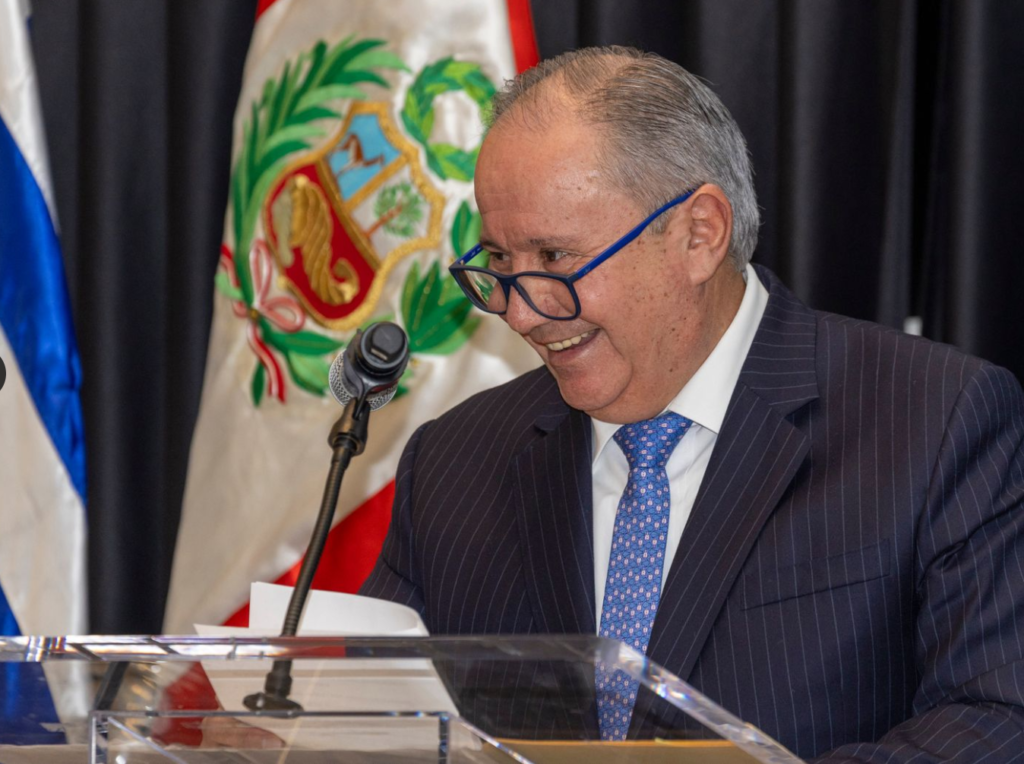
Ambassador Manuel Talavera Espinar/Peruvian Embassy
Maureen Boyd: Despite political instability, Peru’s economy has remained relatively resilient, but poverty, inequality, organized crime and illegal mining remain serious challenges. What are the new government’s priorities, and how can economic growth translate into improvements in the lives of ordinary Peruvians?
Ambassador Talavera: Peruvian society is calling for a determined, comprehensive fight against organized crime and delinquency. President Fujimori’s administration has placed these issues at the centre of its priorities, recognizing that security is an essential foundation for social stability and sustainable development.
Peru’s solid macroeconomic fundamentals—including low public debt and inflation, a stable currency, and a trade surplus—combined with greater social stability, create a favourable environment for both domestic and foreign investment. Increased investment will, in turn, contribute to job creation, expand the tax base, and support continued efforts to reduce poverty.
Maureen Boyd: China is Peru’s largest trading partner, and the new deepwater port at Chancay is strengthening Peru’s position as a gateway between South America and Asia. At the same time, the Fujimori government is strengthening relations with Washington. How does Peru see its relationship with these two powers, and what opportunities does the port create to trade across the region?
Ambassador Talavera: Peru is an open economy committed to trade and investment, and seeks to position itself as a strategic hub in South America, strengthening connectivity and expanding trade across the region. In this context, the Port of Chancay represents one of the most significant infrastructure investments in Peru and South America. It will enhance connectivity with Asia, reducing shipping times by up to 15 days and logistics costs by approximately 20 percent, while creating new opportunities for businesses and strengthening regional trade.
From Peru’s perspective, the priority is to maximize trade and investment opportunities with all our international partners. Our relationships with both the United States and China are particularly important. The United States is a strategic partner in security, investment, and cooperation, while China is Peru’s largest trading partner. We therefore seek to maintain balanced, constructive, and mutually beneficial relations with both countries, while remaining open to deeper engagement with partners across the world.
Policy magazine serves as an independent, nonpartisan platform for insight and analysis on Canadian, U.S. and international politics and public policy, written by policy and political professionals.