
The Diplomats: Swedish Ambassador Signe Burgstaller
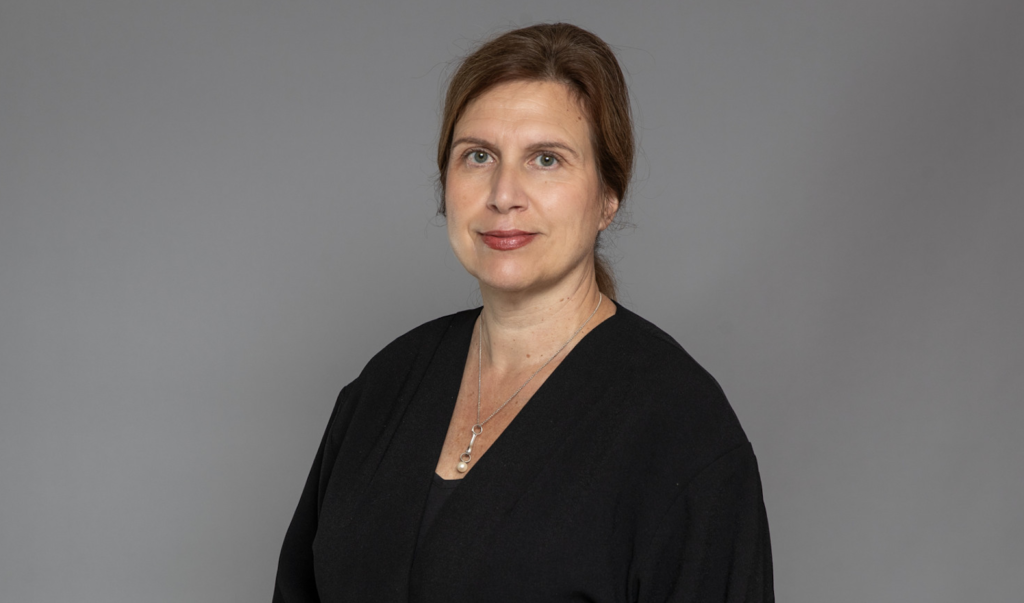
Swedish Ambassador to Canada Signe Burgstaller/Embassy of Sweden
The Diplomats is a Policy email interview series featuring ambassadors and high commissioners accredited to Canada. In each instalment, Policy Contributing Writer Maureen Boyd, C.M. — whose career has spanned politics, government and media, and who accompanied her diplomat husband on postings around the world — explores the bilateral issues, foreign policy priorities and global perspectives shaping diplomacy with Canada.
Her Excellency Signe Burgstaller has been Sweden’s Ambassador to Canada since 2023. A career diplomat, Ambassador Burgstaller previously served as Ambassador to Sudan and South Sudan and to Moldova, and as Sweden’s Deputy Permanent Representative to the United Nations in New York.
Maureen Boyd: You arrived in Ottawa shortly before Sweden joined NATO in March, 2024. Since then, Canada and Sweden have expanded cooperation on defence and Arctic security and, during the state visit by King Carl XVI Gustaf and Queen Silvia in November 2025, Prime Ministers Mark Carney and Ulf Kristersson launched a new Strategic Partnership covering security and defence, trade and investment, technology, energy and critical minerals. How has the relationship changed during your time here, and where do you see the greatest potential for it to grow?
Ambassador Burgstaller: Indeed, I arrived in Ottawa at a moment when our bilateral relationship entered a new and increasingly dynamic phase. Sweden and Canada are no longer just two Northern like-minded countries and partners; we are also Allies. And that does make all the difference. When Sweden joined NATO in March 2024, one of the first decisions of the Swedish Government was to contribute to the defence and deterrence of the Baltic Sea region by sending troops to NATO’s multinational brigade in Latvia, which is commanded by Canada. Besides the deepened military-to-military cooperation between our countries, we see an increase in bilateral defence industrial cooperation. The Swedish Embassy has been reinforced this year by a resident defence attaché in order to promote a further deepening of our relationship in the area of security and defence. As outlined in the bilateral Strategic Partnership launched during the state visit in November last year, there is a whole range of other areas where we see tremendous growth potential for the future, including in Arctic cooperation, innovation, trade and investment, and critical minerals.
Maureen Boyd: Sweden’s accession to NATO in March 2024 meant that, for the first time, all five Nordic countries were members of the Alliance. How has Sweden’s NATO membership changed the way the Nordic ambassadors work together in Ottawa, and how has Canada’s relationship with the Nordic countries changed as a result, particularly on defence, Arctic security and resilience?
Ambassador Burgstaller: Sweden’s NATO membership has strengthened our own security, and that of the Baltic Sea region and the Alliance as a whole. It has certainly brought the five Nordic countries closer together, since we are now part of the same defence alliance and thus aligned in a way we weren’t before. Cooperation on security and defence matters has increased as a result. This builds on a high degree of Nordic cooperation enjoyed for decades in other areas such as regional integration, sustainable economic development and resilient societies. In Ottawa, the Nordic embassies have for years engaged in joint activities and outreach trips to different parts of the country. And that is only intensifying with Sweden and Finland’s accession to NATO. My Nordic colleagues and I are now more often than before invited to talk about the Arctic and whole-of-society approaches to security in our countries. These are also areas where we see increasing potential for cooperation with Canada, bringing government representatives, academics and experts together.
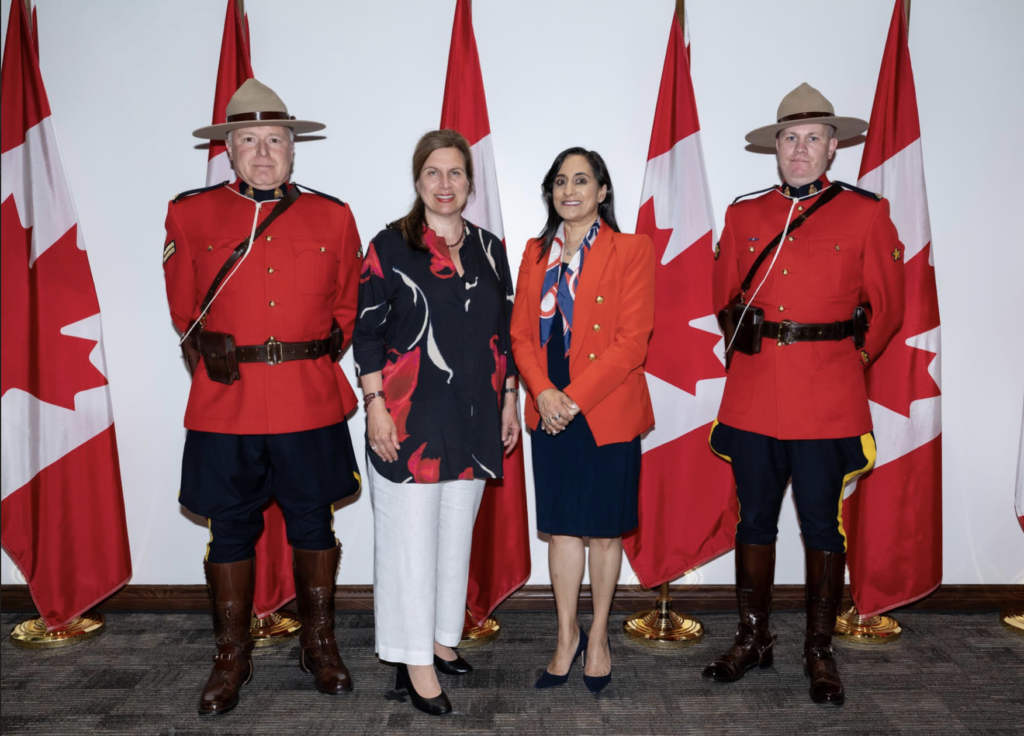 Signe Burgstaller with Foreign Affairs Minister Anita Anand on Canada Day, 2025/Embassy of Sweden
Maureen Boyd: Prime Minister Mark Carney has argued that, in an increasingly fractured international order, middle powers need to work more closely together and build stronger relationships with reliable partners. Canada and Sweden share a commitment to multilateralism and the rules-based international order but also bring complementary strengths in areas ranging from the Arctic and critical minerals to technology and defence. How can Canada and Sweden translate the idea of greater middle-power cooperation into practical action, and what role do you think the Nordic countries should play as Canada seeks to diversify its economic and security relationships?
Ambassador Burgstaller: There is ongoing work on taking concrete actions forward, not just government to government, but also between Swedish and Canadian businesses. Our bilateral trade in both directions has been on an upward trajectory in the last ten years or so — also thanks to the free trade agreement between Canada and the European Union (CETA), and we expect this trend to continue. The Nordic countries and Canada are all robust, open economies and together we represent a substantial market. We stand to gain from enhancing our cooperation, for instance on economic security and advanced technology. The Nordic countries and Canada are close Allies and as Arctic states, we are committed to advancing security and stability for all Allies in this region. As a member of the European Union, Sweden also welcomes a deepened partnership between Canada and the EU, including in the areas of security and defence, support to Ukraine, energy and critical minerals, education and research.
Maureen Boyd: Defence-industrial cooperation has become one of the most tangible parts of the relationship. Saab’s Gripen remains part of Canada’s fighter debate, while Saab and Bombardier are working together on the GlobalEye surveillance aircraft, and Saab has also discussed possible Canadian production of Gripen with Bombardier and CAE. How is this changing Canada-Sweden defence cooperation from simply buying equipment to building and developing technology together, and what will a deeper partnership mean for Canadian jobs, technological sovereignty and the broader relationship?
Ambassador Burgstaller: This is a very dynamic part of our bilateral relationship. Our defence industries understand and complement each other very well. As you mentioned, Saab and Bombardier already have an ongoing partnership to produce the GlobalEye surveillance aircraft, and with several recent announcements from NATO as well as individual Allies (including Canada and most recently the Netherlands) intending to bring this airborne radar capability into their fleets, this is a partnership with strong forward momentum. The positive ripple effects are many — such as more collaboration on innovation, research and development, and more high-quality job opportunities both in Canada and Sweden. If Canada were to choose Saab’s Gripen — and this is entirely up to the Canadian government — this would of course further expand our relationship moving forward, including in production and innovation.
Maureen Boyd: Your diplomatic career has taken you from the United Nations to Moldova, Sudan and South Sudan — places where questions of conflict and security are hardly abstract. How have those experiences shaped the way you view today’s international environment, and the responsibilities of countries such as Sweden and Canada within it?
Ambassador Burgstaller: During my diplomatic career (which also includes earlier postings in Prague, Washington and Pristina) I have experienced war, post-war situations, and humanitarian crises firsthand, as well as countries in transition. I have worked in multilateral institutions both at UN Headquarters and with UN and other international organizations in the field. My experiences have given me the benefit of different vantage points. I have seen multilateral cooperation in action and what difference it makes on the ground; for security, sustainable economic development, gender equality and more. However, on the institutional level, there is a much-needed push to reform the multilateral system, to enhance both efficiency and legitimacy. International cooperation is much needed to address the many conflicts and the humanitarian consequences of them in today’s world, including the Russian aggression against Ukraine and the conflict in Sudan. I think like-minded countries like Canada and Sweden, who share a commitment to multilateralism and the rules-based international order, can play an important role in shaping the world order of tomorrow.
Policy magazine serves as an independent, nonpartisan platform for insight and analysis on Canadian, U.S. and international politics and public policy, written by policy and political professionals.