
‘The Finest Hotel in Kabul’: The Warzone Oasis Immortalized by Lyse Doucet
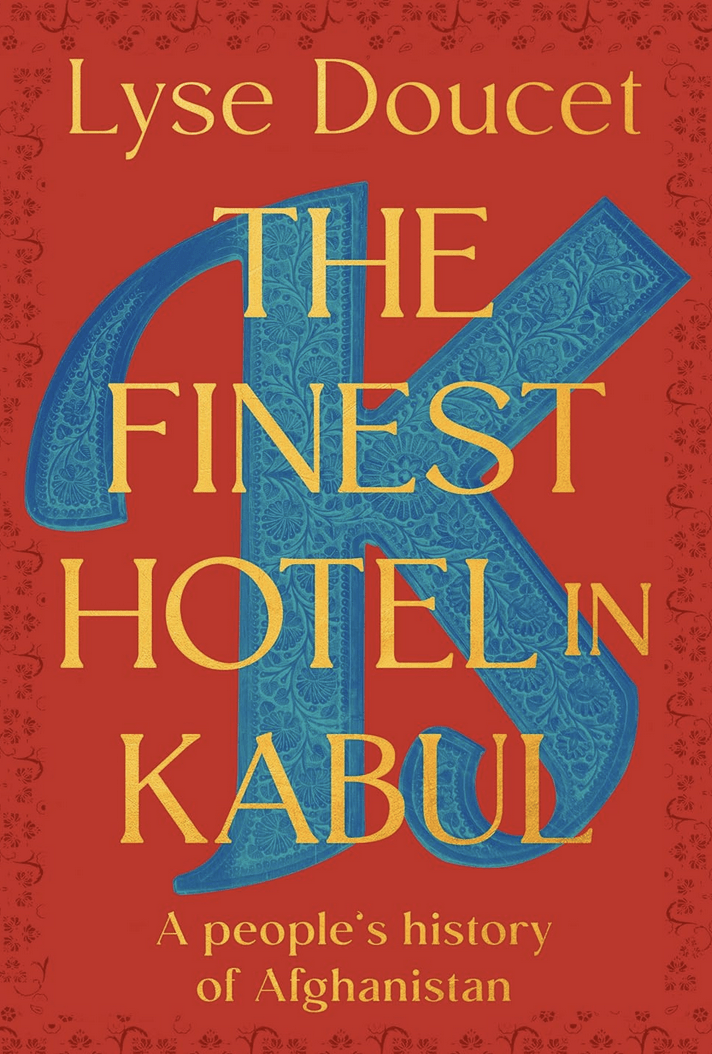
The Finest Hotel in Kabul: A People’s History of Afghanistan
By Lyse Doucet
Penguin Random House/November 2025
Reviewed by Khorshied Nusratty
October 13, 2025
The Finest Hotel in Kabul reads like a tender love letter from Lyse Doucet to Afghanistan and its people, exploring the historical and cultural significance of the Intercontinental Hotel in Kabul — known to locals and habitués as the Inter-Con, against the panorama of events that have transformed the political and cultural landscape of this ancient country for half a century.
Since it opened in 1969, the Inter-Con has been a microcosm of Afghanistan’s struggles, serving as a venue for political gatherings, cultural events, and moments of joy and hope. Despite enduring decades of war, rocket attacks and suicide bombings, the hotel has remained operational, symbolizing the country’s ability to endure and rebuild.
Doucet, the award-winning BBC News Chief International Correspondent, poignantly shares Afghanistan’s recent history through the stories of Afghans and historical figures she has met and befriended since her first trip to Kabul in 1988, when she stayed at the Inter-Con for nearly one year until the departure of the Red Army on February 15, 1989. On that day, the last Russian soldiers crossed the Friendship Bridge from Afghanistan into Uzbekistan after a disastrous 10-year occupation and bloody war left at least 1.5 million Afghans dead, 4.5 million Afghan refugees in Pakistan and Iran, and ended the Cold War as the U.S.S.R. disintegrated under the weight of its epic military failure and mighty economic collapse.
The courage and resilience of the Afghan people resonate throughout The Finest Hotel in Kabul, which chronicles the life of the modernist, five-story building perched on a hilltop overlooking the city and the people who move through it — staff, guests, locals, officials in regime after regime — as a way of telling the story of Afghanistan in a way no battlefield account ever could.
Time and time again, Afghans have adjusted to the shifting political, cultural and economic winds; struggling to make ends meet in the direst of circumstances, learning to live with personal tragedy, loss and unending conflict. Each chapter of the book documents Afghanistan’s turbulent history through monarchy, multiple coups, communist rule, civil war leading to Taliban oppression, and the U.S.-led invasion lasting 20 years, only to tragically end with the return of Taliban rule after the catastrophic withdrawal of U.S. military forces in August 2021.
The Finest Hotel in Kabul rekindled my own memories of living in Kabul for nearly three years. While I wasn’t born in Afghanistan, my father was, and I grew up imbued with his family stories and longing to return. After U.S. and coalition forces secured the country, that became possible — first, for me as a journalist, then for him, for the first time in 48 years.
Of course, I stayed at the Inter-Con when I first arrived in Kabul in June 2002, accompanying my close friend, Dr. Tahira Homayun, who was returning to Afghanistan for the first time in 26 years. Her husband, Dr. Ishaq Nadiri, NYU Professor Emeritus in Economics, had been named Senior Economic Advisor to President Hamid Karzai, who had just formed the new government after the Taliban were driven out by U.S. military bombing in October 2001.
A handful of Afghans depicted in Lyse’s book were friends of mine, most of them passed away now, and reading each chapter brought up many emotions as I remembered them in the bullet-scarred hallways and dining rooms of the Inter-Con.
We arrived in Kabul just as the emergency Loya Jirga (National Assembly) was about to convene at the Polytechnic University, just down the hill from the Inter-Con. It was an incredibly hopeful and exciting time for Afghanistan, and the Inter-Con was full of international reporters, visiting dignitaries, Afghan diaspora returning for the first time in decades, and many shady characters waiting to capitalize on new business ventures.
I first met Lyse after Dr. Homayun and I dined with Ashraf Ghani, the new minister of finance at the time (later to succeed Karzai as president), and his wife, Rula, as Lyse waited patiently in his garden to interview him. She was covering the Loya Jirga as I was for ABC News (I worked for ABC News in New York before leaving for Kabul), and we met several times over the years in Kabul before I moved to Canada as the wife of Afghanistan Ambassador Omar Samad, in late 2004.
A handful of Afghans depicted in Lyse’s book were friends of mine, most of them passed away now, and reading each chapter brought up many emotions as I remembered them in the bullet-scarred hallways and dining rooms of the Inter-Con.
The late Prince Ali Seraj, 9th-generation scion of the Afghan royal family, nightclub owner and bon vivant, became a dear friend and threw me a birthday party in the hotel’s Kandahar Ballroom just three days after our arrival in Kabul. Ali took over the antiquated clutter of a kitchen, ordering the staff to make a delicious Afghan feast under his guidance, which was served to many Inter-Con guests I barely knew. He was magnanimous, charming and larger than life.
A group of us staying at the Inter-Con — Afghan expats returned from self-exile, American journos and NGO workers, some of whom I already knew from California or New York, became fast friends. Prince Ali, himself returned after 20 years in the U.S., was often the ringleader, organizing lunches at the Golden Lotus, his former Chinese restaurant now under new ownership; dinners at the Marco Polo Restaurant; and impromptu gatherings at the Gandamak Lodge, where we created a candlelit banquet on the lawn when the electricity was cut.
We drove to Paghman for picnics next to gurgling creeks and bombed out villas and ventured up treacherous mountain roads into the Panjshir Valley to visit the tomb of Afghan resistance leader Ahmad Shah Massood — assassinated two days before 9/11 — which was only protected by a flimsy bamboo covering at that time, instead of being housed in an impressive mausoleum as it is today. Along the drive into the Panjshir Valley were Russian tanks strewn along the road, down mountainsides, and half-buried in the river, abandoned by the Red Army before they withdrew altogether from Afghanistan. But the Inter-Con was always home base — an oasis and well-appointed clubhouse, as much a witness to history as the rest of us.
By making the Inter-Con a character, The Finest Hotel in Kabul captures Afghanistan’s indomitable spirit through a monument that is still standing, adapting to change and defying peril while holding onto its legacy.
Its survival serves as a beacon of hope, showcasing the determination to move forward despite challenges – just like the Afghan people themselves.
Khorshied Nusratty is a former journalist who worked for ABC News and Fox News in Afghanistan from 2002 through 2004. She has promoted the cause of Afghan women and girls since the Soviet Invasion in 1979 and is the founder of Artists for Afghanistan Foundation, helping Afghan refugees resettle into their new lives while supporting online education and vocational training for Afghan women and girls inside Afghanistan. (www.forafghanistan.org).