
The HFX 2025 Nobel Laureate Essays: Kailash Satyarthi with ‘Democracies Discover Dreamers’
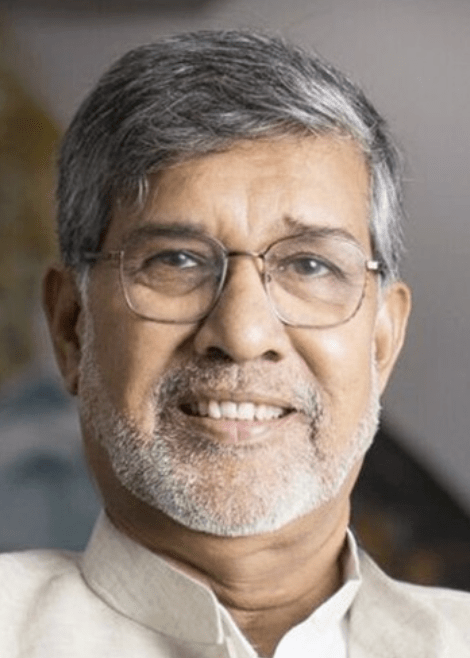
2014 Nobel Peace laureate and founder of Bachpan Bachao Andolan (Save Childhood Movement).
From the Policy Magazine HFX 2025 Nobel Peace Laureate Essays on Democracy Series
November 19, 2025
Democracy is often described as a system of institutions, laws, and elections. But beneath these visible structures lie something far more foundational and far more fragile — the human capacity to dream. Dreams are the first act of freedom. Long before a citizen votes, organizes, or speaks; they imagine. And the ability to imagine a better world is the very soul of democracy.
A house stands only if its foundation holds. A tree grows only if the soil nourishes it. In the same way, a democracy thrives only when its environment allows every individual, especially every child — the space, safety, and dignity to dream freely. Democracy is not merely a mechanism of decision-making; it is the fertile soil in which dreams take root and, in time, bear the fruits of progress, justice, and peace.
Yet in many parts of the world today, that soil is drying. Inequality, hatred, conflict, exploitation, authoritarianism, and fear are eroding the ground beneath our collective future. When societies silence dissent, suppress compassion, or normalize indifference, they do not only endanger political freedoms — they extinguish the human capacity to hope.
I have spent over four decades rescuing children from slavery, trafficking, and forced labour. Children who should have been holding pencils were holding hammers. Children who should have been laughing were silent. Their dreams were not just deferred; they were stolen. And when a child loses the freedom to dream, the world loses a future scientist, teacher, artist, leader. Democracy loses one more citizen who might have strengthened it.
This is why I say that the fight to protect childhood is the fight to protect democracy. A democracy that does not safeguard its children is a democracy in decline.
Yet I have also seen something profoundly hopeful. Even among the most oppressed, dreams may dim but their spark is never lost. I have met children who, after escaping slavery, said simply, “I want to go to school.” I have met young people who have survived conflict and still say, “I want to help others.” I have seen the rebirth of faith; not just in systems, but in humanity itself.
We must remember that the most profound strength of democracy is not power — it is compassion.
It is from these children that I have learned the meaning of the Three D’s: Dream, Discover, Do. To dream is to recognize that we carry within us the power to reshape our world. To discover is to find our purpose and potential. To do is to act with compassion, especially when action is difficult.
These are not steps for individuals alone but for nations. A democracy must dream of justice and equality. It must discover its moral responsibilities in the face of suffering. And it must do the work of building a society rooted in dignity and compassion.
Too often, the world is divided between those who call themselves realists and those who are dismissed as dreamers. But the truth is that realism without dreams turns into cynicism, while dreams without action fade into wishful thinking. Real and lasting change happens when the dreamer and the doer live together in the same heart. We need dreamers who are not bound by fear. We need realists who remember that progress is impossible without hope. We need systems that nourish both.
And that responsibility lies not only with citizens, but with governments. If democracy is the soil, then policy, protection, and justice, is the water that sustains it. Governments must create conditions where every child receives education, every young person feels safe to speak, and every citizen knows that their dignity matters — where institutions do not merely allow dreams to exist, but actively support people in fulfilling them.
We are living in a time when divisions run deep across nations. The world is confronted by the fires of war, the climate crisis, digital misinformation, and rising intolerance. In such a moment, we must remember that the most profound strength of democracy is not power — it is compassion.
Compassion is not a soft virtue. It is a courageous act. It demands that we see others not as strangers, but as reflections of ourselves. It turns concern into responsibility and thoughts into mindful actions.
Democracies discover dreamers, but only if they choose to. Only if they protect childhood, nurture education, listen to youth, and act from the heart as much as from the ballot!
The future will be built not by those who accumulate power, but by those who nurture humanity. Everything around us once began as a dream in someone’s heart. The world we live in today is shaped by the dreams of those who came before us. The world we will leave behind will be shaped by the dreams we choose to nurture now.
So let us build democracies where everyone, including the last mile person, has not only the right to dream but the support, safety, and opportunity to realize those dreams. Because when we protect the dreamers, we do not just protect individuals; we protect our shared future.
Nobel Peace Prize laureate Kailash Satiyarthi was awarded the prize in 2014 along with Malala Yousafzai, “for their struggle against the suppression of children and young people and for the right of all children to education.” He is the founder of multiple anti-child labour organizations, including Bachpan Bachao Andolan, Global March Against Child Labour, Global Campaign for Education, Kailash Satyarthi Children’s Foundation, and Bal Ashram Trust.
With many thanks to the Halifax International Security Forum.