
The Middle East: Two States are Impossible – For Now
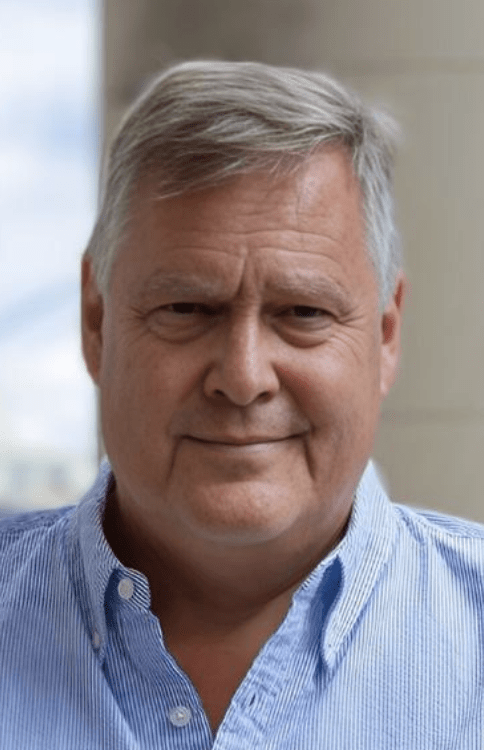
By Peter Jones
July 31, 2025
Canada’s conditional recognition of Palestinian statehood is a seismic shift in this country’s policy towards the Israeli-Palestinian conflict. And not before time.
Critics of the decision, set to be formalized at the 80th UN General Assembly in September, argue that it “rewards” Hamas. This is false: Hamas does not want two states and never has. Though Hamas and its supporters may claim some credit rhetorically, the decision is a reward, and an incentive, to those groups on both sides who still believe in two states.
Essentially, the announcement turns on its head decades of Canadian policy which held that such recognition would come at the end of a diplomatic process toward a two-state solution. There was logic to that approach when there was such a process, or at least the hope of one. But that has not been the case for many years. Indeed, surveying the landscape as it is today, the idea of two states seems delusional.
Today, we face a situation where there is a need to begin what will be a lengthy process to get us back to a place where two states can be a viable prospect once more. Thought of this way, Canada’s recognition of the Palestinian state, and that of other leading governments, rather than being the culmination of a process leading to two states, is now an attempt to start a process to revive the two-state idea.
How did we get here? After the 1995 assassination of Yitzak Rabin, the failure of the Oslo process and Camp David II, and the second Intifada, more extreme elements on both sides opposed to the idea of two states for ideological, religious and political grounds took over their respective governments (or parts of those governments). Hamas won the legislative elections in 2006, which provided the catalyst and context for Benjamin Netanyahu’s return to power three years later.
These forces, on both sides, are intent on creating a vision of the future which holds that the area of what was the British Palestine Mandate can only ultimately belong to one side; theirs. Both of them reject the two-state idea and reject that the other people have a right to inhabit that land. Their actions have been an attempt to dictate what the future shall look like by creating transformative “facts on the ground” through violence and then forcing the rest of the world to accept them.
On the Palestinian side, groups such as Hamas have taken the view that, though it may take many years, Israel must cease to exist and be replaced by an Islamist state. On the Israeli side, the extreme right-wing members of the current Israeli governing coalition take the view that all of the territory must be Jewish, which means annexing the West Bank and Gaza, and (ideally) making the Palestinians leave — or at least accept permanent second-class citizenship.
These forces set about systematically tearing down the peace process, repeatedly serving as strange-bedfellows with a mutual interest in that sabotage. Netanyahu has sought to cling to power to retain his protection from prosecution on corruption charges. An end to the assault on Gaza will activate inevitable investigations into the Hamas rampage of October 7, 2023. That process will reveal in much greater detail the extent to which the massive security and intelligence failure that enabled what has been described as Israel’s 9/11 could have been avoided. It will also explore reports that the Netanyahu government facilitated payments to Hamas from Qatar which allowed Hamas to remain in power in Gaza over several years.
It is a daunting agenda, and none of it looks inevitable or even likely at this point. But what is the alternative? A never-ending cycle of what we have now? Neither side can ultimately ‘win’ this conflict.
Attempts to resuscitate the two-state solution must thus confront the reality that both sides are governed, in whole or part, by people who fundamentally reject it. Ultimately, until those governments change, it will not be possible to progress, which is why one of Canada’s conditions for recognizing Palestinian statehood is new elections. However, even if Hamas and the present Netanyahu government are replaced, the level of trust on both sides is so low that meaningful progress towards two states is seen by many as unrealistic.
It will thus take several years of effort to return us to a place where the idea of two states becomes viable once again. Critics will say it is impossible; too much damage has been done to the idea. We should not be daunted by this. History is full of instances where the seemingly impossible eventually happened, even though the “experts” of the day pronounced it hopeless.
Had you told the experts five years before Mikhail Gorbachev became Soviet leader that the Iron Curtain would fall and the USSR disappear, they would have laughed at you. Had you told them five years before Nelson Mandela was released that the South African government would voluntarily renounce apartheid and accept majority rule, you would also have been the subject of derision.
The issue, therefore, is not whether the idea of two states is impossible today; it is whether the idea can be rehabilitated over a period of years and made possible again.
The experts, surveying the wreckage we see all around us, will tell you “no”.
This is why Canada’s recognition of Palestine cannot be a stand-alone event. It must be part of a concerted effort to re-create the conditions on both sides whereby serious re-engagement with the two-state agenda can take place again. The heaviest lifting in this respect can only be done by the peoples of Israel and Palestine. They must work their way back to a place whereby they can imagine the possibility of living together, despite what has happened, and be prepared to elect governments willing to consider this, or, at least, which don’t outright reject it.
The rest of the world can help by providing incentives for those who want to try to live together and penalties for those who don’t. For Western countries like Canada, this may take us into uncomfortable territory in terms of being prepared to actually sanction Israel if it does not cease annexation efforts, while simultaneously demanding of the Palestinian Authority real reform and not endless excuses for corruption and double-dealing. Neither of these things will be easy and a steady hand will be required over time.
The Arab states have a critical role to play in helping to revive and reconstitute the Palestinian Authority, particularly in Gaza, and convincing the Israeli people that they (the Arab states) will live in peace with them if the Palestinians are given a chance for dignity and self-determination.
The US role in this is also critical, and a source of concern given the Trump Administration. But we also have many examples from history of movements for change that were initially resisted by the US but ultimately came to fruition with the US as a main supporter. If one thinks of the process we are embarked on in the context of a decade or more, Trump will only be around for a short part of that, and he may not hold nearly as much power after the mid-terms in 18 months. Polling shows that a growing majority of Americans think current US policy in the region is misguided.
It is a daunting agenda, and none of it looks inevitable or even likely at this point. But what is the alternative? A never-ending cycle of what we have now? Neither side can ultimately “win” this conflict.
Between the Jordan River and the Mediterranean Sea there are roughly 7 million Jews and 7 million Palestinian Arabs. If the last 80 bloody years have proven anything it is that neither of them is going anywhere. They have no choice but to eventually learn to live together.
Peter Jones is a Professor in the Graduate School of Public and International Affairs at the University of Ottawa. He is also Executive Director of The Ottawa Dialogue, a University-based organization that runs Track 1.5 and Track Two diplomatic dialogues around the world.