The Upside-Down World of Donald Trump
January 21, 2026
During a week when Mark Carney made “order” the theme of Davos, the disordered, upside-down world of Donald Trump was on full display for contrast at this year’s World Economic Forum.
Canada’s Prime Minister offered a principled and brave approach for middle powers like Canada struggling to cope with a world dominated by superpower hegemons – the U.S., China and Russia. Mr. Carney saw no return to the “Old World’, adding that we were experiencing a “rupture, not a transition.”
He added pointedly, “When the rules no longer protect you, you must protect yourself.” Trump countered with predictable bombast, belittling erstwhile allies like Canada for ignoring the power of the U.S. on manufactured issues such as the takeover of Greenland.
“Canada gets a lot of freebies from us. They should be grateful, but they are not,” Trump said in a tone and cadence widely remarked to be reminiscent of Marlon Brando in The Godfather.
Mutual trust and mutual respect – fundamental tenets of any stable alliance – are being shattered. Trump is more comfortable dealing with adversaries like China’s president XI and Russia’s president Putin than with longstanding NATO allies.
He is infatuated with the U.S.’ military and economic power and sees all world events through that prism, acting primarily on “America First” impulses of the moment with little consideration of broader ramifications, including for his own country.
Kidnapping Venezuelan dictator Nicolás Maduro and bringing him to trial in New York City pleased many, especially Venezuelans who suffered under two decades of brutal tyranny.
But, while the U.S. military and intelligence operation was flawless, the follow-up is uncertain. Trump initially sidelined Nobel Peace Prize winner Maria Machado who won the 2024 election handily, favouring instead the vice president, Delcy Rodríguez, who, along with her brother, the Speaker of the National Assembly, had ruled hand in hand with Maduro.
The result is decapitation without regime change. Machado meekly submitted her peace prize to Trump in a White House visit.
Trump tried to assure Americans that he would control subsequent events in Venezuela, particularly the world’s largest oil reserves. But it would require billions of dollars of investment to update Venezuela’s energy infrastructure, and U.S. oil executives have been cautious, some saying Venezuela is “uninvestable.”
Trump lacks a concrete plan that would enable Venezuela to move towards stability and back to democracy, and there is little to suggest that any transition will be either smooth or successful.
On Iran, Trump initially signaled forcefully that the U.S. would retaliate if protestors, who have been demonstrating nationwide since late December, were killed by the authoritarian regime. Estimates suggest many thousands have been brutally slain.
More than 20,000 were incarcerated. Some mistakenly heeded the U.S. president’s assurance that “help is on the way.” So far, the U.S. response has been strictly rhetorical. Several U.S. allies in the region urged caution, fearing destabilization in the region and even worse behaviour by Iran’s Islamic Republic. Following weeks of brutal suppression, the protests faded.
The widely lauded Middle East peace plan is moving to the critical and most difficult second phase, where the prospects of Hamas disarming seem as elusive as ever.
Mostly, Canada needs a united front at home to respond to U.S. machinations on trade and other issues, and to sternly avoid American attempts to divide and conquer.
Meanwhile, efforts for peace between Ukraine and Russia stagger forward, failing to justify Trump’s one-sided support for the perpetrator, Putin, as opposed to the victim, Zelensky. Trump consistently bemoans the deaths involved but refrains from using U.S. leverage to bring Moscow around. Instead, he irrationally blames Zelensky for preventing peace.
Most baffling of all is Trump’s threat to annex Greenland, ostensibly because of U.S. national security concerns about the Arctic. This threatens the viability of NATO – a concern that does not bother a president whose disdain for NATO is palpable. Trump’s real interest may be in Greenland’s rare earth minerals.
After threatening to escalate tariffs against several European countries who openly oppose his annexation, the crisis has been defused at this writing after a meeting between Trump and NATO Secretary General Mark Rutte in Davos on an alleged “framework” on a “future deal”. But his lunge has upset many NATO allies, many of whom have finally concluded “enough is enough.”
Some of Trump’s MAGA followers, including some elected Republicans, are concerned that the president is preoccupied with foreign affairs rather than challenges at home – affordability and health care – which are likely to dominate the mid-term elections that normally do not bring good news to the sitting president.
Canada should worry about what Trump’s “future deal” for Greenland looks like, especially given its possible interplay with Russia and China’s designs on the Arctic.
More acutely, we must be concerned about the prospects for a renewal of the CUSMA, especially in the wake of Trump’s lawless actions on tariffs, which violate the very agreement he signed, as well as basic principles of the WTO. Even if the Supreme Court rules against the administration on tariffs, Trump will seek other ways to achieve a similar end.
Canada’s fundamental guiding principle on any CUSMA re-negotiation should be that “no deal is better than a bad deal.” Trump has openly expressed his dissatisfaction with the current agreement implying “we do not need it,” nor does he think that the U.S. needs autos, lumber, potash or any other product from Canada.
Many U.S. business executives would not agree with Trump’s assertions. The pressure to extend the existing agreement must come from them, especially auto and agriculture executives who rely directly on Canada. That would have a direct impact on Congress in an election year and Congress, not the administration, never forget, is the ultimate U.S. authority on trade.
When 40 million Canadians buy from the U.S., roughly the equivalent of what 340 million Americans buy from Canada, how can Canada be accused of “taking advantage” of the U.S.?
The notion of an alliance between the EU and the Trans-Pacific Partnership, which Carney endorsed in his Davos speech, would create a huge economic bloc capable of countering the hegemons frontally and effectively.
Mostly, Canada needs a united front at home to respond to U.S. machinations on trade and other issues, and to sternly avoid American attempts to divide and conquer. The provinces need to do much more to bring about free trade within Canada. Efforts to date have been feeble.
The government needs to expand trade diversification actions, mainly on energy, and rare earth minerals, and demonstrate convincingly to Washington that there are demands for Canadian products elsewhere. We should not behave like prisoners to our geography.
The best way to counter the topsy turvy Trump approach to world affairs is to confidently work around it – a move that would reduce the risk of over-dependence on the U.S. The results for Canada in China are welcome, albeit debatable. Better by far would be tangible investment and trade agreements with likeminded allies in Asia and Europe – strategic moves that would reduce the risk of over-dependence on the U.S.
We are learning many painful lessons from an erratic, unreliable “America First” administration and cannot coast in the hope that things will improve in a post-Trump world. Mostly, we need precise actions to strengthen our sovereignty, safeguard our security and enhance our prosperity. That is the best antidote to all bullying tactics.
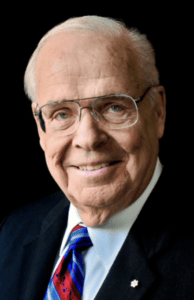
Policy contributor Derek H. Burney is a former 30-year career diplomat who served as Ambassador to the United States of America from 1989-1993.