
Trade, Fertilizer and Canadian Economic Security
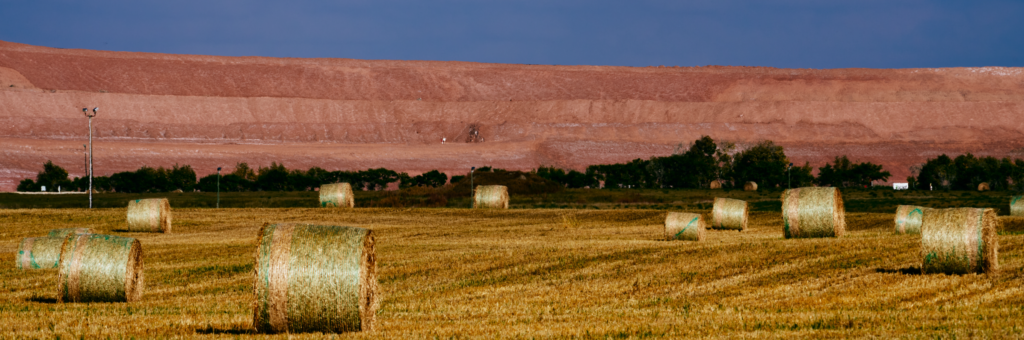 A potash mine in Saskatchewan, where all of Canada’s 10 active mines are located/Shutterstock
By Robert J. Johnston and Kruthika A. Bala
September 29, 2026
President Donald Trump recently threatened to switch from Canadian potash to Belarussian supply. Prime Minister Carney countered that the U.S. and Canada could work together to create a self-sufficient North American bloc for fertilizer.
While Trump subsequently said the U.S. would continue buying Canadian potash, it is well worth exploring why potash supply was raised at all as a bilateral trade issue and how the deep integration between U.S. and Canada on potash and other fertilizers is not easy to restructure.
While oil and diesel price fluctuations grab the headlines, these comments indicate fertilizer supply chains face geopolitical and trade turmoil as well. How is Canada positioned to manage increasingly complex global supply chains to secure the feedstocks and nutrients on which our food supply depends?
Canada’s food security is generally resilient thanks to substantial domestic fertilizer production. However, even from a relative position of strength, Canada must manage geopolitical, supply-chain, and trade-policy driven concentrated exposures in regional nitrogen supply, imported phosphate, potash export markets, and transportation networks.
Overall, a lack of adequate east-west infrastructure and integrated value chains make Canada’s fertilizer supply more vulnerable than it should be, particularly in a scenario where the U.S. market becomes less accessible and integrated.
Canada produced an estimated 25 million tonnes of potash in 2024, an increase of about 2.1 million tonnes from the previous year, and approximately one third of global output. The country’s 10 active potash mines are all located in Saskatchewan.
Canada also has significant domestic nitrogen production, leveraging low-cost natural gas inputs. Alberta is a major centre of Canadian nitrogen production, with large ammonia and urea facilities at locations including Medicine Hat, Carseland, Fort Saskatchewan, and Redwater. Nitrogen production is concentrated principally in Western Canada, while Eastern Canada remains materially dependent on imports. Canadian agriculture also relies on the U.S. and Morocco for phosphate fertilizer.
These characteristics make adjustment capacity an important measure of Canadian fertilizer security. During periods of global market disruption, Canada may need to replace imported fertilizer, move additional domestic production between regions, redirect exports toward alternative markets, or increase throughput via different transportation corridors.
The relevant variables include the volume that can be shifted, the time required to do so, the cost of adjustment, and the extent to which alternative pathways depend on common infrastructure or industrial inputs.
In our recently completed analysis of U.S. fertilizer security, we found that access to existing supply can improve much faster than underlying productive or transportation capacity can expand. Market adjustment operates through inventories, alternative suppliers, rerouting, and spare capacity that already exist.
Canada’s future fertilizer and food security will be linked to four forms of adjustment capacity: Eastern nitrogen replacement, phosphate replacement through independent production pathways, potash redirection to alternative export markets, and incremental transportation throughput during disruption.
Eastern Nitrogen: Replacement Capacity
Eastern nitrogen provides the clearest regional exposure to global market risk. Western Canada has major ammonia and urea production, enough to cover regional needs and provide significant exports to the U.S. By contrast, Eastern Canada is a net importer from key suppliers in the U.S., Algeria, and Germany — suppliers that became even more important for Canada following the cessation of imports from Russia in 2022. The U.S. continues to import Russian urea, which has kept U.S. prices well below comparable prices in Canada.
Entering the 2026 Strait of Hormuz disruption, Eastern Canadian importers had already secured approximately 80-90 per cent of the nitrogen required for the growing season. Most of that fertilizer was already in Canada or in transit. Existing contracts and inventories therefore limited the immediate physical supply exposure from the Gulf crisis, but soaring seaborne prices raised costs for Canadian farmers.
Today, a more protracted geopolitical disruption linked to extended conflict in the Persian Gulf would roll over into another procurement cycle for the next planting season. Eastern Canadian buyers would have to increase purchases from alternative foreign producers or draw more heavily on Western Canadian production—if rail capacity is available.
In a classically Canadian way, an Alberta wheat farmer and an Ontario corn farmer face materially different physical supply exposure to the same global nitrogen shock.
Foreign replacement supply depends on available export capacity, shipping and port capacity, freight costs, trade policy, and competition from other importers. Additional supply from Alberta and other Western Canadian production centres depends on available plant output, eastbound transportation capacity, and delivered cost. In other words, fertilizer is yet another Canadian example of internal trade barriers and inadequate east-west infrastructure creating dependence on volatile global markets.
To bolster security, Canada should estimate the share of Eastern nitrogen requirements that could be replaced within one agricultural season under different disruption durations. That assessment should identify replacement volumes by source, the infrastructure required to deliver them, and the cost of supply substitution.
Government financial support addresses a separate component of the same shock. Farm Credit Canada expanded its Trade Disruption Customer Support Program in March 2026 as fertilizer and energy costs increased, providing eligible farms and agribusinesses with additional credit, term lending, and payment flexibility. However, production, inventories, imports, and transportation determine the physical volume available for purchase even when financial supports are available.
Phosphate: Replacement Capacity
Canada’s phosphate exposure is more directly connected to foreign production as there is no material phosphate rock mining, despite considerable reserves in Ontario and Quebec. Canadian agriculture relies on imports from the U.S. and Morocco.
Phosphorus was added to Canada’s Critical Minerals List in 2024, reflecting its importance to dry, granular fertilizers that supply plants with essential nitrogen and phosphorus such as Monoammonium Phosphate (MAP)/Diammonium Phosphate (DAP) production as well as being a material for lithium-iron-phosphate batteries.
The 2026 disruption demonstrated how constraints in upstream industrial inputs can affect finished fertilizer availability. Phosphate production requires sulfuric acid, creating exposure to sulfur availability from refinery operations. The disruption of supply from the Persian Gulf — which accounts for 50 per cent of global sulphur trade — has disrupted phosphate fertilizer production. The World Trade Organization (WTO) reported in July 2026 that after the Persian Gulf conflict began, DAP rose from roughly US$580/ton to about US$770/ton.
Canada’s phosphates strategy should determine where additional Canadian or allied production would materially increase replacement capacity, the time required for that capacity to reach operation, and whether it can remain commercially viable under normal market conditions.
Canada captures elemental sulphur from oil sands and sour gas (natural gas or any other gas containing significant amounts of hydrogen sulfide) production in Alberta but exports it primarily to Asian markets. There is also sulfuric acid production at copper and nickel smelters in Ontario and Quebec. There are phosphate rock resources in Quebec which, if developed, could provide another vital link in a domestic MAP/DAP supply chain.
Yet the full value chain lies outside of Canada – mostly in Florida and North Carolina which have phosphoric acid and MAP/DAP fertilizer plants that supplies much of Eastern Canadian farming. Where strategically useful capacity is not developing, policy should identify the commercial, financial, regulatory, or infrastructure constraint preventing investment.
Potash: Export Redirection Capacity
Canada’s potash is the mirror image of phosphates – in 2024/25, Canada supplied roughly 85 per cent of U.S. Muriate of Potash (MOP) imports.
Additional U.S. Section 338 tariffs announced in July 2026 explicitly exempted potash even while applying new tariffs to other Canadian goods. Canada is also expanding overseas sales relationships. On September 10, a new government-to- government agreement was announced for Canadian potash exports to Bangladesh, building on agreements that have delivered a cumulative 3.5 million tonnes since 2014.
Following the March removal of U.S. sanctions on major Belarussian potash producers, renewed U.S.-Belarus trade expands the set of non-Canadian supply options for the U.S. However, at best this option is a longer-term one, as Belarussian supply is fully contracted in the near-term.
Belarussian shipments to the U.S. averaged about 635,000 tonnes annually in 2017-21, while Belarus reports that its 2026 production is largely committed Current evidence does not establish either sufficient near-term deliverable volume or a landed cost advantage capable of displacing Canadian supply at scale.
In a disruption scenario with the U.S., the relevant strategic measure is the volume of U.S.-bound potash that Canada could redirect economically if bilateral market access deteriorated materially, including volumes of Canadian potash that are exported through U.S. ports to third-party markets. Because potash trades globally, U.S. substitution would not necessarily translate one-for-one into lost Canadian sales: Belarusian tonnes redirected to the U.S. could tighten availability in their previous markets and create some offsetting demand for other suppliers.
Transportation: Throughput Under Stress
Rail, terminal, and port capacity determine how far Canada can substitute and expand the supply and export pathways identified above. Western nitrogen can supplement Eastern supply only if additional volumes can move across Canada. Potash can be redirected toward overseas buyers only if railways and export terminals can accommodate the additional traffic. Imported nitrogen and phosphate depend on ports, terminals, and inland distribution networks.
Federal transportation policy is now targeting some of this capacity. The $5 billion Trade Diversification Corridors Fund for 2026-27 through 2031-32 targets transportation capacity and connectivity constraints. Its Pacific Corridor explicitly includes potash among the commodities moving from Western Canada through an integrated marine, rail, and road network. The Port of Vancouver Gateway Strategy similarly identifies potash among the port’s principal bulk exports and includes additional bulk terminal development and rail capacity expansion.
The Building Canada Strong Act (Bill C-39) would add corridor performance metrics and project coordination mechanisms; their contribution to adjustment capacity should be measured through changes in usable throughput and project lead times.
A Fertilizer Security Strategy
Collectively, current Canadian policies already seek to address trade diversification, transportation capacity, strategic minerals, agricultural finance, and nutrient management. Agriculture and Agri-Food Canada’s (AAFC) 2026-27 agenda, for example, emphasizes greater geographic trade diversification and continued work to improve nutrient management and optimize fertilizer use.
A Canadian fertilizer security strategy should connect these policies through four measures:
- the share of Eastern nitrogen requirements that can be replaced within an agricultural season;
- the volume of phosphate available through independently viable alternative production pathways including potential development of a Canadian supply chain;
- the volume of displaced U.S.-bound potash that can be reallocated to other markets within specified periods and the resulting change in producer netback relative to U.S. sales; and
- the incremental rail, port, terminal, and storage throughput available when normal transportation pathways become constrained.
In our U.S. analysis, we found that prolonged disruption progressively reduces the scope for short-run adjustment as inventories decline, alternative routes become constrained, and redirectable supply is committed elsewhere.
A Canadian fertilizer security strategy should therefore measure how much supply existing pathways can replace or redirect, how long they can sustain that adjustment, and where common infrastructure or industrial inputs constrain several alternatives simultaneously. Those measures would identify where market adjustment is sufficient, where existing policy addresses the constraint, and where additional capacity has strategic value.
Food costs are part of an affordability narrative that is arguably the dominant narrative in Canadian politics and a source of economic pressure for families.
The affordability and inflation narrative has multiple drivers, but energy and fertilizer are unquestionably among the most important.
This context provides urgency for Canada to move to strengthen its domestic fertilizer value chains and supporting infrastructure, while looking to mitigate the potential global trade and geopolitical exposures that threaten both Canadian fertilizer exports and imports alike.
Robert J. Johnston is Director of Energy and Natural Resources at the University of Calgary School of Public Policy and Professor at the Haskayne School of Business. Kruthika A. Bala is Managing Director of Resources Now.