
Trade Politics in a Time of Coercion
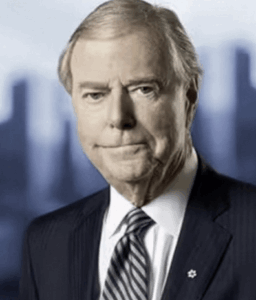
By Don Newman
October 10, 2025
No one should be surprised that Donald Trump and his punishing tariffs on Canadian exports to the United States are creating dilemmas for both of our country’s major political parties.
Prime Minister Mark Carney and his Liberal Government are facing continued resistance from the Trump administration as it tries to negotiate relief from the 50% sectoral tariffs the Trumpsters in Washington have slapped on Canadian steel and aluminum exported the United States, 25% tariffs on automobiles — with a carve-out for the value of parts in any car made in the United States — and tariffs on softwood lumber exports from Canada that, as of October 14, will hit 45%.
It was these particular tariffs that were the main reason for the Carney visit to Washington this past week. There was the Oval Office pool spray that Trump has expanded from its long-customary, five-minute photo-op to an occasion for rambling, gold-plated fireside monologues There was a working lunch with the President and his advisers, and dinner with Vice President J.D. Vance. It all failed to produce any tariff relief, although enough “progress “ was apparently made that Dominic Leblanc, the Privy Council President and “Minister of Everything” in the Carney government, including U.S. trade, was left behind with other high-level Canadian players to continue negotiating with American Officials.
However, Carney returned home to face the Opposition attack of Conservative leader Pierre Poilievre. He blamed the Prime Minister for not securing a tariff deal and because of that going back on his election promise to reach a new economic and security relationship with the Americans as the best man to “handle” Trump.
It is the duty of the Official Opposition to criticize and hold the government accountable. No doubt diehard Conservative supporters in the party base are nodding along in agreement with their leader. But the criticism is failing to convince Canadians with no formal political allegiance who traditionally determine the outcome of elections.
The ritualization of foreign leaders meeting with Trump illustrates how difficult dealing with the American president can be. In his first term, Trump told his staff he wanted each day of his presidency to be an elevation show, and on each show, he had to be the “winner.” In his first four years in office, he didn’t quite master that formula. Usually, he met with camera crews as he walked to the Oval Office outside the White House, and stopped for a “scrum” with reporters who played straight-men (and women) to his performance.
This time around, he has upgraded the performance, moving it into an Oval Office gilded with gold in an apparent replication of the lairs of Central Asian dictators to add grandeur to the show. Visiting dignitaries are now the unpaid extras subjugated to the presidential performance, as Carney was this week.
The Prime Minister played his role well, rarely commenting and saving his power for the private meetings to follow. His main interjection was to point out Canada is the second-largest foreign investor in the United States and would be investing “trillions” more if we get the deal with the United States we want.
Those investments could only come with tying our military even closer to the United States. Equipment like the F-35 jet fighters currently on order. However, most of that order is under review because of the tensions with the Trump administration. There is speculation that Canada would accept the first tranche of the fighter jets that the legally binding contracts says we must, but then switch to a European supplier for the majority of the roughly 80- plane order.
The possibility of doing that makes many Canadians feel good. But the effect on Canada – U.S. relations could be devastating. The tariffs we are now facing would seem puny in comparison to what we would face if the deal were terminated. Other penalties and punishments would certainly follow.
The reality is that Canada has some cards to play, but they are mainly in energy and critical minerals as the government has realized. For his part, Poilievre seems unwilling to accept that, acting as though what is happening now is a traditional trade negotiation the Liberals are messing up. Many Canadians are now seeing the talks for what †hey are; highly sensitive discussions with a mercurial president who hopes to destroy the Canadian economy while claiming he loves Canadians.
This is a difficult reality. Mark Carney must deal with it. To maintain any long-term credibility, Pierre Poilievre must at least publicly acknowledge it.
Policy Columnist Don Newman is an Officer of the Order of Canada, and a lifetime member and a past president of the Canadian Parliamentary Press Gallery.