Trump’s Disastrous War Should Double Our Caution on CUSMA
By Derek Burney
April 5, 2026
Donald Trump’s erratic messaging on Iran — newly captured in a profane Easter-Sunday Truth Social post — continues to inject more confusion than clarity into why and how this war is being waged, and especially how it will end.
Following the spectacular rescue by U.S. Special Forces of an American airman shot down in southwestern Iran, Trump now promises a massive bombing attack against bridges and power plants.
After five weeks, the costs of Trump’s war already greatly exceed the gains. If the strategy is not clear, military operations cannot succeed. Any chance of regime change — to the extent that it was ever really a goal — has disappeared. The new leaders in Iran are even harder-line than their predecessors.
Trump’s 15 point “Peace Plan”, seemingly being brokered by Pakistan, has been categorically rejected by spokesmen for Iran. Deadlines are announced for U.S. bombing actions that will “send Iran back to the stone ages (sic) where they belong” but Trump changes his plans as often as he changes his suits.
Meanwhile, the administration has yet to explain why the U.S. did not secure the Strait of Hormuz as part of the initial assault, or how it so grossly underestimated the havoc Iran’s predictable blockage of the choke point would cause in the global oil market. The U.S. may, as Trump repeatedly says, be “energy independent” but it is not immune from the vicissitudes of the global market.
The impact of $4-a-gallon gas on Americans is palpable and only intensifies the problem the administration and Republicans in Congress are having on the issue of “affordability.” Due to horrendously long lines at major airports caused by the partial government shut down, Trump eventually used his executive power to pay TSA employees who had not been paid for weeks.
But why not earlier? The atmosphere in Congress is brittle, and the public mood is sour. As journalist Jimmy Breslin lamented after the New York Mets’ disastrous first season in 1962: “Can’t anyone play this game?”
Because several NATO allies were initially reluctant to support escorts of tankers through the Strait of Hormuz, Trump petulantly threatened to withdraw from NATO. “If you don’t support us” (on a war about which they were not consulted), “why should we support you?”
NATO Secretary General Mark Rutte will visit Washington this week to try to calm matters. But America’s credibility with its allies has been shattered by Trump’s unilateral lunges and his derogatory, often crude personal attacks.
Donald Trump promotes himself as the consummate dealmaker. But Volodymyr Zelensky would beg to differ. The big winner so far from the Iran “excursion” is Vladimir Putin. Trump decided to lift oil sanctions on Russia to “stabilize” the global market.
His gambit failed completely but fuelled Putin’s war machine with billions of revenue just as events on the ground were turning against Russia. Trump’s complaints about his allies ring hollow in the face of his mollycoddling of Putin.
If the Democrats win both the House and the Senate in the November mid-term elections, Trump risks becoming an even lamer lame duck than is customary in the final two years of a second-term president.
The president has reason to be frustrated at home. His approval ratings have plummeted. He jettisoned two cabinet members – Homeland Security Secretary Kristi Noem and Attorney General Pam Bondi – who were flailing in their responsibilities. War Secretary Pete Hegseth could be next following a long list of senior military and intelligence officers who have been unceremoniously ousted.
If the Democrats win both the House and the Senate in the November mid-term elections, Trump risks becoming an even lamer lame duck than is customary in the final two years of a second-term president.
All of this has direct implications for the renegotiation of CUSMA. Canada should certainly not rush into anything. Time may be our best ally. We should avoid being bamboozled by U.S. efforts to play Mexico off against us and we should ignore the bluster about Canada “being difficult” in trade negotiations.
Except for autos, Canada shares few trade objectives with Mexico. If successful, CUSMA will effectively result in two distinct bilateral agreements being combined under a trilateral umbrella.
Trump’s decision to soften tariffs on aluminum — a product American businesses and defense contractors need — is just the latest manifestation of the folly of his infatuation with tariffs. Far from being a major cure-all, they are a major reason why prices for consumers and producers in the U.S. have risen.
Besides, the Administration has yet to determine how it will compensate those who were hit by the initial round of illegal tariffs that were struck down by the U.S. Supreme Court — a decision that prompted several lawsuits from those seeking reimbursement.
For any trade negotiation to be successful, there must be a degree of mutual respect and a genuine prospect for mutual benefit. Trump does not operate from that premise. In fact, he insists that the U.S. “needs nothing” from Canada.
It is time for Canada to demonstrate to Americans, especially White House sycophants, that we do have robust leverage of our own, namely products like aluminum, oil, potash and electricity that America needs.
The best way to underscore that point is to rapidly develop our vital energy and rare earth resources and associated infrastructure, which will be in even stronger demand following the Iran conflict. There are clearly more welcoming markets in Asia and Europe.
However, we cannot deliver by emulating the “all hat, no cattle” cliche about the Texas rancher with our own version of “all talk and no action.” We need prompt decisions to prove that trade diversification is a reality, not an aspiration. And, if we choose to buy submarines from South Korea or Germany, the agreement should include a promise by the winning supplier to establish an auto assembly plant in Canada.
The best message our negotiators can convey is that Canada has real competitors for products that Trump scorns. Given Trump’s disregard for basic trade principles and existing trade agreements, we should ask pointedly why anyone should assume that he would honour a new deal when he has flagrantly violated the one we already have? Above all, we must continue to reduce our vulnerability to the whim and wile of Washington.
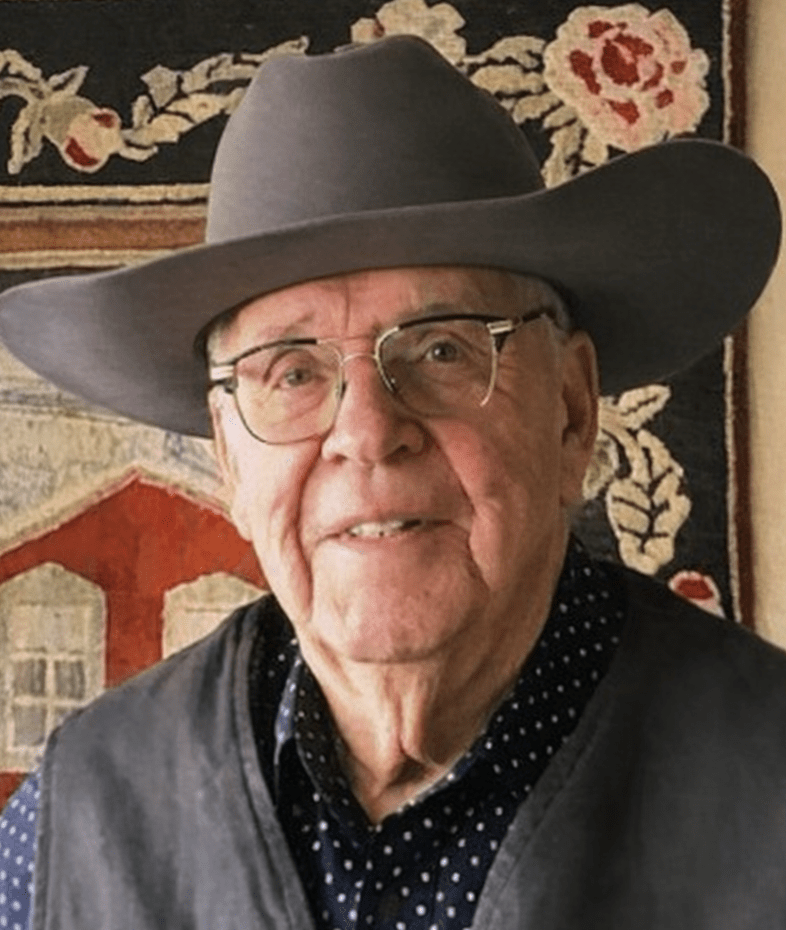
Derek H. Burney is a former 30-year career diplomat who served as Canada’s Ambassador to the United States from 1989-1993. He now shares operations of a family cattle and horse ranch in Colorado.