
Will Iran be Donald Trump’s ‘Forever War’?
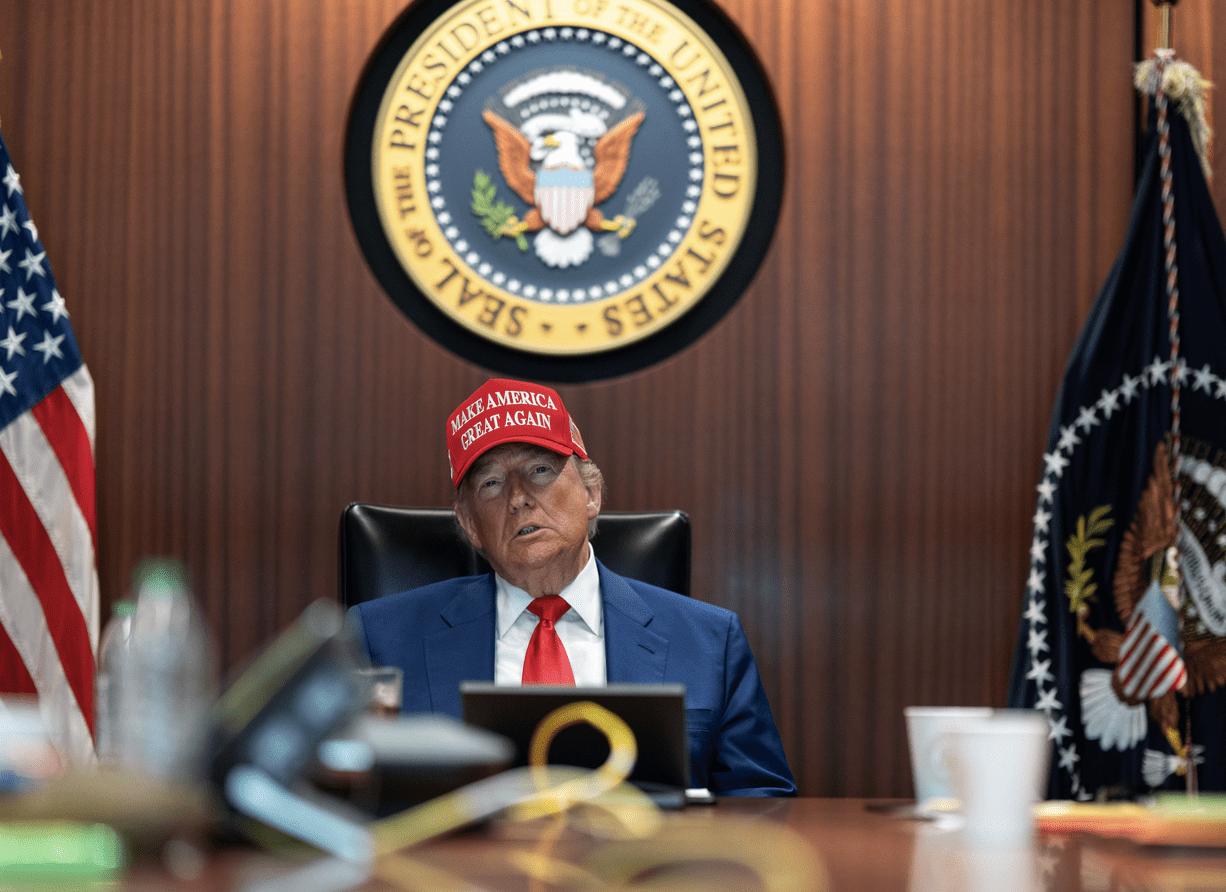 Donald Trump in the White House Situation Room on Saturday, June 21, 2025
By Peter Jones
June 22, 2025
Whatever else you may think of him, Donald Trump has at least been consistent over many years about one thing; he has been ruthlessly critical of his predecessors for embroiling the US in a series of “forever wars.”
Now, it looks like he may have started one of his own by involving the United States directly in the latest hostilities between Israel and Iran.
We are told, of course, that this is not the plan. A bright and hopeful future is in prospect. The strikes have been a “spectacular military success” and “Iran’s nuclear enrichment facilities have been completely and totally obliterated”, Trump reported in his live address Saturday night. If only the Iranian regime will learn its lesson and come to the table in the full acceptance of its defeat, all will be well.
What could be easier?
The problem is that, as the generals are fond of saying, “the enemy gets a vote”; meaning that the trajectory of any military operation depends on the response of the target, and Iran, at this writing, has not yet responded.
The Iranian regime knows that it must be seen to fight back or be hopelessly weakened in the eyes of its own people and the region. The Iranian people, though no lovers of those who rule them, are even less likely to accept a foreign power bombing their country. There is little in the 7,000-plus year history of Persia that indicates this is a people which takes kindly to being kicked around by foreigners.
In terms of Iran’s nuclear program itself, we do not yet know how seriously damaged the deeply buried Fordow enrichment facility is. Even if Trump’s claims that it has been “obliterated” are true, however, this does not end Iran’s nuclear program.
The Iranians have known that this might be coming for some time. It is almost certain that the stocks of enriched uranium have been moved elsewhere, as have at least some of the centrifuges and other key pieces of equipment. And no matter how many Iranian nuclear scientists Israel manages to kill, the knowledge they have acquired will still exist in Iran.
There is no question that these strikes have set back the Iranian nuclear program, perhaps by some years, but they have not ended it.
Instead, they have probably driven that program further into secrecy and have given the regime even more incentive to believe that only a bomb of its own will ultimately protect it from future attack.
So, we are on the brink of entering into a dynamic whereby ever-more intensive scrutiny of Iran will be called-for, only now there will almost certainly be absolutely zero cooperation with the inspectors of the IAEA to monitor what is left of the nuclear program.
Periodic bombings will be required to snuff out whatever new strands of the program are discovered. Meanwhile, the likelihood of Iranian reprisals for US strikes in the form of attacks against US bases and other assets in the region, in Europe and elsewhere, is great. And, barring a de-escalatory off-ramp, the cycle of reprisals will produce consequences that cannot yet be discerned or gamed out.
As the generals are fond of saying, ‘the enemy gets a vote’; meaning that the trajectory of any military operation depends on the response of the target, and Iran, at this writing, has not yet responded.
Eventually, though he says that the strikes launched last night were not aimed at regime change, Trump may conclude that only a new regime can end this dynamic once and for all. Which is where the “forever wars” in Iraq and Afghanistan that he has deplored for so long became quagmires.
The tragedy is that it didn’t have to be this way. The Iran nuclear agreement Trump unilaterally abandoned in 2018, the Joint Comprehensive Plan of Action (JCPOA), was not perfect. But it did dramatically slow Iran’s nuclear program and bring key elements of it under intensive and continuous international monitoring. In short, it set back the Iranian programme by years and ensured that we would know in short order if they ever tried to break out and sprint for a weapon.
This was the analysis of most Western intelligence agencies, including those of the United States and many in Israeli military and intelligence circles.
For Israeli Prime Minister Benjamin Netanyahu, that wasn’t good enough even though his generals and intelligence chiefs told him that the JCPOA was, on balance, a net gain for Israeli security and supported the Biden administration’s efforts to revive it.
In Netanyahu’s political calculation, only regime change in Iran would do (and only a bombing campaign now could divert international attention from Gaza and from Netanyahu’s own failings). Trump, who initially resisted going along with this agenda, now appears to have succumbed to it. Whatever Trump may insist on in his statements, he has walked into a trap laid for him by Netanyahu.
Is there a way out? If you were an Iranian leader today, would you trust that diplomacy with Trump might offer one? He impetuously walked away from the last deal for no good reason other than he thought he could do better when he couldn’t. The bombing came at the very start of what he portrayed as a two-week “pause” to allow diplomacy to work.
I hope that I am wrong; that this act of madness will by some miracle lead to a future in which real diplomacy has a chance to deal with this issue.
There are scenarios whereby the Iranian regime comes to the view that these events require them to step back and the “moderates” in Iran come forward to negotiate a face-saving path out of this. Perhaps the Iranian retaliation for the US bombing will be limited and the Americans will decide to “take it” and not retaliate further (that has happened in the past), thereby cooling off the cycle.
Maybe Trump finally tells Netanyahu that enough is enough and the Israeli bombing campaign stops. And maybe Trump will accept that, if this is to work, he will have to resist publicly gloating (though this may be the most far-fetched part of this scenario).
In a world where, it seems, anything is possible, these things could happen. But I am not counting on it.
Peter Jones is a Professor in the Graduate School of Public and International Affairs at the University of Ottawa. He is also Executive Director of The Ottawa Dialogue, a University-based organization that runs Track 1.5 and Track Two diplomatic dialogues around the world.