
With a Little Help from his Friends: Mark Carney’s New Trade Committee
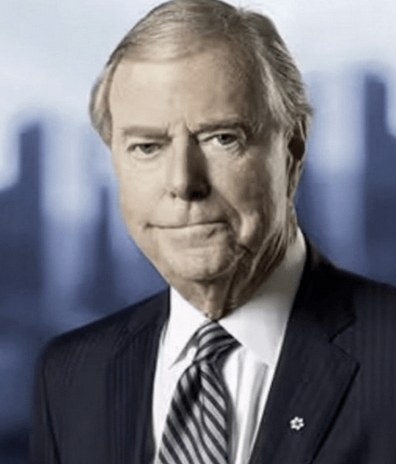
By Don Newman
April 25, 2026
In the classic Canadian tradition of diffusing the pain by enlarging the official target field, Prime Minister Mark Carney this week unveiled a 24-member Advisory Committee on Canada-US Economic Relations to buttress his negotiating team heading into the looming CUSMA review with the United States and Mexico.
The committee is composed of some pan-partisan political figures, from former federal Tory leaders Erin O’Toole and Jean Charest to former Quebec Liberal Premier Jean Charest (always in great demand for checking two boxes).
But it also includes businesspeople, notably from sectors of the economy such as aluminum (Jean Simard, Aluminum Association of Canada) and autos (Flavio Volpe, Automotive Parts Manufacturers Association) that are the most existentially affected by Donald Trump’s unfounded, norm-breaking tariff war.
Its stated role is to advise the government on the impacts and outcomes of various demands, proposals and challenges the Americans will present over the course of the negotiations.
But the announcement of the group comes the same week as the Prime Minister unveiled the first of what is to be a series of social media videos on YouTube.
The idea for the Prime Minister to communicate directly with Canadians comes from the radio talks US President Franklin Roosevelt delivered to Americans during the Depression.
Those “fireside chats” were designed to bolster American spirits and steel national resolve to stay the course with FDR’s New Deal long enough to produce better times ahead.
Carney’s video was an updated, adapted version of that message.
He repeated many of the points he has already made, including in his much-noted speech at the World Economic Forum in Davos, on how the world has changed. Tough times might get worse in the short term, but Canadians can work through them together toward a better, more independent future.
The announcement of the advisory committee the same week raises the possibility that the main role of its high-profile members may be to help convince Canadians that the less advantageous trade deal the Americans will offer Canada is one Ottawa should not accept; that “hanging tough” in controversial negotiations is better than capitulating. That no deal is better than a bad deal.
Canadian officials have surmised, given the widespread expectation that Trump and the GOP will be thumped in November, that their negotiating position can only be enhanced by time.
Per the terms of the CUSMA deal signed by the first Trump administration, July 1st is the date by which the three countries need to either approve a renewal of the existing agreement or declare their intention to leave it.
But already, officials in all three countries are saying that deadline is unlikely to be met. Instead, talks could drag on into the fall, past the U.S. midterm elections on November 3rd.
Canadian officials have surmised, given the widespread expectation that Trump and the GOP will be thumped in November, that their negotiating position can only be enhanced by time. That possibility has prompted a furious reaction from U.S. Commerce Secretary Commerce Secretary Howard Lutnick.
Lutnick exploded this past week, saying of Canada’s apparent strategy of running out the clock until November: “they suck”. Of course, his reaction confirms that for Canada, the strategy is a good one and should be pursued.
The Americans are also demanding concessions from Canada before the negotiations start — notably the end of the provincial boycotts of U.S. wines and spirits. The Prime Minister has sharply dismissed that idea.
Lutnick made his fortune in finance and, like Jared Kushner and Steve Witkoff, reflects Trump’s preference for amateurs instead of diplomats to both register his contempt for diplomacy and rationalize norm-breaking and intractability.
This week, Lutnick repeated demands that American liquor be put back on the shelves of liquor stores across Canada. He said it was an insult that provincial governments had removed the alcohol in retaliation for the initial wave of tariffs imposed on Canada contrary to the existing CUSMA agreement signed by President Trump in 2018.
Lutnick appears to think it is an insult to remove American beer, wine and liquor from Canadian shelves, but it is not an insult for the United States to try and destroy much of the Canadian economy by imposing arbitrary tariffs in violation of an existing trade deal. This is why Trump doesn’t use diplomats.
Again, as with Canada’s negotiating strategy, the “booze boycott” is having an effect in the United States. And again, the immediate takeaway is that it must be working and therefore should be maintained.
This is all happening as the new committee is set to begin meetings with Carney and the minister responsible for the CUSMA negotiations, Privy Council President Dominic Leblanc, who chairs the committee.
Its members will have their work cut out for them. But as of this writing, it isn’t clear whether their job will be to explain a new trade deal, or to explain why there isn’t one.
Policy Columnist Don Newman is an Officer of the Order of Canada, and a lifetime member and a past president of the Canadian Parliamentary Press Gallery.