
For this St. Patrick’s Day, a Dream of Irish Unity
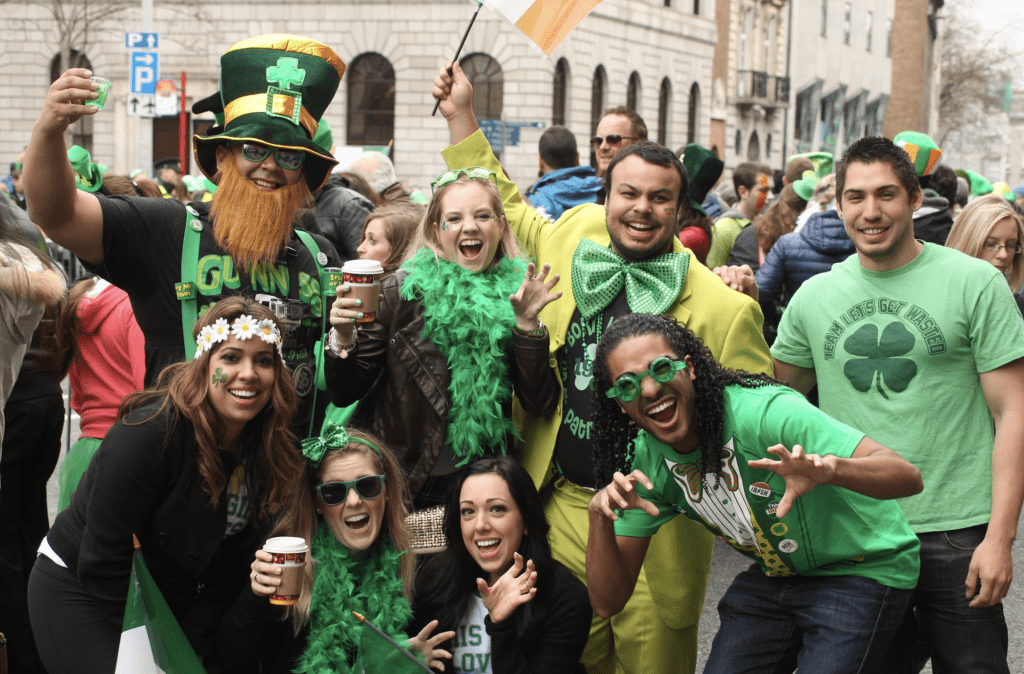 St. Patrick’s Day in Dublin/Shutterstock
By Ben Collins
March 15, 2026
St. Patrick’s Day is a global celebration of Ireland and its culture — or at least a version of Irish culture paid tribute with the donning of springy shamrock headgear and the industrial consumption of green beer.
We Irish are fine with that. We understand the soft power of this collective eruption of revelry and affection for all things Irish, even if leprechauns and shillelaghs aren’t necessarily the first things that come to mind about Irish culture on the island itself.
In Canada, March has been recognized as Irish Heritage Month since 2022 thanks to the efforts of Liberal MP James Maloney, reflecting the country as home to the world’s fourth largest Irish diaspora, with more than 4.4 million citizens (12-15% of the population) claiming full or partial Irish ancestry as of the 2021 Census.
I’m from Belfast, which makes me Irish, but with an asterisk. As a UK citizen born in Northern Ireland, I can hold both a British passport and an Irish passport, per the terms of the 1998 Good Friday Agreement.
But I think of myself as Irish. I grew up in East Belfast, in a strong pro-British, unionist household. But the British part of my identity always felt more political than visceral. I went to university in Dundee, and being in Scotland opened my eyes to what it really means to be Irish.
When I returned to Belfast, the political evolution that led to the Good Friday Agreement was underway, and that process further contributed to me feeling more Irish than British, partly because of the way it decoupled my Irish identity and future from violence.
That sense of solidified identity has informed my views on Irish unification.
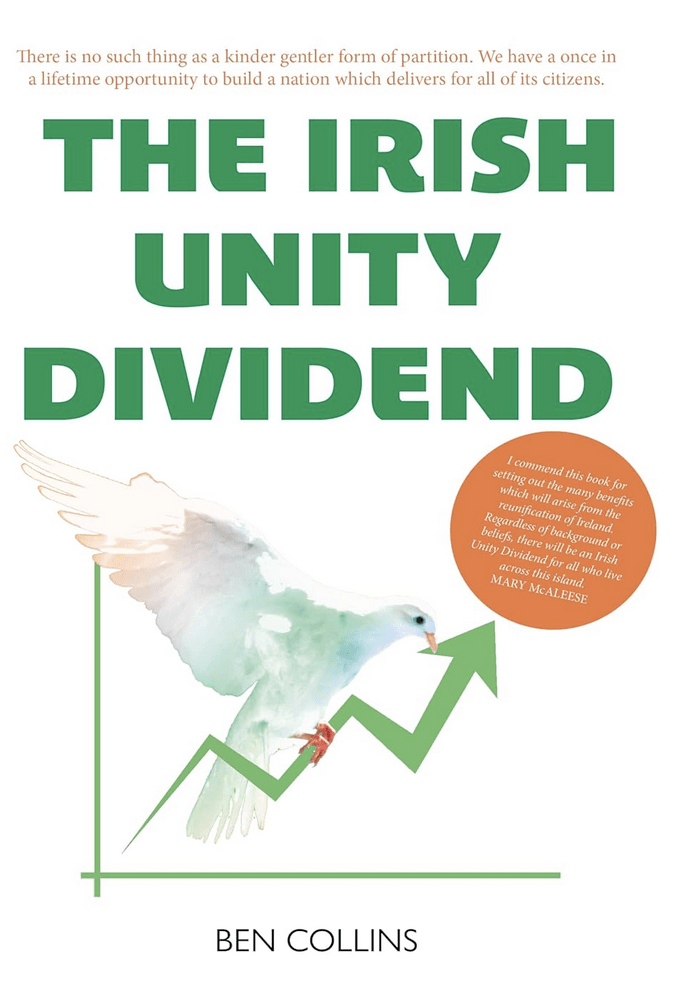
As I’ve set out in my book The Irish Unity Dividend (reviewed for Policy by Colin Robertson), the reunification of Ireland is about more than reclaiming the “fourth green field”, per the iconic Tommy Makem folk ballad about re-joining Ulster to the other three ancient provinces of Ireland.
There are many economic, social and environmental reasons to bring the two parts of the island together into one. And in a time when war and fragmentation are making a shocking, destabilizing comeback, the dream of Irish unity offers a beacon of hope.
Over the past six months, I’ve been fortunate to hold book events across Ireland and the UK. There is so much goodwill towards this small island and the people who live on it, the reception has been both eye opening and humbling. Those in attendance have come from every part of Britain and Ireland. But all shared a desire to see Irish Unity.
Since I published my first book Irish Unity: Time to Prepare in October 2022, many people who come from a similar pro-British and Unionist background in Northern Ireland to me, have told me that they now favour the reunification of Ireland.
They believe, like me, that the partition of the island a century ago has been a failure. They see the looming, divisive possibility of Nigel Farage as the British Prime Minister after the next Westminster election.
There is a deep concern about how the unique requirements of Northern Ireland were initially discounted during the Brexit referendum campaign and then begrudgingly accepted.
 St. Patrick’s Day in Belfast/Shutterstock
But there is a fear that the safeguards put in place, like the implementation of the Good Friday Agreement and the European Convention on Human Rights, could be stripped away by a party or parties that have no representation in Northern Ireland and less understanding.
No MP from Northern Ireland has been a member of the British Cabinet since the Second World War. That’s 80 years outside the corridors of power.
Britain is going through political turmoil, the economic and social repercussions of the knife-edge Brexit vote in 2016 continue to have an impact.
While Farage’s Reform UK leads in many opinion polls, Scotland and Wales look likely to elect nationalist parties that favour independence from the British State, at their respective parliamentary elections in May.
The Green Party of England and Wales also continues to do well — notably in its recent byelection victory. It also supports Scottish and Welsh independence, as well as Irish Unity.
In America, foreign policy has become incoherent at best and dangerous at worst during Donald Trump’s second term.
The role of Canadian General John de Chastelain in the decommissioning of paramilitary groups and Judge Peter Cory in presiding over the inquiry into official collusion during The Troubles leaves a reservoir of goodwill towards Canada.
The Good Friday Agreement, nearing its 30th anniversary in 2028, stands among the most significant foreign policy successes of recent decades, achieved with the indispensable political capital of President Bill Clinton, with the crucial support of UK Prime Minister Tony Blair and Queen Elizabeth II. At a crucial moment in the negotiations just three days before the signing, Ireland’s Taoiseach, Bertie Ahern, left his mother’s funeral to return to the talks. The Irish Government also played a major part in securing the prize of peace on the island.
The role of Canadian General John de Chastelain in the decommissioning of paramilitary groups and Judge Peter Cory in presiding over the inquiry into official collusion during The Troubles leaves a reservoir of goodwill towards Canada.
One of the key provisions of the Good Friday Agreement was the potential for a border poll on Irish Unity. In 1998, citizens across the island of Ireland got to vote for peace.
In the coming years, citizens should have the chance to vote on reunification of the island in the border poll provided for in the Agreement. Irish Unity would be celebrated across the world as the ending of 100 years of pain caused by the partition of Ireland.
Irish Unity would mean that what is now Northern Ireland would automatically rejoin the EU — the greatest peace project the world has ever seen, in my opinion — as part of the Irish State. The region never voted to leave the EU but was taken out by the votes of England and Wales.
In a world of turbulence, the prospect of all of Ireland being part of the EU feels like a safe harbour.
On this St. Patrick’s Day, amid the world’s wars and divisions, it’s worth pausing to reflect on the miracle of Irish peace, and the dream of Irish unity that could be its natural sequel.
Policy Contributing Writer Ben Collins is a Belfast-based communications consultant and author of Irish Unity: Time to Prepare, and The Irish Unity Dividend.