En Route to NATO, Carney Doubles Down on NATO
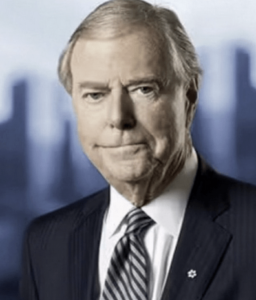
By Don Newman
July 6, 2026
While the Carney government bills itself as Canada’s “new government”, it has gone with the conventional choice in selecting a German-Norwegian consortium to supply and maintain up to 12 new submarines for the Royal Canadian Navy’s Canadian Patrol Submarine Project (CPSP).
After a monthslong contest between South Korean shipbuilder Hanwha and the German/Norwegian consortium TKMS, Prime Minister Mark Carney went to Halifax — the spiritual home of Canada’s navy — to announce that the Germans and the Norwegians have been selected to build the subs and provide the repairs and maintenance for the underwater warships for up to 80 years.
All in all, the contract could be worth $100 billion over its lifetime.
That Carney made the long-awaited sub announcement en route to the annual NATO summit — this year held in Ankara — was a major clue as to which bid had prevailed.
Both companies put up spirited campaigns to influence the awarding of the contract. For the most part, the Koreans have been the most visible. Hanwha has been announcing contracts with Canadian companies to create jobs and large industrial benefits, run television adds extolling the benefits of their company and their boat, and even sailed one of their submarines across the Pacific Ocean to Canada’s West Coast Navel hub at Esquimalt near Victoria on Vancouver Island.
Because of their higher profile, many thought the Koreans had the upper hand in this contract. Canada has a military history with South Korea. Between 1950 and 1953, Canadian soldiers and airmen fought in that country as part of a United Nations force to repel invaders from North Korea and China.
At the United Nations Memorial Cemetery in Busan, there are 376 Canadians buried, and the Monument to the Canadian Fallen in Ottawa commemorates their sacrifice as well.
But, as pointed out in this space on June 4th, Canada has much stronger defence ties with NATO allies Germany and Norway. Along with Canada, Norway was one of the founding members of the alliance in 1949. For Germany, the part of the country not occupied after the Second World War by the Soviet Union joined NATO as West Germany in 1955. The reunified Federal Republic of Germany became a member after the fall of the Berlin Wall.
That Carney made the long-awaited sub announcement en route to the annual NATO summit — this year held in Ankara — was a major clue as to which bid had prevailed.
And while Carney underscored in Halifax that the choice was a difficult one and that the outcome was not a reflection on Canada’s increasing ties with its Asia-Pacific trade and security partners, Korea included, it was more than history that clinched the deal.
The new submarines will be interoperable with other NATO fleets. Training and many other opportunities will be readily available. But as the Prime Minister also said, the submarine decision will strengthen the Atlantic alliance at a crucial moment.
Since the return of Donald Trump as president of the United States in 2025, the alliance has been under strain. Germany and other European countries have joined Canada in quickly increasing defence spending as Trump has cozied up to Russian President Vladimir Putin even as Putin prolongs his illegal invasion of Ukraine. And, he continues complaining that the allies are not paying their fair share of the costs of NATO.
While many in the procurement loop were impressed with the Korean sub offered by Hanwha, Canada’s new government has been reaching out to strengthen connections to Europe. And nowhere is that effort more intense than in the defence sector.
In addition to committing to meet NATO defence spending targets, something that, until this year, Canada has not done in more than 30 years, Canada and the European Union have formed the Canada-EU Security and Defence Partnership.
Canada is also the first non-European country to be admitted to European defence procurement competitions. Having been granted that access it is hard to imagine that this country could then turn its back on a strong European bid for the biggest procurement contract in Canadian history.
So even for a “new” government that has deepened its economic and security relationships with its non-European allies, Canada’s NATO commitments have carried the day.
Policy Columnist Don Newman is an Officer of the Order of Canada, and a lifetime member and a past president of the Canadian Parliamentary Press Gallery.