
Where Does Peace fit in Mark Carney’s Global Vision?
August 13, 2026
Mark Carney is an internationally acclaimed central banker, a man of ideas who raises the subject of values in our society, a visionary who has a prescription for a ruptured world, and a tactician who stands up to the menacing U.S. president, Donald Trump.
He brings to his office unique credentials as governor of two central banks and as an adviser to the U.N. secretary-general. I’ve watched 10 prime ministers since I entered politics in 1972 and cannot recall one occupant of the office who drives himself as hard as Carney does. His schedule, as he admits, is “relentless.”
Why, then, is my applause restrained?
I’ve spent months exploring this question for my upcoming book, Values/Chaos: Discovering Mark Carney and Canada’s Role in a Ruptured World. The core reason for my misgiving is that Carney has elevated military might through arms over diplomacy as the route to peace.
The entire United Nations structure, built on the ashes of World War II and at the dawn of the nuclear age, is grounded in the idea that human security comes not from more arms but from economic development, social progress and the steady infusion of diplomacy into crisis areas to preserve the peace indispensable to both.
For decades, the international relations term of art “peace and security” reflected the belief — from the first UN General Assembly resolution in 1946 — that these two values are inextricable.
By inflating Canada’s defence spending to a new goal of 5 per cent of GDP while simultaneously cutting Canada’s diplomatic and foreign assistance programs, Carney has inverted the value system he laid out in his own book, Value(s): Building a Better World for All.
In that book, he lambasted free-market fundamentalism for its disregard for the human condition. He warned that growing income inequality, unemployment, systemic racism, global pandemics and the existential threat of climate change all stem from a profound crisis in values. But in office, Carney likes to say that “the strength of our values” is now secondary to “the value of our strength.”
It’s as though the prime minister is reluctant to use his star power to lead both Canada and his new international partners away from excessive reliance on military might.
Carney prides himself on pragmatism yet discounts the essential idea of mutual survival in a world that is increasingly tolerant of violations of international law. That essential idea is common security, not bloc power. In today’s world, Carney should be energizing Canadians with the key principle that the U.S., Russia and China should work together, not against one another, for humanity’s survival.
As a principled person himself, Carney has the opportunity — and, I would argue, the obligation — to lead Canada toward a principled world; not tomorrow but today.
Several of his predecessors demonstrated moral leadership and were able to lift up Canada’s contribution to world peace: Pearson started UN peacekeeping, Mulroney rejected apartheid, Chrétien kept Canada out of the Iraq War, Martin said no to missile defence. Their courage in going against American pressure allowed Canada to lead in developing both the Ottawa Treaty on landmines and the International Criminal Court.
It is not a stronger military that will enable Canada to be heard in the councils of peace: rather, it is raising Canada’s voice and diplomatic work to exercise a rising global conscience against war. It is not Trump’s zeal for militarism that Canada should be imitating, it is the exhortations of UN Secretary-General Antonio Guterres and Pope Leo to save humanity by addressing the root causes of conflict and strengthening international law that we should be emulating.
What happened to the Canada that invented peacekeeping, created the Anti-Personnel Landmine Treaty, developed the International Criminal Court, and displayed the well-proven perspicacity to stay out of the infamous 2003 Iraq War?
If values are best expressed by governments via their fiscal priorities, it speaks volumes that the Carney government is imposing a 20 per cent cut in this year’s budget for Global Affairs Canada, which is tasked with implementing the prime minister’s vision of middle power countries forging a new consensus for a more equitable world, while investing unprecedented sums in military might.
Contrast the $7 billion Global Affairs receives with the $63 billion for the defence department. As an expression of values, that’s nine times greater.
The NATO route to peace and the United Nations route to peace are two very different concepts. One relies on a readiness to use force historically associated with dictatorships; the other relies on the prioritization of social justice and human security long associated with democracies, with the use of force enacted only as a last resort.
Mark Carney has, so far, advanced the idea of middle power leadership through defence partnerships. Guterres is pleading with world leaders to wake up and recognize that “global military spending is at record levels, even as deadly weapons get cheaper to produce and resources for development and humanitarian needs get slashed.”
As a principled person himself, Carney has the opportunity — and, I would argue, the obligation — to lead Canada toward a principled world; not tomorrow but today.
In pragmatic terms, these principles mean the abolition of nuclear weapons, the funding of preventive diplomacy, the acceleration of the Sustainable Development Goals (SDGs), the participation of women at all levels in the decision-making processes of peace and security, a political priority to curb global warming, reversal of the negative impact of unconstrained military spending, multinational peace enforcement units, and reform of the Security Council to make permanent membership more representative of the modern world.
I am not alone in lamenting this prime minister’s sense of direction. Alex Neve, the outstanding former secretary general of Amnesty International Canada, who gave the 2025 CBC Massey Lectures, has expressed “a sense of dread that protecting human rights, addressing humanitarian needs and responding to the climate crisis are precisely the crucial imperatives that will be sacrificed to fund this massive military spend. We must push back.”
Carney needs to think beyond NATO to be a credible world leader. It is the existential threat of climate change, nuclear weapons, pandemics and forced migrations of peoples that also challenge Canada’s security.
The Canadian prime minister is uniquely placed to restore confidence in multilateral institutions through a pragmatic emphasis on diplomacy, accountability and reform. If he is returned to office in the next federal election, Carney’s seniority among world leaders will increase his influence.
He can become a statesman of historic importance.
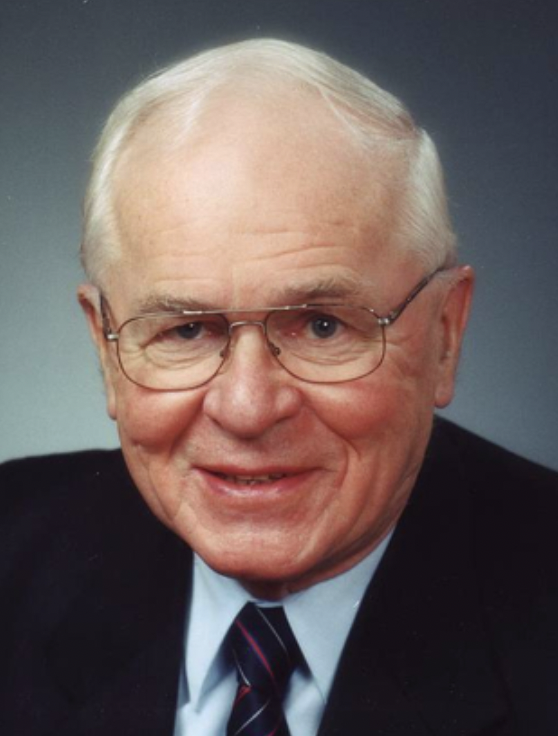
Former Senator Douglas Roche, OC, served as a member of Parliament from Alberta, as Canada’s Ambassador for Disarmament and as chair of the United Nations Disarmament Committee. He is the author of several books on peace and security, including Values/Chaos: Discovering Mark Carney and Canada’s Role in a Ruptured World.