
On Critical Minerals, Canada and Europe Meet in the Midstream
This piece is part of our Asia Pacific Foundation of Canada Series: Canada’s Critical Minerals Advantage.
By Peter Handley
August 5, 2026
Since 2025, Canada and the European Union have tightened the ties of the transatlantic relationship across a number of metrics, from trade to defence to the Eurovision Song Contest. Among those metrics is the securing of reliable and sustainable critical minerals supply chains.
When the European Union’s Critical Raw Materials Act (CRMA) entered into force in May 2024, one number mentioned in the act did more than any other to concentrate minds in European capitals: 40 per cent.
By 2030, the Act says, the EU’s processing capacity should be able to cover at least 40 per cent of its own annual consumption of strategic raw materials, alongside targets of 10 per cent domestic extraction, 25 per cent recycling, and no more than 65 per cent from a single third country.
Two years on, that benchmark is the best lens through which Canada can view Europe’s critical minerals strategy, because it names the stage of the value chain where both partners have the most to gain from expansion and from working together: the midstream, where the processing, refining, and chemical- transformation steps of that value chain bridge the gap between raw mining (upstream) and manufacturing (downstream).
The EU’s 40% benchmark did not emerge from nowhere. Europe’s vulnerability in critical minerals is overwhelmingly one of refining. According to the International Energy Agency’s 2025 Global Critical Minerals Outlook, China controls the processing of 19 out of 20 energy-transition minerals, with an average global market share above 70 per cent.
China weaponizes this dominant position by restricting the export of refined metals, refining technology, and equipment, and by adjusting prices to keep original equipment manufacturers (OEM) consuming and making life hard for competitors.
The EU’s import reliance for refined materials climbed from roughly 83 per cent in 2011 to 90 per cent by 2023, even as its raw ore imports stayed comparatively stable. That gap between mining exposure and refining exposure became impossible to ignore once it started costing European factories production days. Between 2023 and 2025, Chinese export controls on gallium, germanium, graphite and rare earth technologies produced real stoppages on European assembly lines.
Trafigura CEO Richard Holtum correctly pointed out that “Europe’s smelters are strategic assets we cannot afford to lose.” The good news — despite the erosion of the midstream due to high energy costs and subsidized Chinese overcapacity — is that Europe retains a significant industrial base of metals smelters and “with targeted investment, existing assets could be modernized and expanded”, per Holtum. For a relatively small sum compared to the cost of inaction, existing zinc smelters can produce germanium, while alumina smelters can produce gallium.
The EU CRMA 40 per cent figure sought to be ambitious without coming at the expense of processing expanding in developing countries. This value addition is something they insist on for economic and social development. Europe agrees and it is in Europe’s interest to help its partners to process materials close to the mine and then to ship value-added materials directly to the European market instead of sending concentrates for processing in China.
The EU’s strategy to achieve its 2030 CRMA benchmarks relies essentially on:
- prioritizing the materials most essential to strategic technologies of the future, such as clean tech, digital, defence and aerospace;
- selecting strategic projects that make a meaningful contribution toward the benchmarks – 28 out of the 60 strategic projects announced in 2025 were for refining (or integrated mining and refining);
- streamlining and speeding up the permitting of strategic projects without weakening environmental or social protections – 15 months from when the project promoter submits a complete application file to the relevant authority for refining and recycling projects, 27 months for mining projects;
- facilitating public and private finance, although the CRMA lacks a dedicated fund, existing programs are being repurposed and the December 2025 RESourceEU action plan mobilized C4.8 billion (€3 billion ) in EU‑level financing instruments to support CRMA strategic projects;
- strategic partnerships with countries outside the EU – there are currently 16 of these; and
- demand-side measures, including demand aggregation and joint purchasing as well as incentives for supply chain diversification in EU public procurement rules.
Where does implementation of the 40 per cent benchmark stand?
The benchmark points out the direction of travel, but it is not a legally binding number. By itself, setting a benchmark cannot override the economic fundamentals of Europe’s high energy, regulatory and labour costs, weak demand from downstream sectors, or much cheaper Chinese materials.
Progress differs sharply by material. On the credit side, lithium refining capacity has grown, anchored by AMG Lithium’s hydroxide plant in Germany. Nickel and cobalt chemicals production has strengthened through Umicore, Terrafame and new precursor plants in Poland. Greece’s vertically integrated aluminium producer Metlen is on track to produce gallium.
Rare-earth separation and magnet recycling, which barely existed in Europe five years ago, are taking early shape through Solvay, Carester and MagREEsource in France and Neo Performance Materials in Estonia, with feedstock due to come onstream in Sweden and Norway before long.
Against that, the debit side is substantial. Nearly a third of Europe’s base-metal smelting capacity has closed or been curtailed over the past decade, for the reasons explained above. Magnesium and titanium metal still have essentially no European refining base at all. Several silicon metal facilities are shuttered due to the inability to compete with China’s prices.
Canada, overreliant on the U.S. market, urgently needs to diversify, while EU companies need to become much more active as offtakers and investors to secure minerals and refined metals from Canada, the EU’s reliable and stable partner in North America.
Overall, the assessment now must be that while the EU is unlikely to achieve its 40 per cent refining benchmark by 2030, it is far better to try than to simply let this sector shrivel in the face of ruthless and rigged competition.
What should Canada and Europe take from this?
First, Canada has its own Critical Minerals Strategy (2022), positioning it to become a global mining and critical minerals leader, not just in what it extracts but in how it builds, processes and delivers value from the mine all the way to the market. That foundation is sound, but the shifts in global supply chains since 2022, and the midstream opportunities set out below, make a strong case for refreshing and sharpening the strategy.
Canada produces a broad suite of strategic minerals and maintains processing capacity in areas such as aluminum, nickel, copper, cobalt and zinc, alongside recovery of key by‑products like indium and tellurium. These capabilities are underpinned by access to reliable, low‑cost and low‑carbon electricity.
Second, Canada and the EU have a strong bilateral relationship. The Comprehensive Economic and Trade Agreement (CETA) provides a preferential trade framework most competitors lack. The 2021 EU-Canada strategic partnership on critical raw materials anchors the bilateral partnerships with countries such as France and Germany as well as corporate deals backed politically by public authorities on both sides of the Atlantic.
Recognizing the growing importance of middle powers’ alignment, Prime Minister Mark Carney and European Commission President Ursula von der Leyen have nominated special envoys to drive the bilateral relationship forward — John Hannaford for Canada and Joost Korte for the Commission.
While the political framing is excellent, the strategic partnership on critical raw materials (CRM) needs more solid projects and co-investments. Canada, overreliant on the U.S. market, urgently needs to diversify, while EU companies need to become much more active as offtakers and investors to secure minerals and refined metals from Canada, the EU’s reliable and stable partner in North America.
Concretely, this means building a dynamic project pipeline, backed by joint financing for shared midstream plants, offtake agreements guaranteeing European buyers for Canadian-processed material, reciprocal fast-track permitting for jointly designated strategic projects, and pairing Canada’s low-carbon power with European separation and recycling know-how.
Third, during its G7 presidency in 2025, Canada announced the first round of the G7 Critical Minerals Production Alliance: 26 new investments and partnerships with nine allied countries. Several of these were midstream facilities which would benefit from tighter European involvement: Rio Tinto’s scandium refining expansion in Sorel‑Tracy; Ucore’s Kingston rare‑earth refinery advanced samarium and gadolinium processing; Northern Graphite’s graphite processing tolling deal with Italy’s Alkeemia and Torngat Metals’ Strange Lake rare earths mine’s separation technology tie-up with France’s Carester.
Fourth, the NATO High Visibility Project on Critical Raw Materials launched at the Ankara Summit in July 2026 brings together 12 allies to strengthen defence‑industrial supply chains through the acquisition, storage, transport and management of critical raw materials and recycled products essential for defence production. Canada is a party and so are nine EU Member States (Belgium, Denmark, Finland, Greece, Italy, Luxembourg, The Netherlands, Spain, and Sweden). The initiative creates a natural platform for Canada-EU cooperation across the critical minerals value chain, where Canada’s upstream strengths and Europe’s processing and recycling ambitions are highly complementary.
Fifth, there is an opportunity in financing. Many midstream operations struggle to stay profitable and yet are strategic assets. Canada and the EU both recognize the need for public capital to de-risk CRM processing, but scale and design differ sharply. Since 2022, Ottawa has committed roughly C$7-8 billion in dedicated funding, including a new C$2 billion Critical Minerals Sovereign Fund for equity, debt and offtake support, plus C$443 million under its Defence Industrial Strategy specifically for critical mineral processing technologies.
The EU’s RESourceEU plan targets just C4.8 billion (€3 billion), repackaged from existing instruments like the Innovation Fund and European Defence Industry Programme rather than purpose-built financing, with no dedicated CRM line in the current EU budget. Real dedicated EU funding will have to wait for the next Multiannual Financial Framework starting in 2028.
Lastly, the EU and Canada should be natural partners in international discussions about supply chain resilience and diversification. While export controls proliferate and minor metal prices remain volatile and opaque, what should be the role of price floors, import tariffs, strategic stockpiles, and de-risking strategic technologies’ supply chains? What are the best strategies to counter hegemonic behaviour and to embed solutions in multilateral, rules-based frameworks? These geopolitical tensions ultimately converge in the midstream, where China has achieved a dangerously high control of global supply chains.
The midstream is where resilience must be built. Without diversified refining and processing, neither extraction nor recycling can guarantee secure supply chains. The midstream is also where Canada and the EU have natural alignment. Canada offers scale, reliability and clean, affordable energy for processing; Europe brings industrial demand and advanced technologies.
Focusing the bilateral relationship on midstream cooperation, shared projects, co‑investment and predictable offtake, Canada and the EU can create a stable transatlantic foundation for the materials on which clean tech, the digital ecosystem and defence rely.
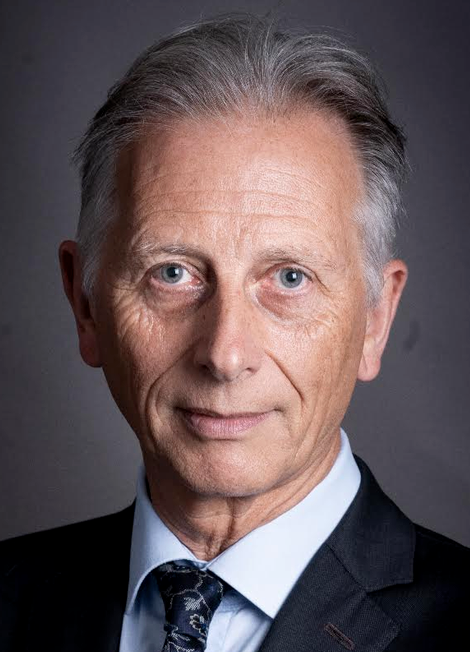
Peter Handley is the founder of PHASE32, a consultancy specializing in sustainability and resilience. He is also a senior fellow with the European Initiative for Energy Security and a strategic advisor with The Hague Centre for Strategic Studies. As head of unit and deputy director in the European Commission’s Directorate General for the Internal Market, Industry, Entrepreneurship and SMEs, Peter and his team negotiated the 2021 EU-Canada Strategic Partnership on Critical Raw Materials as well as the 2024 Critical Raw Materials Act.