The Meaning of our Federal Moment
This piece is part of our Forum of Federations Series on National Unity and Canadian Federalism.
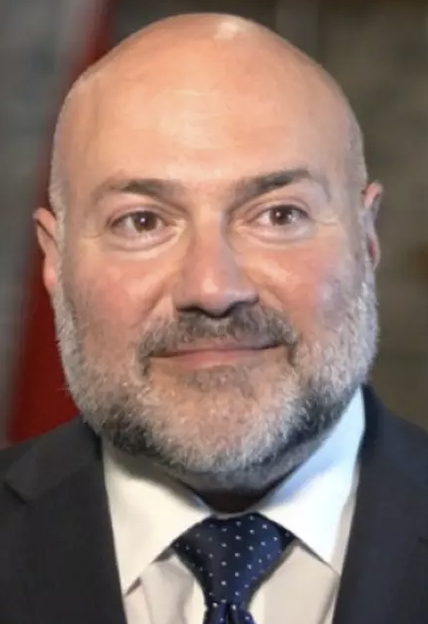
By Taki Sarantakis
August 10, 2026
Canada’s federal reality is facing one of the most paradoxical moments in its history.
Besieged by threats — real and dramatically expressed — to our very integrity as a country, Canadians have shown a burst of the sort of pan-Canadian patriotic fervour that we usually reserve for moments of hockey or Olympic glory.
Yet, we also face the prospect of not one, but two secessionist referenda. How is that for paradox?
Canadians are used to living with paradox because the very nature of our polity is infused with it. We are used to being both one and several. We are used to a federal condition which means, at its core, that we do things together as Canadians, and we do things apart as members of a province or a territory. The particular mix of what we do together and what we do apart is constantly celebrated or lamented, occasionally in the very same breath.
The study of federalism is arguably the most quintessentially Canadian of the social sciences. If we had a Canadian Federalism Hall of Fame for our greatest federalism scholars, among the dozen or so most illustrious would be the late Alan Cairns. Almost a decade since his passing, and more than three decades since his retirement from his position at the University of British Columbia, Cairns continues to illuminate our most Canadian reality: our federal existence.
In his presidential address to the Canadian Political Science Association almost half a century ago, Cairns reversed what most social scientists of his era did. Instead of understanding the state and its institutions as representations of interests in society, Cairns argued that governments had an interest that might have no meaningful constituency beyond itself.
An agency, a tribunal, a department, a province, or a federal government is thought to serve and reflect some type of underlying societal reality. But in The Governments and Societies of Canadian Federalism, Cairns flipped the script, noting that while we exhaustively study how societal forces shape government, we rarely study the “the capacity of government to make society responsive to its demands”.
This is a very telling insight into our current federal moment. As we face what I would politely call “an external forcing function” from our neighbours to the south, federal and provincial elected politicians and their administrative apparatuses are frantically meeting and reporting.
Some are meeting and reporting on discussions with representatives of the U.S. administration. That engagement is a direct result of dealing with the threat posed by tariffs and Canadian access to the U.S. market. That is clearly in the pan-Canadian interest, with a broad-based underlying societal constituency for that process. Institution and society are pretty much 1:1 correlated here.
But what of the purely domestic debates and the purely domestic meetings?
When we are not directly speaking of the threat, we are doing so indirectly: we speak of autos, and oil, and electricity, and pipelines, and canola, and dairy, and permits, and potash, and domestic regulatory regimes. And don’t forget beer, wine, and spirits.
The particular mix of what we do together and what we do apart is constantly celebrated or lamented, occasionally in the very same breath.
Each of those things plays out differently in different parts of Canada. Autos and oil are pretty binary — there are regions that produce one, and regions that produce another, and regions that produce neither. So, it is fair to say that there are pretty important sub-federal societal constituencies here.
But as we try to come together to face that external forcing function, is there really a societal cry for provincial wine on one hand, or federal wine on the other? Let’s ask Cairns for a perspective. It is worth quoting him here at length:
“The ministries, departments, agencies, bureaus, and field offices to which they daily report constitute partially self-contained entities, valued for their own sake, and possessed of their own life and interests. Their minimum desire is for a steady level of activity. Typically, however, they seek to enlarge the scope of their functions. If the environment offers new opportunities for expansion in emergent problem areas they will compete with other bureaucracies for the prizes of status and growth offered by enhancement of their activity.
If major challenges are made to their organizational identity, purpose, or cohesion they will fight back against unsympathetic political superiors and other menacing figures and forces in their environment. If their functions decline in social utility, or their expertise becomes obsolescent they will scan the horizon of alternative possibilities in an aggressive search for new justifications for continued existence.
While they are subject to political control and direction, they have impressive capacities to get their own way and to bend their political superiors to their will. Although their functions relate them to particular sectors of society, they are not puppets or simple reflections of the interests of the groups they control, regulate or service.”
Another way of putting this more bluntly: society has not called out to deny a licensed engineer in Nova Scotia from being a licensed engineer in Alberta. Society has not said that a teacher who crosses from Saskatchewan to Manitoba is incompetent to teach. Society has not demanded that a psychologist be competent in this part of Canada but incompetent in that part of Canada.
Those who think this expansionist/defensive tendency is merely a provincial dynamic would do well to ponder the growth of the federal apparatus over the last decade. No small figures will be found there — in dollars, in people, or in new federal institutions.
What does all this mean for our particular federal moment? First, it means that we have much work to do regardless of the U.S. situation. Second, it also means that if this work cannot be done now, even in this moment of real peril for our country, we could face a situation where the things that we do differently cost us the very country that allows us to do things together.
Will the internal costs of the U.S. threat be too high a price to pay for some of the actors and institutions who live by and operate the instruments of Cairns “Governments and Societies of Canadian Federalism?”
That remains to be seen.
But for too long, we have largely laughed and shrugged when we heard that Canadian companies in one province could export their goods more easily to the U.S. than they could to another Canadian province. We can no longer afford that reaction.
We have to look upon this federal moment and decide, plainly and clearly, whether we are prepared to become just a little more Canadian than we were before the U.S. threat emerged, or not.
Canadians appear to want Canada to rise to that challenge. If so, our institutions must enable us to do a little more together than we currently do apart.
Canadians have met this moment. Will the actors who operate our institutions do the same?
Taki Sarantakis was, until recently, President of the Canada School of Public Service, having previously served as Associate Secretary of the Treasury Board and as Assistant Deputy Minister at Infrastructure Canada. He is a Non-Resident Fellow of the Forum of Federations.