
Our Forum of Federations Series: National Unity and Canadian Federalism
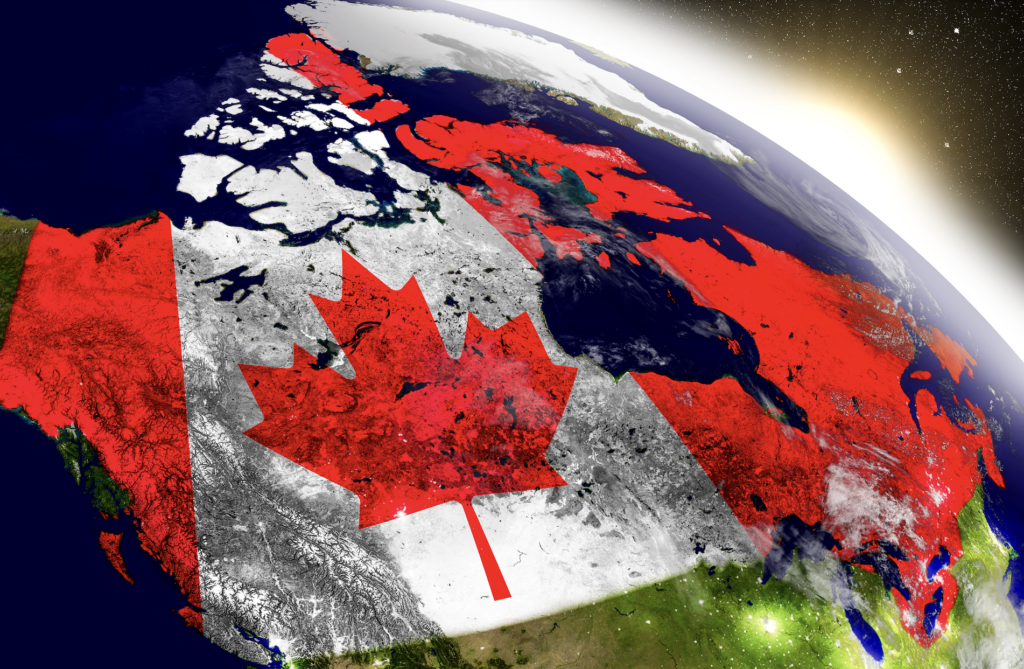

Established by the Government of Canada in 1999, the Forum of Federations is the world’s leading organization dedicated to strengthening federal and decentralized governance. Renewed discussions surrounding Quebec’s constitutional future, the prospect of a referendum on Alberta independence, and increasing political polarization have underscored the importance of constructive dialogue on the institutions and principles that bind Canadians together. The Forum of Federations and Policy magazine have partnered to bring together leading voices from across Canada to examine the opportunities and challenges facing the federation at this moment. This series aims to foster informed dialogue among policymakers, business leaders, academics, and engaged citizens, for a constructive conversation about Canada’s shared future.
We open with Forum president and Policy Contributing Writer Rupak Chattopadhyay, on a concept that has informed independence debates in Canada for the past half-century, including in Quebec ahead of a scheduled October election and in Alberta ahead of an October referendum. “As it happens, sovereignty is one of the most frequently invoked — and least examined — concepts in global politics,” writes Chattopadhyay. “It surfaces in constitutional disputes, trade negotiations, separatist movements, and geopolitical crises, often as though its meaning were self-evident. In reality, sovereignty has never been a fixed principle.” Here’s Rupak Chattopadhyay with the essential What Is Sovereignty? Canada and the Politics of Shared Authority.
As Quebecers face a provincial election campaign in which the Parti Québecois is the party to beat and a referendum on sovereignty is, if no longer a ballot question, always a possibility, the implications of Quebec separation are once again being debated, including in the most interprovincially integrated region in the country. “Thirty years after the failed 1995 referendum, the relationship between Ottawa and Gatineau has only deepened,” writes Association for Canadian Studies President Jack Jedwab. “The region is no longer merely two neighbouring cities on opposite sides of a river. It functions as a single metropolitan space.” Here’s Jack Jedwab with Where the Two Solitudes Meet: Quebec Sovereignty and the National Capital Region.
From Pierre Trudeau’s National Energy Program to his son’s climate change policies to Canada’s equalization system, the reasons for Western alienation are well known. “Taken together,” writes Forum of Federations Program Manager Jamie Thomas, “the ways in which these issues continue to inform the discourse on dissatisfaction with Alberta’s place in Canada are fundamental to understanding the context that has led us to the current political moment.” Here’s Jamie Thomas with From Resentment to Referendum: The Challenge of Western Alienation.
With Canadian federalism under unprecedented pressure from inside and out, the concept itself is worth re-exploring. “We have to look upon this federal moment,” writes Forum of Federations fellow and former president of the Canada School of Public Service Taki Sarantakis, “and decide, plainly and clearly, whether we are prepared to become just a little more Canadian than we were before the U.S. threat emerged, or not.” Here’s Taki Sarantakis with The Meaning of our Federal Moment.
 A Scottish independence referendum rally in Glasgow, May 2018/Wikimedia
While Canada hasn’t seen an independence referendum since 1995, the 21st century has seen key separation votes elsewhere, including in Scotland and Catalonia. “Separation referendums are ultimately questions of politics, not process,” writes Forum of Federations Senior Program Manager Liam Whittington. “While the constitutional and legal thresholds are fundamental, they do not operate in abstraction; context matters.” Here’s Liam Whittington with Paralysis by Plebiscite? Lessons for Canada from Separation Referendums Elsewhere.
On August 21st, 2026, Prime Minister Mark Carney pulled Canada out of tariff negotiations with the United States. While the impossibility of negotiating with the Trump administration in good faith has created a bilateral breach, it has also refocused attention on economic adaptation. “Our bilateral trade crisis has ended the comfortable assumption that access to the American market could be taken for granted,” writes Forum President Rupak Chattopadhyay. “We should use the moment to rethink how Canada is connected — within the federation, to the United States, and, increasingly, to Asia.” Here’s Rupak Chattopadhyay on August 25th with Federalism, National Unity, and Trade: From Bilateral Shock to National Renewal.
For nearly 160 years, Canadian Confederation has withstood a range of threats and challenges. “Our long history of coping — ultimately successfully — with severe national-unity crises,” writes University of Toronto Political Science Professor David Cameron, “sometimes in the form of acute regional alienation, sometimes in the shape of convulsions over conscription in the two World Wars, sometimes as referendums on sovereignty, as in 1980 and 1995, suggests that the country has more unity sinew than might seem to be the case at first glance.” Here’s David Cameron with Is the Bargain of Confederation Holding?
 Hon. Stéphane Dion, now serving as Diplomat in Residence, Université de Montréal/U de M
As Minister of Intergovernmental Affairs, Stéphane Dion was responsible for the Clarity Act, which codified the terms of any provincial secession from Canada into law following the Quebec independence referendum of 1995. “Through the Clarity Act, legal secession is possible in Canada if the population of a province clearly wants to stop being part of the country.,” writes Dion today. “This presents separatists with their biggest challenge: convincing the people of their province that they would be happier if they stopped being Canadian.” Here is Hon. Stéphane Dion with The Clarity Act: A Timely Refresher. Et la version française, La loi sur la clarté: Un rappel opportun.
On October 19th, Albertans will vote on whether Alberta should remain a province of Canada. “The vote is not itself a vote on independence, but the debate raises a broader question about the federation,” writes Forum of Federations Vice Chair Salma Siddiqui. “How can a political community accommodate strong particular identities without those identities eventually becoming alternatives to membership in the whole?” Here’s Salma Siddiqui with Beyond Multiculturalism: ‘Canadian’ as a Civic Identity.
With the Alberta referendum looming, Forum of Federations Program Manager (Gender Equality & Youth) Olakunle Adeniran filed a comprehensive look at the question of identity and how it informs the questions on the 10-question referendum ballot. “A province asking whether it is fully included in Canada,” writes Adeniran, “is being asked, at the same moment, to decide who is fully included in Alberta.” Here is Olakunle Adeniran on September 30th with Who is ‘We’ in Alberta? The Deeper Question Behind the Referendum Ballot.
Jocelyne Bourgon served as Clerk of the Privy Council during the 1995 Quebec referendum. Just days before the Alberta referendum, Bourgon, who now heads Public Governance International, explored the perils of secessionism for a country that has otherwise weathered well the storms of this century. “The idea of secession as an ongoing concern and the recourse to referendums to address national unity issues is the only factor that could undermine Canada’s capacity to successfully navigate through an especially challenging period of time,” writes Bourgon. “Unity is the ingredient to ensure Canada’s continued success, and unity must be defended.” Here’s Jocelyne Bourgon on October 13th with Who is Making the Case for Canada?
We will be posting pieces in this series regularly throughout the second half of 2026.
Policy magazine serves as an independent, nonpartisan platform for insight and analysis on Canadian, U.S. and international politics and public policy, written by policy and political professionals.