
Canada’s Response to Trump: Time for Resolve, Self-Respect and Spine
July 31, 2026
If anyone’s wondering how to deal with the Trump administration these days, they should read Regime Change: Inside the Imperial Presidency of Donald Trump, (reviewed for Policy Books by Colin Robertson), written by Washington political reporters Maggie Haberman and Jonathan Swan.
It reveals the chaotic decision-making style of a president who operates on impulse or whim without apparent consideration for strategic intent or analytical details.
Tariffs are central to Trump’s vision of presidential power and his ‘Might is Right’ America-First approach to trade policy. He has publicly rationalized them as a catalyst for redressing trade imbalances and reshoring manufacturing. They are also used as a weapon to force allies and adversaries alike to bend to his will.
But Trump’s tariffs also impose costs on Americans. They disrupt cross-border supply chains, increase costs and cause uncertainty for businesses. Trump’s fixation on tariffs as the cure-all for what ails the U.S. economy actually undermines what most Americans see as their Number 1 concern — affordability.
The analysis-free decision-making in the White House is not limited to trade. It explains the looming quagmire over the war in Iran. Despite overwhelming military prowess, the U.S. is nowhere near its primary goals and the stop/start approach to negotiations only betrays the administration’s spaghetti-cannon strategy of firing in multiple directions in the apparent hope that something will stick.
The American public is souring on this spectacle. Meanwhile, Ukraine is rescuing itself from U.S. ambivalence (and Trump’s autocratic affection for Putin), demonstrating convincingly that it has cards of its own to play and win.
As for Canada, if the crass shakedown on the Gordie Howe bridge was not enough, the threat of tariffs against wildfire smoke from Northern Ontario breached a new absurdity threshold.
“We are holding Canada responsible for the fact that they are not properly maintaining their forests, and brush therein, and the U.S. is being unnecessarily invaded by filthy, polluted and unhealthy air. This is willful negligence…costing the U.S. billions of dollars.” So said the president.
The irony is that, when wildfires erupt in the U.S., as in California, Canadian firefighters routinely deploy to help, often with generous donations of money and personnel to Americans in need.
Events were exacerbated further when the president threatened to hit Canada with 50% tariffs on a range of goods including hockey sticks, honey, beer, down feathers, fishing rods and golf clubs ostensibly because Canada had the temerity to retaliate against the Liberation Day first round of Trump’s tariff mania.
The new tariffs are intended to extort concessions up-front from Canada in the CUSMA negotiations with nothing in return.
Even Canada’s most prominent Trump booster, Conrad Black, could not stomach this behaviour. “Canada must never consent to be treated with disrespect,” he wrote. “We have no delusions of grandeur nor are we anyone’s doormat.” Indeed.
If the crass shakedown on the Gordie Howe bridge was not enough, the threat of tariffs against wildfire smoke from Northern Ontario breached a new absurdity threshold.
We cannot win a trade war with the U.S., but neither can we acquiesce meekly to actions that are neither legal nor constitutional and violate blatantly the terms of our existing trade agreement. When confronting an intransigent bully on our southern border, one who sees his presidency as an instrument of unchecked power, Canada must show some spine.
Free trade agreements are, by their nature, preferential. Canada gives the U.S. better access than others and expects to gain reciprocal benefit from the U.S. Trump recognizes only the first half of this equation. There is no reason to believe that he would respect a new trade agreement any more than he has the current version, which is as legally binding as any treaty can be.
That is the real dilemma for Canadian negotiators.
It is not clear whether the new tariffs will be implemented. In any event, they should be countered expeditiously by court challenges recognizing that — as the Supreme Court ruled on Trump’s Liberation Day tariffs — Congress, not the administration, has the constitutional power for tariffs unless it has expressly granted that authority to the administration. Regrettably, Republicans have forfeited this power abjectly to the president.
We should also invoke the dispute settlement provisions of the CUSMA and, at the same time, galvanize support from American businesses, and from State governments heavily reliant on trade with Canada.
Other suggestions:
- Signal our readiness to ban exports of rare earth minerals to the U.S. once production is underway and halt any further U.S. investment in this sector, in which U.S. investments are already excessive and, some suggest, represent sweetheart deals prompted by the U.S. government. This would demonstrate that Canada does indeed have leverage of its own.
- The prime minister should invite the CEOs of the Big Three automakers — GM, Ford and Stellantis — to “clarify” their position on the terms for a renewal of CUSMA and to assure the government that they remain fully committed to production in Canada and will not succumb to demands that they move to the U.S. As Japanese firms (Toyota and Honda) make up 77% of auto production in Canada, our top priority should be to safeguard and enhance their operations.
- Above all, we should stand firm, show some spine and patience but not overreact to the president’s belligerence.
Meanwhile, United States Trade Representative (USTR) Jamieson Greer is becoming an embarrassment to the global trade policy fraternity. In his July 20th statement on the 338 tariffs, Greer said that “President Trump took decisive action to hold Canada accountable for retaliation and discrimination.”
His arguments are baseless, and evidence that — like so many public officials and politicians in Washington who could once be counted on to be tethered to reality but have succumbed to the behaviour modifying effects of Trump’s coercion — Greer has been reduced to a mouthpiece for Trump’s tariff mania.
Prime Minister Mark Carney was correct to say that the U.S. conduct on trade constituted a “rupture” in our relationship. Anti-American sentiments have grown substantially in Canada and with other erstwhile allies in Europe and Asia.
According to a recent Pew survey, only 35% of Canadians would describe the U.S. as a “reliable partner” compared to 83% in 2022, when Joe Biden was president. This may change when Trump leaves office, but the damage done will not disappear and America will not easily regain the trust that it had enjoyed for more than eight decades.
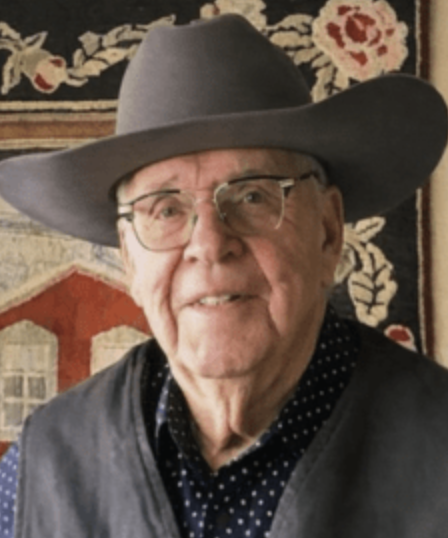
Derek H. Burney is a former 30-year career diplomat who served as Canada’s Ambassador to the United States from 1989-1993. He now shares operations of a family cattle and horse ranch in Colorado.